 Aidoc
Aidoc
Aidoc provides an enterprise-level clinical AI operating system, aiOS™, with the largest FDA-approved AI algorithm portfolio on a single platform, covering the four major fields of radiology, cardiovascular, neurovascular and vascular surgery. It has been deployed in 1,600+ medical institutions around the world and has been proven to shorten pulmonary embolism notification time by 31% and stroke puncture time by 34%.
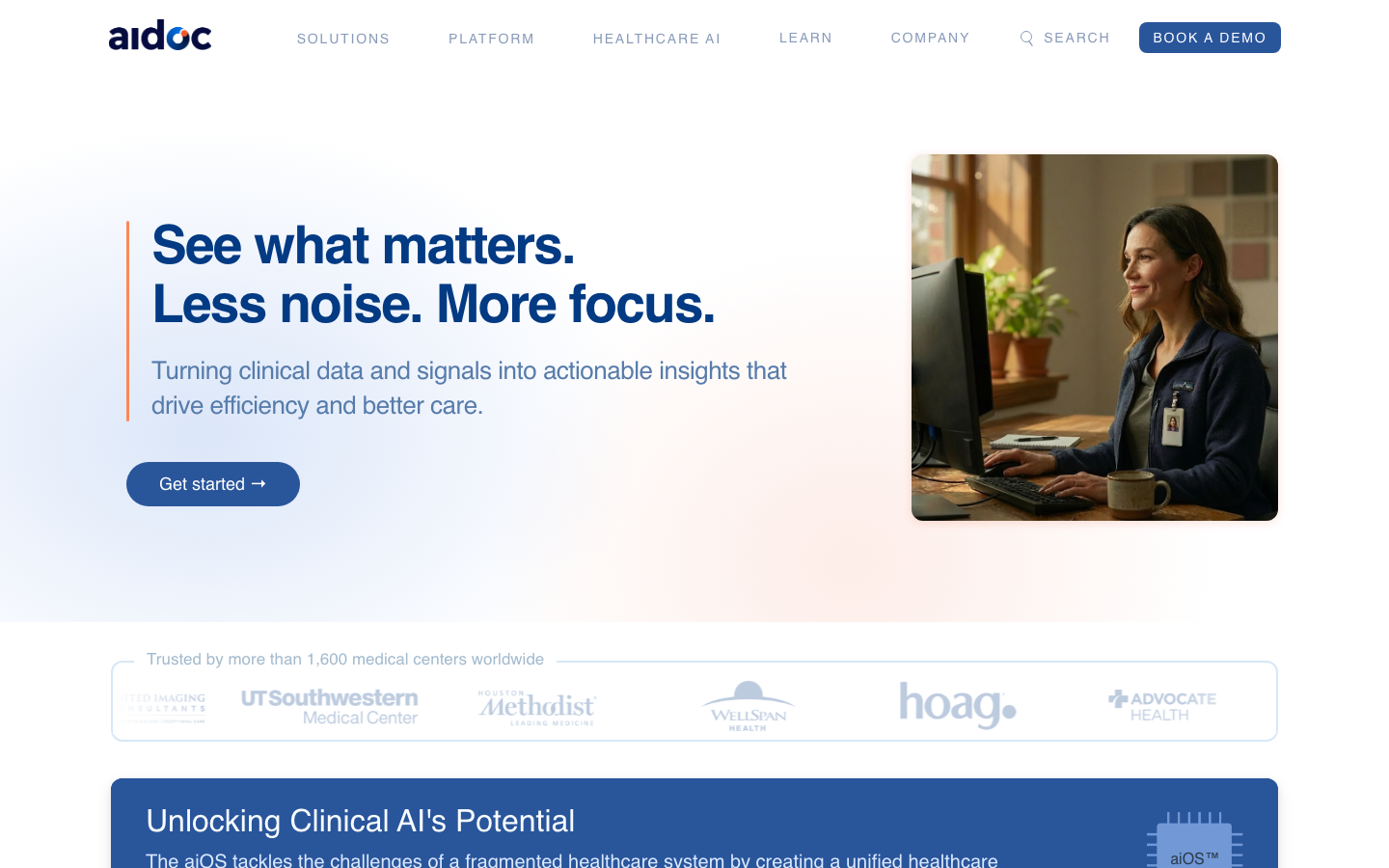
Aidoc: Platform breakthrough of clinical AI operating system and implementation guide for radiology department
Core parameters and statistics of Aidoc
Aidoc's core competitive barrier lies not in the accuracy of a single algorithm, but in the architectural advantage of "a single platform carrying the largest combination of FDA-approved AI algorithms." The following parameters reflect its positioning as an enterprise-grade clinical AI infrastructure:
| Parameter items | Public information |
|---|---|
| Product positioning | Enterprise-level clinical AI operating system, radiology and multi-specialty image analysis |
| Core Platform | aiOS™ (AI Operating System) |
| Number of FDA-approved algorithms | Largest combination on a single platform (specific numbers are not disclosed, including own + partner algorithms) |
| Covered specialties | Radiology, cardiovascular, neurovascular, vascular surgery |
| Patient Coverage | Covers approximately 75% of the patient population in deployed institutions |
| Global deployment | 1,600+ medical institutions (including community hospitals to large academic centers) |
| Business Model | Enterprise Annual Subscription + Algorithm Module License Fee |
| Pulmonary embolism notification time improved | 31% shorter (compared to baseline without AI) |
| Improved stroke puncture time | Shortened by 34% (about 38 minutes), directly expanding the thrombolytic treatment window |
| Establishment/Headquarters | Established in 2016 / United States (Israel R&D Center) |
| Core integration standards | HL7 FHIR, DICOM, and mainstream PACS/EHR docking |
Parameter Interpretation: The number of FDA-approved algorithms is the core moat in the field of clinical AI - each additional algorithm approved means that one more disease scenario can be included in AI automated analysis. Aidoc’s strategy is not to pursue the top accuracy of a single algorithm, but to rapidly expand the types of diseases covered through platformization. The 75% patient coverage means that in hospitals that have deployed aiOS, most imaging examinations can be analyzed by at least one AI algorithm, rather than just covering specific departments.
Positioning differences with competing products: Aidoc, Viz.ai, and PathAI represent three different clinical AI commercialization paths. The following comparison reveals their respective strategic trade-offs:
| Comparative Dimensions | Aidoc | Viz.ai | PathAI |
|---|---|---|---|
| Core strategy | Platform-based multi-algorithm coverage | Deep penetration into single disease (stroke) | Pathology AI + drug research and development |
| Target users | Radiology + multi-specialty | Neuro/vascular specialty | Pathology + pharmaceutical companies |
| FDA algorithm coverage | Largest portfolio | Focus on neurovascular | Focus on pathological diagnosis |
| Platform openness | Open third-party algorithm access | Closed ecology | Limited openness |
| Applicable institutions | Large medical groups | Stroke centers | Pathology laboratories/pharmaceutical companies |
| Expansion path | Horizontally expand disease types | Vertically deepen workflow | Vertically deepen pathology AI |
Users and market recognition of Aidoc
Aidoc's market recognition is based on the three pillars of "verifiable clinical indicators + large-scale installed capacity + regulatory compliance accumulation" rather than pure brand reputation.
-
Installed Density of 1600+ Institutions: Customers span the full spectrum from community hospitals to large academic medical centers. Public examples of partnerships include St. Luke's Health System, Yale New Haven Health, Renown Health, Wake Forest Baptist Health and others. In the field of radiology AI, the installed capacity ranks first in the world. Verification Points: The installed capacity is not equal to the active usage rate. The actual adoption rate of AI-assisted diagnosis needs to be evaluated based on the monthly active algorithm calls of each institution.
-
Quantifiable improvements in clinical indicators: The efficiency indicators provided by Aidoc have clear clinical implications - a 31% reduction in pulmonary embolism notification time means that the time from completion of imaging to the clinical team knowing the positive result is reduced from about 60 minutes to about 40 minutes; the "door-to-puncture" time for stroke patients is shortened by 34% (about 38 minutes). In an acute ischemic stroke scenario, every 1 minute shortened may mean more brain tissue is saved. These metrics, derived from real-world studies rather than laboratory simulations, are key to persuading hospitals to make purchases.
-
First-mover advantage in regulatory compliance: Accumulated mature experience in the FDA 510(k) filing path, including algorithm change management, continuous performance monitoring and recertification processes. For hospitals, this means lower risk of regulatory review—Aidoc’s compliance system has been verified through multiple rounds of FDA reviews, rather than a startup filing for the first time.
-
Industry Standards Guidance: The BRIDGE Guidelines framework provides medical institutions with a systematic AI implementation methodology, covering the four stages of assessment, integration, verification, and monitoring. The AI Path training program extends from "purchasing software" to full empowerment of "clinical operations". This strategy of "selling methodology rather than just software" reduces the decision-making resistance of large hospitals in deploying AI.
Market Risk Warning: Competition in the clinical AI market is intensifying - giants such as Google Health and Nuance (Microsoft) are accelerating the deployment of AI in radiology, while a large number of startups are also competing for FDA approval in segmented disease fields. Whether Aidoc's platform strategy can continue to attract third-party algorithms to settle in depends on whether the platform distribution value is greater than the direct income from independent sales.
Cost Advantages of Aidoc
Aidoc's cost structure is completely oriented to medical institutions rather than individual consumers, so its definition of "cost advantage" is completely different from that of C-end AI products - it is not measured by the unit price, but by the return on efficiency improvement (ROI) compared to traditional workflows.
C-side/individual users: Aidoc does not provide independent products for individuals. Patients cannot subscribe or purchase its AI analysis services directly, and all AI-assisted diagnoses are delivered indirectly through medical institutions that have deployed aiOS. This contrasts with Viz.ai’s direct notification service for patients.
Developers/Third Party Algorithm Vendors: Aidoc’s partner program allows third-party AI algorithm developers to connect their algorithms to the aiOS platform for distribution. Terms of the partnership are undisclosed and typically involve a revenue-sharing model and division of compliance responsibilities. For hospital IT teams, aiOS provides standard system integration interfaces (HL7 FHIR, DICOM), but does not open public API pricing for independent developers. This is an implicit threshold for small startups that want to develop their own algorithms - they need to meet both Aidoc's technology access standards and FDA compliance requirements.
Enterprise/medical institution (three-tier cost breakdown):
| Cost hierarchy | Cost components | Estimate scope | Description |
|---|---|---|---|
| Platform basic license | aiOS platform use + basic AI module | Graded by hospital size and annual imaging volume, undisclosed | Includes platform operation and maintenance, technical support, and basic algorithms |
| Algorithm module fee | Activation by specialty/disease area | Each module is priced separately, undisclosed | Hospitals can gradually activate by stages, starting with radiology and then expanding to cardiovascular |
| Implementation and training | System integration + workflow design + team training | One-time fee, fluctuates according to the complexity of the organization | Includes PACS/EHR docking, rule configuration, role training |
| Annual Maintenance | Ongoing Support + Algorithm Updates + Compliance Maintenance | Typically 15%-25% of base license | Includes FDA change management support and version upgrades |
Three key points of hidden costs:
- Integration Adaptation Cost: The complexity of integrating aiOS with the hospital’s existing PACS/EHR depends on the degree of standardization of the system. Hospitals based on old DICOM Modality Worklist or non-standard HL7 interfaces may require additional middleware or custom development, and this cost is often exposed during the implementation phase.
- Cost of Workflow Change: AI-assisted diagnosis is not "installed and effective". Radiologists need time to adapt to the way AI labeling works, and "alarm fatigue" (a decrease in trust caused by too many false positives) in the initial stage is a common challenge that needs to be alleviated through threshold tuning and training.
- Algorithm switching cost: Once a hospital is deeply bound to the aiOS ecosystem (workflow, notification rules, and follow-up management are all based on this platform), the cost of data migration and workflow reconstruction when switching to a competing platform is extremely high. This lock-in effect is beneficial to manufacturers, but it constrains the long-term bargaining power of hospitals.
ROI Deduction: Taking a medium-sized hospital with an annual imaging examination volume of 150,000 as an example, if AI assistance allows radiologists to handle 15% more cases per day (approximately reducing 0.5-1 full-time manpower requirements), annual labor costs will be saved by approximately US$300,000-600,000 (estimated based on the annual salary of US radiologists of US$300,000-500,000). Based on this rough calculation, when the annual license fee of the platform is in the range of US$200,000-400,000, the ROI can be positive within 1-2 years. However, this deduction is based on an estimate of public statistical data, not an official commitment from Aidoc, and does not include implementation costs and maintenance fees.
Main functions of Aidoc
Aidoc's functional system is designed around the full link of "image analysis → prioritization → cross-disciplinary notification → closed management", rather than focusing on AI detection of a single image.
-
aiOS enterprise AI operating system (platform core): Unified orchestration and management of the workflow of all AI algorithms. Supports parallel running of multiple algorithms - the same CT can be analyzed by the pulmonary embolism algorithm, pneumothorax algorithm and coronary artery calcium algorithm at the same time, and the results are summarized in a unified interface. Automatically routes image data to corresponding algorithms, centrally presents analysis results, and provides cross-specialty care coordination capabilities. Acceptance concerns: The delay superposition effect when multiple algorithms are concurrent, it is necessary to ensure that the total analysis time does not exceed 3-5 minutes in emergency scenarios.
-
AI analysis of radiology department emergencies: Automatically analyze CT, X-ray MRI and other images to detect common emergencies such as pulmonary embolism, pneumothorax, intracranial hemorrhage, and cervical spine fractures. AI results are embedded in the radiology department worklist (Worklist) in the form of priority tags, helping radiologists deal with high-risk cases first instead of browsing in order of examination time. Implementation Tips: The balance between positive detection rate and false positive rate needs to be adjusted according to the actual workload of each department - departments with large emergency volume tend to increase sensitivity to avoid missed diagnoses, but excessive false positives will reduce doctors' trust in AI markers.
-
Cardiovascular AI Suite: Covers algorithms such as coronary artery calcium (CAC) scoring, echocardiography analysis, and aortic disease detection. The key technical node is the automatic management of "incidental findings" - after coronary artery calcification is identified in chest CT, the patient follow-up process is automatically triggered (generating follow-up recommendations, notifying the attending doctor, and arranging specialist outpatient services), turning "it is written in the imaging report, but no one follows up" into "find and act". The actual effect of this function highly depends on whether the hospital has set up clear follow-up responsibilities and standardized processes.
-
Neurovascular AI Suite: Covers emergency neuroimaging analysis of acute ischemic stroke (LVO detection), intracranial hemorrhage, cerebral aneurysm, cervical spine fracture, etc. While integrating with the radiology department work list, positive notifications are simultaneously pushed through mobile applications (such as a dedicated interface for neurologists), and the patient's medical history and current medication information are displayed in combination with the EHR clinical context, shortening the time from imaging completion to the start of the interventional treatment team.
-
Nurse coordination and patient management (cross-specialty coverage): After the AI detects a positive result, it automatically notifies the relevant clinical team, triggers consultation requests, arranges specialist referrals, and tracks the completion status of patient follow-up. This is a comprehensive management from "image discovery" to "treatment execution", which solves the problem of information transmission gap in multi-specialty collaboration scenarios. For example: After emergency CT detects aortic dissection, aiOS notifies the radiology department, emergency department, and vascular surgery team at the same time, and creates a consultation task in the EHR to avoid single-channel notifications being missed.
-
CARE™ Basic Model (Technology Foresight): The multi-task basic model launched in 2026 aims to use a single model to handle multiple image analysis tasks, replacing the traditional model of maintaining multiple dedicated algorithms. It is currently in the early deployment stage, and the actual disease types covered and cross-disease performance need to be verified by more clinical data. Risk Warning: The trade-off between the "universality" and "specialty accuracy" of the basic model is the core problem of clinical AI - a model that is too general may not be as good as a dedicated algorithm in identifying rare diseases.
Aidoc’s model and version evolution
The version evolution of Aidoc reflects the typical path of the medical AI industry: from single-point algorithm → platform integration → basic model exploration.
2016-2022: Single-point algorithm accumulation period
- 2016: The company was established and initially focused on the research and development of AI algorithms for emergency radiology.
- 2018: The first batch of FDA 510(k) approvals were obtained, covering intracranial hemorrhage and pulmonary embolism detection-these two indications are the most urgently needed but one of the highest missed diagnosis rates in emergency radiology departments.
- 2020-2022: Continue to obtain more FDA approvals, and gradually form an algorithm combination covering a variety of emergency and incidental diseases such as pneumothorax, aortic dissection, cervical spine fracture, pulmonary nodules, etc. The delivery form at this stage is multiple independent AI algorithm products, which hospitals need to deploy and manage separately.
2023-2025: Platform transformation and specialty expansion
- 2023 (aiOS v3.0): Transforming from a single algorithm product to a unified AI operating system aiOS, this is the most important strategic turn in the history of Aidoc. Core changes include: unifying the algorithm orchestration layer, supporting third-party algorithm integration, cross-specialty workflow orchestration, and centralized result presentation. For hospitals, this means moving from “managing multiple AI boxes” to “one platform managing all AI.”
- 2025 (aiOS v5.0): Introduce echocardiography analysis and coronary artery disease management functions, officially extending AI coverage from radiology to cardiovascular and vascular surgery. Key features: Inter-specialty care coordination - AI test results can trigger the response process of radiology and cardiovascular departments at the same time, rather than working independently.
2026 to present: basic model and ecological expansion
- 2026 (aiOS 2026 Release/CARE™): Launch the CARE™ basic model to explore the architectural direction of multi-task clinical AI. At the same time, the partner algorithm ecosystem will be expanded to include more third-party algorithms into aiOS distribution. The strategic intention of this stage is to reduce the cost of algorithm development for new disease coverage through basic models, and to make up for the disease areas not covered by its own algorithms through the partner ecosystem.
Candidate verification and third-party algorithms
The entry of third-party algorithms into aiOS requires technical integration verification and FDA compliance review. The specific access standards and verification cycle have not been made public. Potential challenges: The quality consistency of third-party algorithms, the frequency of updates, and the division of responsibilities for FDA change management—the attribution of responsibilities when problems occur with third-party algorithms are terms that need to be clear in hospital procurement contracts.
Aidoc’s technical advantages
Mechanism — Effect — Scenario: Aidoc’s AI algorithm is based on deep convolutional neural network (CNN) and Transformer architecture, and is optimized for different imaging modalities such as CT, X-ray, and ultrasound. The training data scale reaches tens of millions of annotated images, and the model can identify abnormal signs from emergency images and automatically classify them (positive/negative/critical value). Unlike general vision models (such as classification models based on natural images), Aidoc's algorithms are specifically optimized for the specific challenges of medical imaging: low-contrast lesion detection, robustness to anatomical structure variations, and adaptation to differences in image quality from different equipment manufacturers. Effectively, AI pre-screening allows radiologists to prioritize AI-marked high-risk cases in their work lists, reducing delays caused by work list accumulation. Applicable scenarios: Medium and large hospitals with a large volume of emergency imaging but insufficient staffing in the radiology department, especially during night shifts and weekends.
aiOS platform architecture - from "algorithm stacking" to "system orchestration": Unlike most single-point AI algorithm products, aiOS is essentially an "AI orchestration layer" - it is not just a collection of algorithms, but a complete workflow engine. Key design features include:
- Automatic Image Routing: After the CT scan is completed, aiOS will simultaneously route the images to all applicable AI algorithms according to the configuration rules (such as simultaneous analysis of pulmonary embolism, pneumothorax, and coronary calcium), rather than allowing each algorithm to independently capture images.
- Result Prioritization: Summarize the output of all AI algorithms and generate a unified priority queue according to criticality, instead of letting doctors switch between independent result interfaces for each algorithm.
- Workflow trigger: Positive results can not only be displayed on the interface, but also automatically trigger subsequent actions (notification, consultation request, follow-up task creation), transforming "AI analysis results" into "clinical actions".
- Engineering Advantages: This architecture avoids the problem of "the more algorithms, the more chaotic the system", allowing hospitals to gradually expand AI coverage without replacing infrastructure. For hospitals that have deployed algorithms from multiple AI vendors, aiOS can serve as a "unified scheduling layer" rather than replacing all existing algorithms.
Technical path of CARE™ basic model: Aidoc's CARE™ basic model represents the evolution direction of clinical AI from "single-task dedicated model" to "multi-task basic model". The technical logic is: use a basic model pre-trained on diverse medical images to adapt to different analysis tasks (such as bleeding detection, embolism detection, fracture detection, etc.) through fine-tuning, rather than training independent models from scratch for each task. In theory, this can reduce the marginal development cost of new disease coverage and achieve better performance through transfer learning in rare disease scenarios. However, this technology is still in the early deployment stage, and more peer-reviewed studies are needed to verify its performance stability, hallucination rate control, and comparison with dedicated algorithms in real clinical situations.
BRIDGE Implementation Framework—from technical products to implementation methodology: Aidoc’s differentiation lies not only in its algorithm, but also in its mature AI implementation methodology. BRIDGE Guidelines cover four stages:
- AI Assessment: Pre-evaluate the hospital’s clinical processes and data quality IT infrastructure to determine whether it meets the prerequisites for AI deployment.
- Workflow integration: Design specific ways to integrate AI results into existing clinical workflows, including trigger rules, notification paths, and responsibility allocation.
- Clinical Validation: Prospective or retrospective validation in the deployment environment to confirm that the performance of the algorithm in the local patient population meets the standards.
- Continuous Monitoring: Establish a continuous monitoring system for AI algorithm performance, and track indicators such as false positive rate, false negative rate, and doctor acceptance.
For hospitals, this means not only purchasing a set of software, but obtaining a proven AI implementation path, significantly reducing the risk of "buying it but not using it".
How to use Aidoc
Aidoc provides enterprise-level deployment for medical institutions and does not allow individual registration or self-service trials. The typical access process is divided into stages as follows:
| Stages | Main Activities | Estimated Cycle | Participating Roles |
|---|---|---|---|
| Needs assessment | Determine priority deployment specialty scenarios and assess IT infrastructure readiness | 2-4 weeks | Hospital CMIO/IT team Aidoc solution consultant |
| Platform deployment | aiOS integration with hospital PACS/RIS/EHR system, configuration of image routing rules | 4-8 weeks | Aidoc implementation engineer, hospital IT team |
| Algorithm activation | Activate corresponding AI algorithm modules by specialty, set positive thresholds and notification rules | 1-2 weeks | Aidoc clinical specialist, director of radiology department |
| Workflow Design | Work with clinical teams to design how AI results fit into existing workflows | 2-4 weeks | Radiologists, Specialists, Care Coordinators |
| Training goes live | Radiologists, specialists and IT team receive operational training | 1-2 weeks | Aidoc training team |
| Continuous optimization | Monitor performance, utilization and clinical time metrics through aiOS management console | Continuous | Hospital AI operations team |
Integration interface description: aiOS interfaces with the hospital's existing system through the HL7 FHIR (for EHR data exchange) and DICOM (for imaging data exchange) standard protocols. For older PACS systems that do not support standard interfaces, additional adaptation layers or middleware may be required.
Key Implementation Threshold: The premise for the deployment of Aidoc is that the hospital has completed basic digital construction (the PACS system is running normally, the RIS system covers the entire inspection process, and the EHR system supports structured data entry). For hospitals that are still using film or semi-digital workflow, the conditions for the implementation of AI-assisted diagnosis are not yet mature.
Product Pricing for Aidoc
Aidoc does not publish a standard price list and all pricing is determined through business negotiations. The following is an analysis of the pricing structure based on industry practice. The specific amount is subject to Aidoc's official quotation:
- Platform basic license fee: Pricing is graded based on the size of the medical institution and the annual imaging examination volume. Includes aiOS platform usage rights, basic AI modules (such as radiology emergency suite), standard technical support and platform updates. Estimate range (unofficial): For a medium-sized hospital with an annual imaging volume of 100,000 to 200,000 cases, the annual license fee may be in the range of $200,000 to $500,000, and for a large academic medical center it may be more than $1 million.
- Algorithm Module Fee: Priced separately by specialty and disease area. Radiology emergency packages are usually required, with cardiovascular and neurovascular packages available as optional extras. Hospitals can gradually activate in stages, starting with the emergency radiology department, and then expand to other specialties after verifying the value of AI.
- Third Party Algorithm Fee: Partner algorithms distributed through aiOS, pricing is set by the partner, and Aidoc charges a platform distribution fee (usually 15%-30% of revenue). When hospitals sign contracts directly with third-party algorithm vendors, they need to confirm compatibility with the aiOS platform and support boundaries.
- Implementation and Training Fee: One-time fee, including system integration, workflow design, team training and go-live support. The cost range depends on the hospital's IT complexity (number of interfaces, customization requirements, multi-hospital deployment, etc.).
- Annual Maintenance Fee: Usually 15%-25% of the basic license fee, including ongoing technical support, algorithm updates, FDA compliance maintenance and platform upgrades.
First Five Checklists for Purchasing:
- Confirm the integration compatibility of aiOS with the current PACS/EHR system (Aidoc is required to provide integration cases from at least three hospitals of similar size).
- Request clinical validation data of the algorithm on local patient populations or similar populations (rather than relying solely on generic data from FDA 510(k)).
- Clarify the responsibility for managing algorithm updates and new FDA-approved versions—whether updates are automatically included in the maintenance fee or billed separately.
- Confirm data security compliance—HIPAA compliance certification status, data storage location, and whether patient data is used for model retraining.
- Evaluate exit costs - data export plan when terminating the contract, workflow switching path after algorithm deactivation.
Application scenarios of Aidoc
The following four types of scenarios have undergone real-world verification on a certain scale in Aidoc's deployed institutions. The implementation conditions and verification focus of each type of scenario are different:
-
Radiology emergency image hierarchical processing: After the CT scan is completed, aiOS automatically analyzes and marks positive cases as high priority in the radiology department work list. Radiologists first handle critical cases marked by AI (intracranial hemorrhage, pulmonary embolism, aortic dissection), and routine cases are handled in the normal order. Verification Points: The consistency between AI priority marking and radiologist's actual emergency judgment needs to be reviewed regularly after deployment - if the false positive rate of AI is too high and causes doctors to frequently process non-critical markings, it will reduce work efficiency. It is recommended to review monthly in the initial stage of deployment and then switch to quarterly review after stabilization.
-
Clinical management of incidental findings is limited: Coronary artery calcification or pulmonary nodules incidentally discovered in chest CT are often only mentioned in the radiology department report in the traditional process, but no one actively follows up. After automatic recognition by AI, the patient management process is triggered - generating follow-up recommendations, notifying attending doctors, and arranging specialist outpatient clinics - turning "radiology department reports are written, but no one follows up" into "discovery and action". Implementation Tips: The actual effect of this function is highly dependent on the depth of participation of the hospital's quality management team - it is necessary to jointly set follow-up triggering conditions (such as CAC score threshold, nodule size classification) and responsibility allocation rules (who is responsible for notifying patients and who is responsible for arranging follow-up visits).
-
Multi-hospital Stroke Network Collaboration: In a regional medical group, CT images from primary hospitals are automatically analyzed through aiOS, and positive results are notified to the hospital's emergency department and the group's stroke center at the same time. Stroke center experts can receive AI analysis and original imaging data through the mobile terminal when the patient is transferred to the hospital, and directly enter the intervention process upon arrival, eliminating the time of repeated imaging and re-evaluation. Applicable premise: The medical group has established a standardized referral process and image sharing mechanism. AI notification only accelerates rather than replaces the existing collaboration path.
-
Vascular surgery emergency and elective surgery planning: AI automatically detects vascular emergencies such as aortic dissection and abdominal aortic aneurysm, and quantifies anatomical parameters (such as dissection range and aneurysm diameter) to provide preoperative planning reference for interventional surgery. In elective scenarios, AI-assisted coronary calcium scoring can be used for preoperative risk assessment to help vascular surgeons decide whether coronary intervention is needed before non-cardiac surgery. Key points of verification: The consistency rate between AI quantified anatomical parameters and intraoperative findings requires a continuous comparison mechanism to be established at the department level.
Applicable groups of Aidoc
Users and beneficiaries of Aidoc are spread across multiple clinical, technical and managerial roles, with significant differences in the types of benefits and perceived value.
-
Radiologists and imaging diagnostic teams: the most direct user groups. AI pre-screening reduces the time of searching for positive results among a large number of negative cases, and is particularly effective when the emergency department has a large volume (more than 200 CT cases per day) or when night shift resources are tight. Prerequisite: The department has completed the digital imaging workflow transformation (PACS full coverage, structured reporting system ready). Not suitable: For small departments with an annual imaging volume of less than 30,000 cases, the efficiency improvement brought by AI assistance may not be enough to cover the platform cost, and doctors may prefer the certainty and controllability of traditional workflows.
-
Hospital Information and AI Strategy Department (CMIO, CIO): The decision-making group responsible for clinical AI evaluation, procurement and deployment. The platform design of aiOS allows it to gradually expand AI coverage—first piloting the emergency department in radiology, and then expanding to cardiovascular, neurological and other specialties after verifying the effect. Core considerations: The complexity of integrating the platform with existing IT systems, the maintenance burden of algorithm updates and FDA compliance, and the sustainability of the third-party algorithm ecosystem. Not applicable: Small hospitals or primary health centers that have not yet completed basic digitalization of PACS - AI-assisted diagnosis requires a stable digital imaging workflow as a prerequisite.
-
Emergency Department and Specialist Clinicians (Cardiovascular, Neurological, Vascular Surgery): Indirect users, but benefit significantly. AI automatic detection and cross-specialty care coordination functions allow specialists to intervene in patient management earlier - neurologists can receive stroke AI analysis results and image links within 5-10 minutes after the patient's CT is completed, instead of waiting for up to 1-2 hours for a formal report. Prerequisite: The hospital has deployed aiOS and activated the corresponding specialty AI module, and the doctor is willing to use the mobile terminal to receive notifications (instead of relying on traditional phone notifications).
-
Hospital Quality Management and Administrative Decision-making Level: Focus on the improvement effect of AI deployment on medical quality indicators (such as Door-to-Needle time, Door-to-Puncture time, average hospitalization days), rather than the technology itself. The continuous monitoring phase in the BRIDGE implementation framework provides a methodology for correlating AI effects with quality indicators, but the actual implementation depends on whether the hospital quality management department is willing to invest manpower in data collection and analysis.
Unsuitable Boundary: Aidoc is not suitable for non-imaging medical data analysis (such as genomics, electronic medical record text mining, drug research and development), does not provide individual remote diagnosis or health management services, and does not cover specialized fields such as pediatric imaging, prenatal ultrasound, or intraoperative pathology. For community hospitals whose annual imaging examination volume is less than 50,000, the return on investment between platform license fees and efficiency improvements needs to be carefully evaluated. It is recommended to start with a pay-as-you-go or specialized limited-time pilot model instead of directly signing a multi-year full platform contract.
Summary and Outlook of Aidoc
Through the aiOS platform strategy, Aidoc has established a differentiated positioning from "single point algorithm" to "operating system" in the field of clinical AI. The scale of deployment in 1,600+ medical institutions, multiple time improvement indicators supported by clinical evidence (pulmonary embolism notification shortened by 31%, stroke puncture shortened by 34%), and the methodological barriers of the BRIDGE implementation framework, together constitute its current market moat.
Quantitative deduction of cost reduction and efficiency improvement (estimate based on public information, unofficial commitment):
- Radiologists: AI pre-screening increases the average daily effective diagnosis time of each doctor from about 4 hours to about 4.8 hours (+20%), which is equivalent to releasing the capacity of one person for every five doctors in the team.
- Emergency Department: The stroke notification time has been reduced from about 45 minutes to about 30 minutes, gaining a critical window period for thrombolytic treatment.
- Hospital IT Team: By managing all AI algorithms on a single platform, the operation and maintenance burden is reduced from the maintenance of multiple independent systems to the maintenance of a single platform. It is estimated that the IT team's man-hour investment in AI operation and maintenance will be reduced by approximately 40%.
- Prerequisites: The above deduction is based on real-world research data publicly released by Aidoc and the average workload of medium-sized hospitals. Actual results vary depending on department workflow, staffing, and patient population.
Human-machine collaboration boundary (based on process characteristic analysis):
- Can be 100% automated: AI pre-analysis of images, preliminary classification of positive/negative/critical values, and standardized follow-up notification trigger generation. These procedures can be completed automatically by aiOS without manual intervention, but the results still need to be reviewed and confirmed by a doctor.
- Manual confirmation required: The final diagnostic confirmation of all AI positive results must be completed by a certified radiologist; AI-triggered treatment decisions (such as thrombolysis, interventional surgery) must be reviewed and confirmed by specialists; procedures involving patient notification and informed consent require the direct participation of clinicians. Irreversible operations (such as surgical arrangements, medication prescriptions) need to have Human-in-the-loop confirmation points throughout the entire process, and AI is not allowed to execute them directly.
Current Limitations and Uncertainties:
- Validation Gap of CARE™ Basic Model: From FDA-approved dedicated algorithms to multi-task basic models, the regulatory path is unclear. There is a tension between the "black box" nature of the underlying model and the FDA's requirement for interpretability, and its clinical deployment may face greater scrutiny than a dedicated algorithm.
- Third-party algorithm quality control: The performance consistency of partner algorithms, the frequency of updates, and the division of FDA change management responsibilities may become hidden dangers in the expansion of the platform ecosystem. The performance benchmark and exit mechanism of third-party algorithms should be clearly agreed upon in the procurement contract.
- The gap between the depth of integration and actual implementation: Differences in the degree of standardization of PACS/EHR systems in different hospitals may cause the implementation cycle to be extended from the expected 4-8 weeks to 3-6 months, and some old systems may require additional middleware modifications.
- Intensified competition and maintenance of differentiation: Giants such as Google Health and Nuance (Microsoft) are accelerating the deployment of AI in radiology, while vertical players such as Viz.ai are also deepening into specialized workflows. Whether Aidoc's platform advantage can be sustained depends on whether the network effect of the third-party ecosystem can reach critical scale before the giants enter the market.
Procurement/Adoption Risk Assessment: Aidoc is suitable for medium and large medical groups with clear AI strategic plans (annual imaging volume of more than 100,000 cases, PACS/EHR digital transformation has been completed, and a full-time clinical AI team). For hospitals that introduce clinical AI for the first time, it is recommended to start with the emergency AI pilot in the radiology department (3-6 months period), set clear quantitative acceptance indicators (such as notification time reduction rate, doctor utilization rate, false positive rate), and then expand to the entire platform after verifying the ROI. During contract negotiations, focus should be placed on: definition of responsibilities for algorithm updates and FDA change management, data migration plans (such as how to export processed AI-enhanced data when the contract is terminated), and actual verification clauses for platform expansion capabilities.
Related tools:  Midjourney, stable-diffusion
Version Info
- aiOS™ 2026 Release :Added support for basic model CARE™ to expand partner algorithm ecosystem and cardiovascular AI coverage. There is no official precise date yet.
- aiOS v5.0 :Introducing interspecialty care coordination capabilities, extending to vascular surgery and echocardiography analysis. There is no official precise date yet.
- aiOS v3.0 :Platform transformation, from single-point AI algorithms to unified AI operating systems, supporting third-party algorithm integration. There is no official precise date yet.
User Reviews