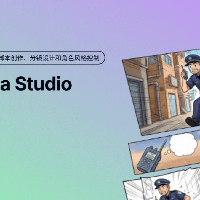
 AIMangaStudio
Free
AIMangaStudio
Free
AIMangaStudio is an open source AI comic creation tool that provides a complete pipeline from scripts to comic pages. Supports natural language script generation, character setting and consistent AI storyboarding, and multi-frame comic PNG/PDF export.
AIMangaStudio
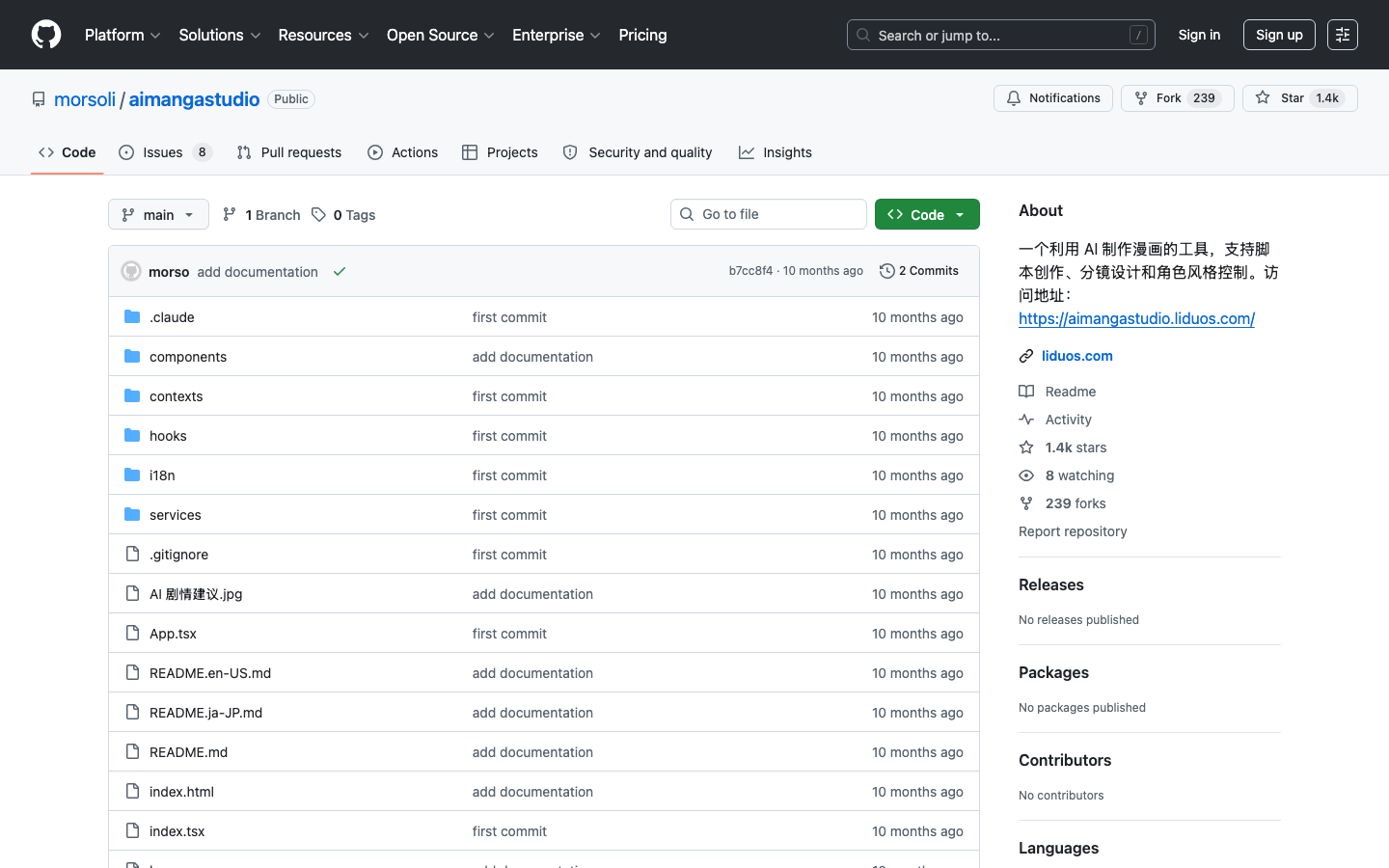
Core parameters and statistics of AIMangaStudio
AIMangaStudio is an open source web application positioned as an end-to-end AI comic creation pipeline for independent creators and small studios. It does not rely on self-developed large models, but uses the Google GenAI API to achieve three core capabilities: natural language script generation, character consistency maintenance, and automatic storyboarding.
| Parameters | Verifiable information |
|---|---|
| Product positioning | Open source AI comic creation tool, end-to-end pipeline |
| Technology Stack | React + Vite + TypeScript + Google GenAI |
| Input method | Natural language script/Character description/Style setting |
| Output format | PNG, PDF (batch export) |
| Deployment method | Local development / Vercel / Netlify one-click deployment |
| Run Youjing | Node.js 18+, npm/yarn |
| Open Source License | MIT |
| Latest Submissions | ~2025-09 (about 10 months ago) |
| GitHub Stars | 1.4k |
| GitHub Forks | 246 |
Brief review in one sentence: AIMangaStudio is not a general-purpose image generation tool, but an integrated "from script to page" pipeline specially designed for comic creation scenarios. The core value lies in packaging the three most tedious aspects of comic production, "character consistency + storyboard layout + batch export", into an open source solution.
Positioning Boundary Statement: It is suitable for assisting creation rather than replacing artists. For professional cartoonists who require fine hand-drawn styles, complex perspective compositions or highly customized cartoon works, AIMangaStudio's current capabilities are still in the "concept proof to assisted production" stage and cannot replace the fine control capabilities of professional cartoon software (such as Clip Studio Paint).
User and market recognition of AIMangaStudio
AIMangaStudio is a GitHub open source project as a carrier, and community data directly reflects its market acceptance.
Community Size: As of mid-2026, the project has received 1.4k Stars and 246 Forks. For a personal open source project that focuses on a niche field (AI comics) and has no commercial promotion, this number shows that it has established basic awareness among the comic creator community. 8 Watch users and 8 Open Issues indicate that the project is actively maintained but not frequently iterated.
Adoption Scenario: There are currently no publicly disclosed large-scale enterprise-level users. Its typical adopters are: independent comic creators with basic development capabilities, digital art learners, and self-media operators exploring AI-assisted content production processes. The one-click deployment to Vercel/Netlify capability provided by the project lowers the threshold for non-technical users, but the step of configuring the underlying AI API Key still blocks some users.
Industry benchmarking: Compared with commercial products (such as Clip Studio Paint's AI function ComicAI, AI Comic Factory, etc.), the core difference of AIMangaStudio is that it is open source and self-hosted - users do not rely on third-party services, data privacy is controllable, and secondary development can be carried out based on the MIT license. But this also means that there is no SLA guarantee and customer support of commercial products, and the update rhythm depends on the maintainer's personal schedule.
Cost Advantages of AIMangaStudio
AIMangaStudio's cost structure adopts the "open source software is free + infrastructure is borne by you" model, which is in sharp contrast to commercial comic tools.
C-side/Individual Creator: The software itself is completely free (MIT license). Individual creators only need to bear the cost of calling the Google GenAI API (pay-as-you-go billing, subject to Google's official pricing) and optional hosting costs (the free Vercel/Netlify quota is sufficient for personal use). Compared to an annual subscription to Clip Studio Paint (about $50-$100/year) or a one-time buyout to Procreate (about $13), the long-term cost advantage is obvious, especially in high-frequency creation scenarios.
Developer/API level: Open source projects allow developers to freely modify and extend. For teams that want to embed comic generation capabilities into their own platforms, AIMangaStudio provides a reference front-end architecture (React + TypeScript) and AI integration model (Google GenAI). But please note: the project does not provide a standardized API package or SDK, and direct integration as a service requires supplementing the back-end orchestration and authentication layer by yourself.
Enterprise/studio level: Small studios can use it for free, but they need to deal with the following hidden costs themselves: GPU or API call fees (depending on whether to replace the underlying model), operation and maintenance manpower (deployment, updates, troubleshooting), and tuning costs for model output quality. The project itself does not have enterprise-level support, nor does it have a commercial version or paid value-added features. Compared with commercial SaaS solutions, subscription fees are saved but technical maintenance costs are increased.
Main functions of AIMangaStudio
The functional design of AIMangaStudio revolves around the core process of comic creation, and AI-assisted tools are provided for every section from script to finished page.
-
Natural language script generation: Enter a plot description or brief prompt words, and AI will automatically generate a structured comic script containing dialogue, narration, and scene description. Synergy effect: The script generation results can be directly used as input for subsequent storyboarding and character setting, reducing the friction in the conversion from copywriting to visuals. In actual use, it is recommended to manually write the story outline and then use AI to expand the dialogue details, rather than relying entirely on AI to generate the plot to ensure narrative coherence.
-
Character and Styling: Supports creating and saving character descriptions and maintaining appearance consistency across multiple pages of comics - this is a key difference between AI comics tools and general-purpose image generators. Synergy: Character setting data will be referenced by downstream storyboarding and rendering modules to ensure that the same character maintains uniform clothing, hairstyle, and facial features in different panels and pages. The current implementation relies on textual descriptions rather than reference images, and the upper limit of consistency is limited by the semantic understanding accuracy of the underlying LLM on the character description.
-
AI storyboard automatic layout: Automatically generate multi-frame comic layout, including dialog box placement, lens switching and reading order arrangement. Supports a variety of grid templates to reduce time investment in manual typesetting. Synergy effect: The storyboard output is linked to the script content - AI automatically determines the number of grids on each page and the distance of the shots according to the rhythm of the plot, reducing the creator's manual splitting workload in the "script → storyboard" stage.
-
Multi-page comic export: Supports PNG (single page) and PDF (entire) format export, and can batch process multi-page comic output. For creators who need to post to social media or print, a one-time batch export saves a lot of repetitive operations compared to page-by-page screenshots.
-
One-click deployment capability: The project provides one-click deployment buttons for Vercel and Netlify, and has preset build scripts in package.json. Non-technical users can complete the online instance setup in minutes, bypassing the configuration obstacles of local development.
Model and version evolution of AIMangaStudio
AIMangaStudio is currently in the early stages of the project, and version evolution is mainly reflected in the GitHub submission history rather than the official Release tag.
Initial release (~2025-01): The project is made public for the first time, and the basic comic generation pipeline is online. The core submission focuses on building the project skeleton, integrating the React front-end with Google GenAI interface docking and basic UI implementation. The first version supports Chinese and English bilingual README and multi-language interface (i18n), showing its positioning for global comic creators.
Functional improvement period (~2025-09): Added AI plot suggestions, character creation, style setting functions and batch export capabilities. Judging from the submission record, user interface screenshots (AI plot suggestions.jpg, character creation.jpg, style settings.jpg, batch export.jpg) are mainly added, indicating that the project has entered the stage of functional promotion and document improvement. There were no new submissions in the next 10 months, and the project entered a stable maintenance period.
Current status of version management: There is no official release version on the GitHub Releases page, and the dates of latest_version and history_versions are project milestone estimates (marked with ~YYYY-MM). The project does not follow Semantic Versioning (SemVer) or provide CHANGELOG, and the update rhythm depends on the maintainer's personal schedule. This is a common status for open source community projects, but it also means that users cannot tell if there are breaking changes or breaking updates from the version number.
Impact of technology stack selection: The project chose the front-end technology stack of React + Vite + TypeScript, with Google GenAI as the AI backend. This means that users' API fees and availability are directly affected by Google's pricing strategy and service availability - if Google adjusts the pricing or model versions of the GenAI API, the user experience of AIMangaStudio will change accordingly, without the project itself needing to release a release.
Technical advantages of AIMangaStudio
The technical advantage of AIMangaStudio lies not in the self-developed underlying model, but in the deep coupling of AI capabilities with the comic creation workflow, as well as the full use of the open source ecosystem and modern web technology stack.
Efficiency gain of front-end technology stack: Based on the combination of React + Vite + TypeScript, Vite provides millisecond hot update development experience and optimized production build (code splitting Tree-shaking), which is especially suitable for comic tool development scenarios that require frequent UI adjustments and iterative functions. TypeScript's type system reduces runtime error rates in data-intensive scenarios such as character setting and storyboard configuration.
Google GenAI as an architectural choice for AI backends: Choosing Google GenAI over self-deployed models means projects don’t need to bear the cost of GPUs and the burden of model operations. Google GenAI's multi-modal capabilities provide underlying support for comic generation - it can not only understand text scripts to generate images, but also handle the consistency of character descriptions. But this also means that the model's reasoning capabilities and output style are limited by Google's currently available API version, and the output style cannot be customized through fine-tuning like a self-deployed open source model.
Ecological value of open source license: The MIT license gives users the greatest freedom of use - the source code can be modified, commercially available, and integrated into their own systems. For studios looking to embed comics generation capabilities into their own content management system (CMS) or publishing pipeline, this licensing model eliminates the risk of lock-in with commercial tools. The community can fork the project and develop branches independently, which is an ecological resilience that cannot be provided by commercial products from a single vendor.
Implementation mechanism of role consistency: Unlike general image generation tools (such as Midjourney, DALL·E) that require users to manually maintain seeds or reference images, AIMangaStudio achieves a "set once, use globally" experience by maintaining structured data of role descriptions on the front end and injecting it as context into the AI model in each generation request. The bottleneck of this implementation lies in the consistency of the underlying model's understanding of text descriptions - if the model produces different visual interpretations of the same character description, the structured data on the front end cannot guarantee consistent output.
How to use AIMangaStudio
AIMangaStudio provides two usage paths: local development and one-click deployment, adapting to users with different technical backgrounds.
Local Development Mode: Suitable for users with Node.js development experience. After cloning the warehouse, execute npm install and npm run dev in sequence to start the development server, and npm run build to build the production version. You need to apply for the GenAI API Key in the Google Cloud Console and configure it in the project.
One-click deployment mode: The project provides one-click deployment buttons for Vercel and Netlify in the README. After clicking the button, users only need to associate the Git repository and configure the API Key context variable to obtain an online-accessible comic creation instance within minutes. This is the most recommended path for non-technical users.
API Key acquisition and security: Generative Language API must be enabled in the Google Cloud Console and an API Key must be created before use. The cost is based on the official pricing of Google GenAI (there is a free quota, and you will be charged on a pay-per-use basis after exceeding it). Developers need to pay attention to the secure storage of API Keys - there is a risk of leakage if the Key is directly embedded in the front-end. It is recommended to inject it through a back-end proxy or a contextual variable.
Running Requirements: Node.js version 18+. Dependency management uses npm or yarn. The project has no back-end services and runs entirely on the browser side (except for AI API calls), so deployment costs are extremely low - even using the Vercel free plan can host personal usage scenarios.
Product Pricing
AIMangaStudio itself is completely free and open source, but the following fees will be incurred during use:
Software Cost: Zero. The MIT License permits free use, modification, and distribution without payment for personal or commercial use.
AI API fee: Relies on the Google GenAI API. There is a free quota for the first use (subject to the latest official Google policy). After that, it will be charged according to the token/image amount. For individual creators, daily use is usually within the free limit; high-frequency commercial use requires an assessment of the monthly API cost. Specific prices are subject to the Google Cloud pricing page, and numbers that may be out of date are not listed here.
Hosting Fee: Both Vercel and Netlify provide free plans, and personal creation scenarios usually do not require upgrading to paid plans. If you use a self-built server or object storage to distribute comic files, corresponding infrastructure fees will be incurred.
Hidden costs: Spend time configuring the development environment, adjusting prompt word parameters to obtain ideal output, troubleshooting API call exceptions, etc. These time costs are particularly significant for non-technical users, who may require a debugging period ranging from hours to days.
Application scenarios
The core scenarios of AIMangaStudio focus on creative scenarios where text ideas need to be quickly transformed into visual comic content.
-
Independent Comic Creation: A complete comic production process from script to page for individual creators. Typical tasks: First use natural language to generate a story script, set 2-3 main characters, AI automatically generates storyboards and page layout, then manually fine-tune it, and finally export the PDF and publish it to the online platform or print. Efficiency deduction: For an 8-page short comic, traditional hand-drawing takes 2-3 days (including storyboards, line drawings, coloring, and dialogue bubbles). AIMangaStudio assists in compressing the first version to 1-2 hours, but subsequent manual refinement still requires 4-8 hours. Boundary of human-machine collaboration: AI completes the script draft and first version visual generation, and humans are responsible for controlling the core concept of the story, fine-tuning the character's emotional expression, and final output quality acceptance.
-
Social media comic content production: Self-media operators need to produce short comics or strips frequently to maintain the activity of social media accounts. Typical tasks: 3-5 4-frame short comics per week, quickly created to match hot topics. Efficiency deduction: The entire process from hotspot identification, script conception to final graphics can be compressed from 4-6 hours to 1-2 hours, but AI-generated content still requires manual filtering of sensitive words and brand tone adaptation. Human-machine collaboration boundary: AI is responsible for rapid drawing and batch typesetting, while humans are responsible for topic selection planning, content compliance review and final release.
-
Digital Art Education and Tutorial: Using comic creation as a teaching case for AI application. Typical tasks: Demonstrate the AI-assisted creative process in a teaching context, allowing students to experience the complete pipeline from text to image. The open source feature allows students to read and modify the source code and understand the integration model of the front-end technology stack and AI API.
-
Rapid Prototyping and Concept Design: Generate comic storyboards and concept drawings before officially entering detailed drawing. Typical tasks: Screenwriters or directors use AIMangaStudio to quickly visualize script fragments, evaluate page rhythm and visual effects, and then decide whether to entrust professional artists to draw them in detail. Efficiency Deduction: It is originally necessary to commission an artist to produce a concept drawing (2-5 days + fee), but AI assistance can generate multiple versions for selection within a few hours.
Applicable people
AIMangaStudio covers multiple levels of users from technical creators to pure content creators through a combination of open source and free + online deployment.
-
Independent comic creators and fan artists: Individual creators who have basic technical skills and want to use AI to speed up the comic production process. Adaptation value: Zero-cost entry, the character consistency maintenance function directly addresses the pain point of "unification of the same character in multiple scenes" in fan creation. Not suitable for the boundary: For professional cartoonists who have extremely high requirements for picture precision and pursue a specific personal style, the AI output style may be too "universal" and require a lot of post-production adjustments.
-
Digital Arts Learners and Educators: Students and teachers who are learning comics creation or AI application development. Adaptation value: The open source React + TypeScript front-end code can be used as a teaching case for learning AI application integration. Not suitable for the boundary: Educational institutions that require a systematic curriculum system or commercial after-sales support are not suitable to rely on open source community projects as their core teaching dependence.
-
Self-media operators and content studios: New media accounts or small studios with comic content as their core productivity. Adaptation Value: Zero licensing cost and one-click deployment make it a low-risk trial-and-error tool for exploring the commercialization of AI comics. Unfit Boundary: A commercial production environment with strict requirements on output stability and SLA - the project has no version commitment and no customer support, and the availability and quality of the AI API completely depend on Google's service status.
-
AI Application Developers and Open Source Contributors: Developers interested in the intersection of AI + authoring tools. Adaptation value: You can fork the project to explore technical solutions for AI comic generation, or develop functional enhancements based on the project framework (such as replacing the underlying model, adding batch processing pipelines, integrating other image generation APIs). Does not fit the boundary: For developer teams looking for mature commercial APIs or SDKs, AIMangaStudio does not provide standardized backend services.
Summary and Outlook
AIMangaStudio provides valuable exploration in the segmented track with its combination of "open source + AI + comic creation pipeline" - it is not the most comprehensive comic tool, but it may be the only one currently that packages script generation, character consistency, automatic ranking and open source licensing for free delivery.
Current Core Advantages: The open source MIT license gives maximum freedom of use; the character consistency maintenance mechanism hits the core pain points of AI comic creation; one-click deployment lowers the threshold for non-technical users; Google GenAI as the backend avoids the high cost of building self-built models.
Current major limitations: The project has had no new submissions for 10 months, and the update rhythm is highly uncertain; there is no formal Release version management, and users cannot track major changes; role consistency relies entirely on text descriptions, and the semantic understanding deviation of the underlying model cannot be compensated for by the front end; AI API fees and service availability are not controlled by the project; the lack of a back-end service layer makes it difficult to embed complex production pipelines.
Follow-up observation points: Whether the maintainers will restart development in the second half of 2026; whether the community fork will form an active branch; whether there will be a commercial version (paid hosting version, customized model version) to ensure long-term sustainability; whether the model upgrade of Google GenAI will bring a capability jump or disruptive change to the project.
Purchasing and Adoption Risk Assessment: For individual creators and learners, with zero cost investment and no compliance risk under the MIT license, it is worthy of being an experience entrance to AI comic creation. For studios that consider comic generation as their core business, it is recommended that: first try it out in non-critical processes to verify whether the output quality reaches the minimum acceptable standard; plan alternatives to the AI API in advance (such as switching to other image generation models); pay attention to project forks and community activity to judge long-term maintainability; and do not rely on open source projects with no version commitments or SLA guarantees as the only infrastructure in production.
Related tools:  Midjourney, stable-diffusion
Version Info
- AIMangaStudio current :Supports text-to-comic generation, character consistency, multi-panel layout, AI storyboarding, PNG/PDF export.
- AIMangaStudio launch :The project is open source and launched online, with a basic comic generation pipeline.
User Reviews