 Contenda
Free
Contenda
Free
Contenda is an AI-driven long content reuse and social media content creation platform. The core scenario is to convert long content such as blog posts, podcast transcriptions, and video scripts into short content that is suitable for multiple platforms (Twitter, LinkedIn, TikTok, Instagram, etc.) through AI, solving the efficiency pain point of "one-time production, multi-channel distribution" for content creators.
Contenda
Contenda’s core parameters and statistics
Contenda is an AI creation tool with "content reuse" as its core concept. It is officially positioned to use AI to automatically convert long-form content (blog articles, podcast transcriptions, video scripts, research reports) into short-form content that is suitable for multiple social media platforms. Its product logic is not generated from scratch, but "one creation, intelligent disassembly, and multi-channel distribution" - this is a rare vertical entry point among AI writing tools.
| Projects | Public Information |
|---|---|
| Product positioning | AI-powered content repurposing platform |
| Core Competencies | Intelligent dismantling of long content, multi-format rewriting, and social media adaptation output |
| Input forms | Blog posts, podcast transcripts, video scripts, document links |
| Output form | Twitter thread LinkedIn post TikTok script, email summary, community Q&A |
| Platform Support | Web |
| Target users | Content creators, social media operations, marketing teams |
| Parent Company | FSH Technologies (formerly Contenda) |
| Founder | Lilly Chen |
Brief review in one sentence: Contenta does not let you "write more", but allows you to "write once and use many times" - its core value lies in reducing the marginal cost of content production to close to zero, rather than raising the quality ceiling of a single piece of content.
Product form: Contenda does not take the pure AI editor route, but adopts an "input-conversion-output" pipeline architecture. Users paste a blog link or upload a podcast transcript, and AI automatically parses it to provide a variety of output format options (Twitter threads, LinkedIn posts, TikTok scripts, email summaries, etc.). It is essentially a "content format conversion engine" rather than a writing assistant.
Market Positioning: In the AI writing tool track, Contenda has chosen the market segment of "content reuse" rather than "creation from scratch". This makes it complementary rather than directly competitive with general AI writing tools such as Jasper and Copy.ai - the latter solves the problem of "cannot write", while Contenda solves the problem of "how to use multiple channels after writing".
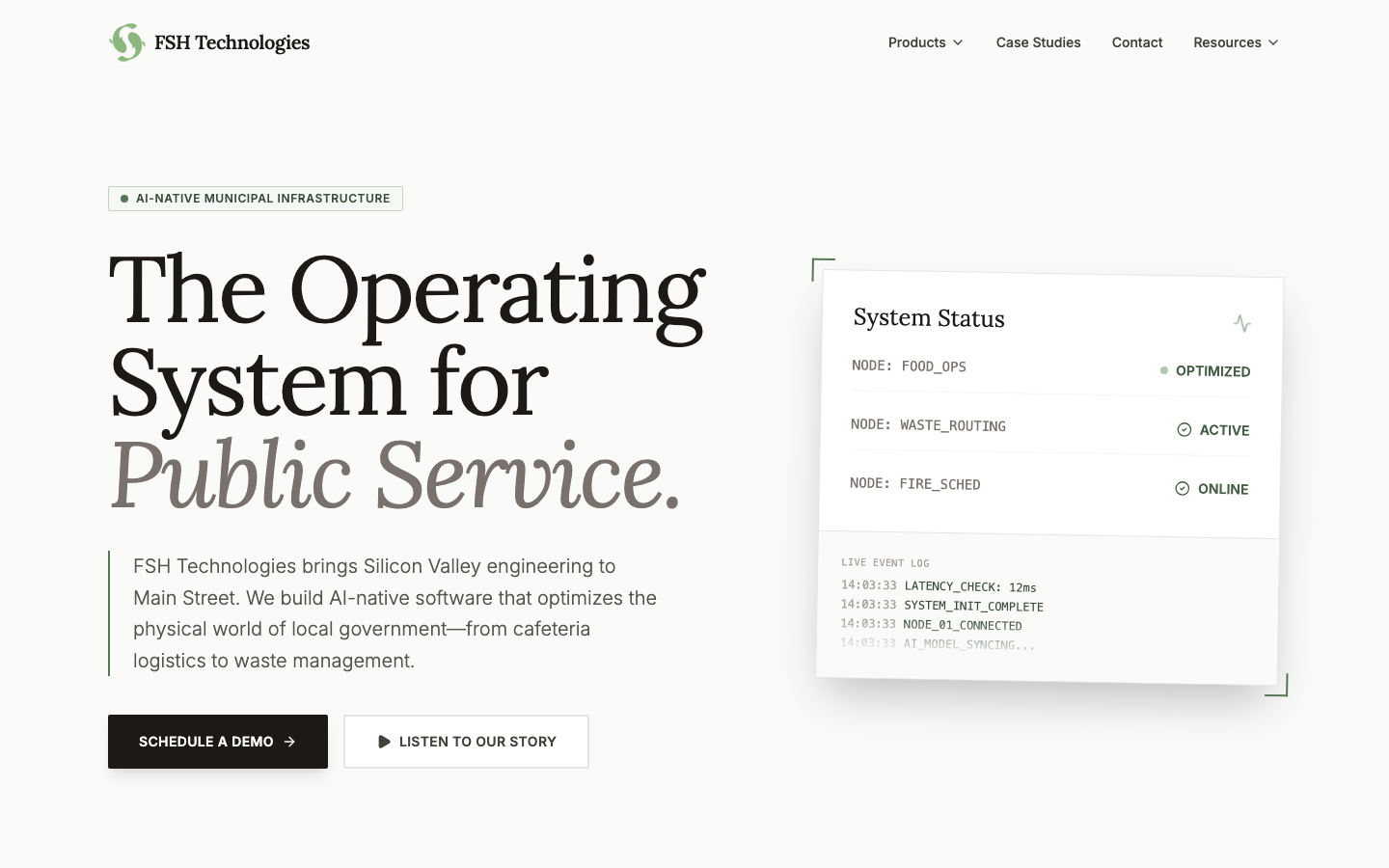
Version Status: Contenda’s original domain name contenda.co is currently redirected to FSH Technologies (government technology company), and the subsequent status of the original product line has not been publicly disclosed. The following content is based on information compiled during the product's public existence. The current availability of the product needs to be verified before purchasing.
Contenda’s users and market recognition
Contenda’s market influence is concentrated in the content creator ecosystem and small and medium-sized marketing teams, rather than large-scale enterprise deployment.
Creator Community Recognition: Contenda has gained a certain reputation in the Twitter creator community, and its core selling point is summarized as "turning a blog into a week of social media content". This positioning accurately captures the pain point of independent creators and podcasters who have "high content output but limited distribution energy." Without large-scale advertising, word of mouth built awareness within the Creator Economy circle.
YC background endorsement: Contenda is a startup company with a Y Combinator background. The founder, Lilly Chen, has previous experience as a Meta engineer. YC endorsement provides credit support for the reliability and continuous iteration of the tool to a certain extent, but for C-side creators, the value of this background is not as direct as direct product experience.
Competitive Landscape: In the content reuse segment, Contenda’s direct competitors include tools such as Repurpose.io and Missinglettr. However, Contenda’s differentiation lies in its AI-driven intelligent rewriting capabilities—not just mechanical interception of snippets, but adaptive rewriting based on the stylistic style of the target platform (Twitter’s short and fast vs. LinkedIn’s professional depth vs TikTok’s colloquial scripts). This capability barrier stands out in the context of the general homogeneity of AI writing tools.
Adoption Limitations: Due to its highly vertical product positioning, Contenda has limited mass market awareness. For users who do not have long-term accumulation of content assets (blogs, podcasts, video channels), the product value is difficult to reflect, which is why the user scale is always limited to the group of "professional creators with existing content assets".
Contenda’s cost advantage
The cost structure varies depending on the usage method: C-side users can usually experience core functions through the free version, and high-frequency usage requires subscribing to paid packages; developers/API users are billed based on the number of calls; enterprise-level users need to contact the business to obtain customized quotations. The specific price is subject to the official real-time pricing page.
Main functions of Contenda
Contenda's functional system is designed around the "content reuse pipeline". It is not a large and comprehensive content studio, but a precise professional conversion tool.
-
Long content parsing and structuring: The core entrance of Contenta is to receive a long content (URL link or direct paste), automatically parse its structure (title, paragraph, list, quote), and extract core arguments and data points. Typical Usage: Paste a 2,000-word blog article into it, and AI will automatically identify 5-7 independently disseminated ideas, saving the time of manual disassembly. This ability is particularly critical in large-scale content matrix operations - operators usually need to read an in-depth content repeatedly before refining the key points. Contenda compresses this section from 15-20 minutes to less than 1 minute.
-
Multi-format intelligent rewriting: After the parsing is completed, Contenda provides multiple output format options, each format is optimized and adapted to the stylistic characteristics of the target platform. Format coverage: Twitter thread (short paragraph + hashtag), LinkedIn post (professional tone + moderate length), TikTok script (colloquial + timestamp), email summary (concise and direct), community Q&A (FAQ style). Expert view: This is not a simple text cutting - the same original text will be split into 3-5 short tweets in Twitter format, and reorganized into an in-depth post with a point of view introduction in LinkedIn format. The bottom layer is AI modeling of user behavior patterns on different platforms.
-
Multi-platform distribution support: The direct value output of Contenta is "one content source → multiple platform-adapted content", but the real efficiency improvement of this function lies not only in the regular content production, but also in the elimination of the hidden labor of "manual typesetting + adaptation on a platform-by-platform basis". A lot of time in social media operations is actually spent on formatting adjustments and platform-specific wording optimization. Contenda improves this methodical semi-automation rate to more than 80% through templating and AI rewriting.
-
Content Asset Management: Contenda provides basic content asset review functions. Users can view past generated content, re-adjust the output format, and reuse parsed content sources. Engineering Perspective: This constitutes a lightweight "content middle platform" - for a team that produces 10+ pieces of social media content every week, the asset traceability function avoids the problem of "content sinking" (lost after production). Each reuse is a secondary realization of the original content investment.
-
Team Collaboration (undisclosed details): Contenda has hinted at team collaboration capabilities, allowing multiple members to share content assets and distribute workflows. The specific functional boundaries and permission granularity are subject to official real-time information.
Contenda’s model and version evolution
Contenda's version iteration can be roughly divided into three stages, each stage reflects the adjustment of product direction:
Initial stage: MVP verification (2024 Q4 ~ 2025 Q1)
Contenda enters the market as an "AI content multiplexer", and its core capabilities focus on long text parsing → multi-format output. The product form at this stage is the simplest - the user pastes the URL, selects the output format, and obtains social media content that can be directly published. The MVP stage verified the real demand for the "content reuse" scenario, and early users were concentrated among independent creators and podcasters.
Function expansion stage: Beta and format expansion (2025 Q2 ~ 2025 Q4)
During the beta phase, Contenda expanded from plain text output to video script format support and richer output templates. The product began to distinguish fine-grained formats such as "Twitter threads" and "Twitter single posts", "LinkedIn long posts" and "LinkedIn opinion posts". In essence, it is building a "content format adaptation map" - allowing the same content source to match the expression habits of different platforms and different scenarios.
Platformization attempt: current stage (2026 ~ present)
The latest version (marked as Contenda current, around ~2026-01) attempts to add more collaboration and asset management capabilities to the product direction, evolving from a single conversion tool to a "content middle platform". However, the original domain name contenda.co has since been redirected to FSH Technologies. The independent iteration status of the original product line is subject to the latest official announcement.
| Version node | Time | Key changes |
|---|---|---|
| Contenda MVP | ~2024-10 | Long content parsing + multi-format output, MVP verification |
| Contenda Beta | ~2025-06 | Extended video script support and rich output templates |
| Contenda current | ~2026-01 | Exploring the direction of team collaboration and asset management |
Contenda’s technical advantages
Contenda's technical route selection reflects the engineering philosophy of "vertical tools" - not doing large model training, but doing in-depth optimization of the "content adaptation layer".
Content Analysis Engine: After receiving the input content, Contenta first performs structured analysis instead of direct rewriting - identifying the article's argument level, argument relationships, and "content units" that can be independently disseminated. This "understand first, then rewrite" pipeline design is different from the "direct generation" approach of most AI writing tools. Engineering Implications: For content with high input quality (blogs with clear structure, podcasts with clear arguments), the quality of rewriting after parsing is significantly better than direct generation; but for fragmented or unstructured input, the loss in the parsing stage will be passed downstream.
Format Adaptation Model: The core technical barrier of Contenda is not in the base model (which has a high probability of calling the GPT series or other commercial LLM), but in the "format adaptation layer" - the prompt template and post-processing rules trained for each output format. For example, the Twitter format needs to limit each tweet to 280 characters, threads need to have hooks, and the LinkedIn format needs a more formal tone and moderate length. This "format-aware" rewriting ability is the key difference between Contenda and general AI writing tools.
Editing efficiency formula: From an engineering perspective, the value of Contenta can be measured by "content reuse rate = output quantity × adaptation quality / input cost". The design goal of the tool is to maximize the numerator (output quantity, adaptation quality) and minimize the denominator (input cost = user's raw material preparation time). This efficiency formula determines that Contenda is most suitable for users with "existing content assets" - for these users, the input cost has been sunk, and the reuse rate is almost a pure benefit.
How to use Contenda
The usage path of Contenda is based on "input-conversion-output", and the entire process is completed on the web side, without installation or technical configuration.
Access & Registration: Visit contenda.co to register an account. Note that the current domain name has been redirected to FSH Technologies, product availability is subject to real-time status. If the product is still online, you can enter the content reuse workbench after registering.
Typical workflow:
- Enter content source: Paste the blog post URL, upload the guest transcript, or paste the long-form content directly. It is recommended to use input with a clear structure and clear argument hierarchy (such as list-style blogs, in-depth articles with subtitles). This type of input can produce higher-quality structured output during the parsing stage.
- Select Output Format: Select the target format from options such as Twitter threads LinkedIn posts TikTok scripts, email summaries, community Q&A, and more. You can select multiple formats at once and generate multiple content drafts.
- AI rewriting and generation: Wait for the AI parsing to complete (usually 30-60 seconds) and preview each generated content. Check content accuracy - AI rewriting may produce deviations in key data and references. It is recommended that manual review be performed before publishing.
- Editing and Export: Fine-tune the generated content in the preview interface, and then copy it to the corresponding social media platform for publication. Contenda itself does not provide one-click publishing function, and you still need to manually paste it to each platform after exporting.
Efficiency Tip: It is recommended to embed Contenda into a fixed content production process - for example, every Monday, import the blog posts published last week and batch generate social media content for the week. This "batch processing" mode maximizes the efficiency benefits of the tool and avoids the context switching penalty of a single use.
Contenda’s Product Pricing
Contenda’s pricing is based on the public real-time page, and the following is based on public information during the product’s existence.
Free Trial: Provides free trial quota, usually after registration, you will get a certain number of free conversion quotas. For users who want to verify that the product meets their workflow needs, the free credit is enough to complete 3-5 full conversion experiences.
Paid Subscription: Paid plans are usually on a monthly or annual basis, with an estimated price range of $15-$30/month (based on the live page). Subscribe to unlock unlimited conversions and more output format choices. Compared to other AI writing tools, Contenda's pricing is in the middle of the pack—lower than Jasper's enterprise plans, but higher than pure AI writing aids.
Team plan: Team pricing details are not disclosed. For multi-person collaboration scenarios, please contact customer service for confirmation. Before purchasing the team's plan, it is recommended to confirm whether the product is still accepting new customer registrations - given that the domain name has been transferred to the government technology business, enterprise-level SLA and service continuity require special verification.
Hidden Costs: The biggest cost of Contenta is not the subscription fee, but the preparation of content ingredients before use. If the team does not have stable long-form content output (blogs, podcasts, research reports), the value of the tool will be greatly reduced. From an ROI perspective, it is recommended to first count the team's "how much high-quality long content can be used as raw material every week" before deciding whether it is worth investing in subscription fees.
Application scenarios of Contenda
The value of Contenda can be maximized in specific scenarios, and its core application scenarios revolve around "multi-channel reuse of existing content assets":
-
Blog Content → Social Media Matrix: A content team that publishes 4-8 blogs per month can convert each blog into 5-7 social media content through Contenda (2-3 Twitter tweets, 1 LinkedIn long post, 1 email summary, 1 social discussion topic). Efficiency deduction: Under the traditional model, it takes operators 2-3 hours to complete the social media distribution planning of a blog; after using Contenda, the AI first draft can be completed in 5-10 minutes, and manual review and fine-tuning add an additional 20-30 minutes. The distribution time of a single blog is reduced from 2-3 hours to 30-40 minutes, and the efficiency is improved by about 70%-80% (deduced value, unofficial commitment).
-
Podcast Transcription → Multi-platform secondary dissemination: Podcasters can import the AI transcribed text of each episode into Contenda to automatically generate Twitter threads (refining golden sentences), LinkedIn posts (sharing insights), and TikTok scripts (trailer copywriting). Key value: Podcast content has a high consumption threshold. Through textual secondary dissemination, it can reach the audience group that is "unwilling to listen but willing to read" and achieve multiple exposures of a single issue of content. Podcasters typically invest 2-5 hours into recording, and Contenda can extend the "lifecycle" of content from one episode to 1-2 weeks.
-
Video script → Multi-platform copywriting reuse: YouTubers or video creators can import video scripts into Contenda to generate matching copywriting for different platforms - YouTube descriptions, Twitter previews, LinkedIn opinion posts, and email newsletter summaries. Cost-performance critical point: When a creator publishes 8+ videos per month, manually writing supporting copy for 4-5 platforms for each video requires 8-15 hours/month, which can be reduced to 2-3 hours/month using Contenda.
-
Post-event/meeting content distribution: Shorthand/transcriptions of offline events or online seminars can be converted into a series of post-meeting content through Contenda: summary tweets, guest perspective lists, participant Q&A, etc. For operations teams that hold 2+ events per month, this process can effectively reduce the waste of "the meeting is over but the content has not been sent out".
Applicable groups of Contenda
Contenda's vertical positioning determines that it only generates high value for users with specific profiles, while other users may "have tools but cannot use them."
-
Independent content creators and podcasters: People who have stable long-term content output (blog/podcast/YouTube) and need to distribute it to multiple social media frequently. Value Anchor: Content reuse rate is directly linked to revenue - one piece of content generates 5 social media posts, which means that what originally needed to be written 5 times now only needs to be written once. Prerequisite: It is necessary to establish a stable rhythm of long content creation, otherwise the tool will be idle.
-
Small and medium-sized marketing team (3-10 people): A marketing team responsible for brand social media matrix operations but with limited team manpower. Typical role: Social media operations specialist, needs to produce 5-10 pieces of multi-platform content every day. Contenda can be used as the core component of the content center - the marketing manager writes weekly reports/in-depth articles, and the operations specialist quickly disassembles and distributes them through Contenda. ROI Calculation: If the team produces 2 long pieces of content per week, Contenta can save 20-30 hours of social media operation man-hours per month (deduced value), which translates into monthly labor cost savings of approximately US$2,000-5,000 (estimated based on North American social media operation hourly wages).
-
Content Marketing Team for SaaS Products: A B2B SaaS team that needs to continuously output "product blog + social media distribution". The value of Contenda lies in "translating" content assets such as technical blogs, product update announcements, and case studies into short formats suitable for social media communication. Collaboration boundary: The product team writes blogs (human strengths), and the operations team uses Contenda for social media distribution (AI strengths). Manual review is required between the two to ensure technical accuracy.
-
Not suitable for the crowd:
- Pure AI writing user created from scratch: If the user does not have long content input, Contenda is of no use. For this kind of scenario, you should choose a tool generated from scratch such as Jasper, Copy.ai or ChatGPT.
- Authors who pursue the creation of in-depth long articles: The output goal of Contenda is not in-depth articles, but short social media content. For scenarios that require writing an in-depth analysis of 2,000+ words, it is recommended to directly use general AI writing tools or manual creation.
- Regulated industries with compliance requirements for data security: Contenda does not disclose compliance certification information such as SOC2/GDPR, nor does it clarify whether the data will be used for model training. Regulated industries such as finance, medical care, and law need to conduct special data security assessments before use.
- Teams that require Chinese content: Contenda mainly supports English content processing. Its Chinese capabilities have not been publicly verified, and its applicability to non-English content teams is questionable.
Summary and Outlook
Contenda demonstrates a deep understanding of the "content supply chain" in its product design - it does not pursue writing faster, but pursues "write once and use it to the extreme". In the entire AI writing tool track, it is one of the few products that truly differentiates itself on "content operation efficiency" rather than "writing assistance". For a team that produces 8+ long pieces of content every month and needs to cover 3-5 social media channels, the value of Contenda's workflow is clear: it can automate "content distribution", a high-frequency and low-value task, so that the team can focus on "content quality", the part that truly creates differentiation.
Not suitable for boundaries: The value of Contenta depends entirely on the premise of "high-quality long content input", and users or teams without content asset reserves cannot benefit from it. In addition, there is uncertainty about the subsequent status of the product - the original domain name has been transferred to the government technology business, and the availability of new user registration and customer support needs to be verified before purchasing.
Procurement/Adoption Risk Assessment: For teams interested in adopting Contenda, it is recommended to evaluate according to the following steps: (1) First confirm whether the product is still accepting new user registrations and whether the customer service responds effectively - given that the domain name has been changed to FSH Technologies, the independent operating status of the original consumer product line is questionable; (2) Use the free trial quota to complete 5 complete conversions, and whether the measured output quality meets the team standards, especially the accuracy of key data citations and brand tone; (3) The statistics team has completed 3 Monthly output of long content, confirm that an average of at least 8-10 pieces of long content are used as input raw materials per month, otherwise the investment payback period is uncontrollable; (4) If the team has compliance requirements, it needs to clarify the data storage location, whether it is used for model training, whether it supports content deletion, etc. in communication with customer service - this information is currently not public.
Related tools:  Notion AI,
  Jasper
How to use Contenda
- Web client: You can use it by visiting the official website and registering an account. Most functions do not require installation.
- API access: Provides RESTful API, developers can obtain the API Key and integrate it into their own applications.
Version Info
- Content current :There is no official precise date for the latest publicly available version.
- Contenda beta :The early beta version is online, but there is no official precise date yet.
- ContendaMVP :The initial public version focuses on core capabilities of content reuse and social media distribution. There is no official precise date yet.
User Reviews