 Dear AI
Free
Dear AI
Free
Dear AI is an AI-driven sales communication and customer management assistant that helps sales teams automatically follow up with customers, write communication content and manage the sales process, reducing repetitive work and allowing sales to focus on high-value issues.
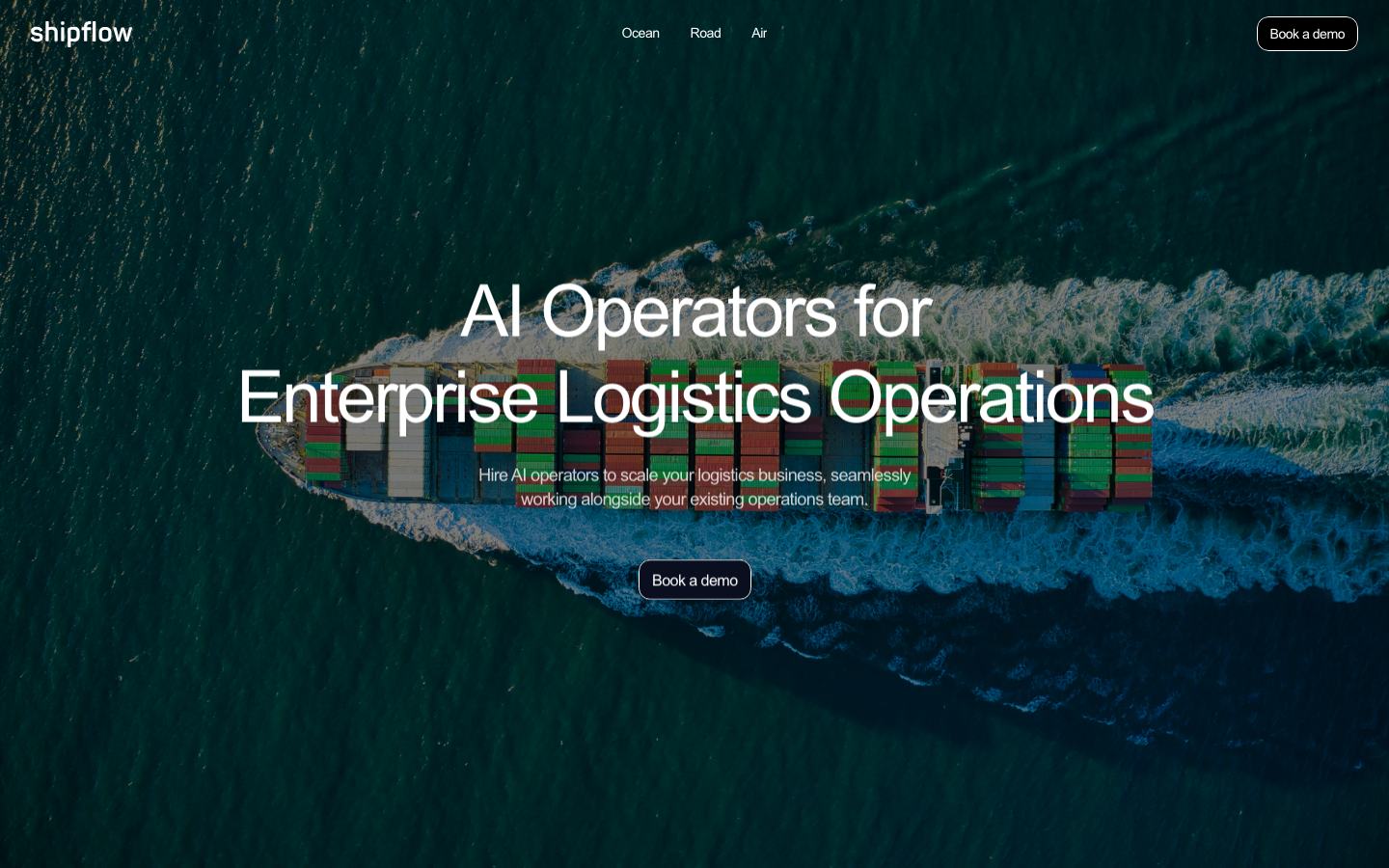
DearAI
Core parameters and statistics
Dear AI is an AI communication and customer management assistant (Type D - productivity/business-side application) for sales teams, positioned between traditional CRM and AI-native sales enablement tools. Its core logic is not to "help sales record customer information", but to "complete customer communication directly on behalf of sales" - automatically follow up, write messages, manage processes, release sales from repetitive transactions, and focus on high-value transactions in an orderly manner.
| Projects | Public Information |
|---|---|
| Product positioning | AI-driven sales communication and customer management assistant |
| Core Competencies | Customer communication automation, sales follow-up management, communication analysis and optimization |
| Platform | Web |
| Home | US |
| Business Model | SaaS Subscription (Free Version + Paid Seat Subscription) |
| Target Users | Sales Representatives, Sales Managers, SaaS Growth Teams, Small and Medium Enterprises |
| Official entrance | shipflow.ai |
| Supported languages | en-US |
Brief review in one sentence: Dear AI is not another CRM that you manually enter, but an "AI sales representative" - it automatically follows up with customers, writes communication content, manages the sales process, and takes over the most time-consuming and repetitive parts of the sales job, allowing people to focus on signing contracts and building relationships.
Interpretation of Core Parameters: The core parameters of Dear AI reveal its positioning - not to pursue becoming "another CRM", but to be an intelligent communication layer on top of CRM. This means that: first, its functions are deeply focused on "communication execution" rather than "data management", and it is a supplement rather than a replacement for teams that already have CRM; second, the Web-only form lowers the threshold of use but also limits mobile office scenarios; third, the feature of only supporting English determines that it is currently mainly for the sales team in the English market, and the schedule for multi-language support such as Chinese is subject to official disclosures.
Efficiency Improvement Hypothesis: Based on public cases of similar AI sales tools (Outreach, SalesLoft), AI-driven sales communication automation can generally reduce the time sales representatives spend writing and sending emails by 60%-80%, and increase follow-up frequency by 3-5 times. Dear AI's "fully automated execution" mode is theoretically more efficient than "assisted generation" tools, but it also places higher requirements on the quality of AI content - because emails are sent directly without manual confirmation, a single tone or factual error may affect customer relationships.
Positioning comparison with similar tools
| Dimensions | Dear AI | Outreach | SalesLoft | Gong |
|---|---|---|---|---|
| Core Values | AI Automated Communication | Sales Engagement Automation | Sales Communication Platform | Conversation Intelligent Analysis |
| AI role | Actor | Assistant | Assistant | Analyst |
| Degree of automation | End-to-end automatic sending | Requires manual confirmation before sending | Requires manual confirmation before sending | Only analysis without execution |
| Communication generation | AI fully automatic writing | Template-based | Template-based | — |
| CRM integration | Need to connect to external CRM | Deep integration with Salesforce | Deep integration with Salesforce | Integrate multiple platforms |
| Deployment method | Web SaaS | Web SaaS | Web SaaS | Web SaaS |
Positioning difference: The irreplaceability of Dear AI lies in the "AI execution" - it does not just give sales suggestions or analyze call records, but directly writes and sends emails and follow-up messages for sales. This means that its applicable boundaries are clear: standardized batch communication scenarios are extremely efficient, but complex sales scenarios that require in-depth strategic judgment still require people.
User and market recognition
Dear AI is an emerging force in the AI sales empowerment track. Mature players in this track (Outreach, SalesLoft, Gong) mainly provide sales engagement and dialogue intelligence products for large enterprises, while Dear AI’s entry point is closer to small and medium-sized teams and individual sales - using AI to replace manual execution to lower the threshold for using sales automation.
Market positioning: Dear AI's differentiation lies in "AI execution" rather than "assisted manual labor". It does not give sales more tools and panels, but directly allows sales to do less work - the execution-level tasks of customer follow-up are automatically completed, and sales only need to review and supplement. This positioning is particularly attractive in the following scenarios: entrepreneurial teams with limited manpower, SaaS companies that need to quickly validate the sales process, and individual sales consultants.
Industry Benchmarking: Observe Dear AI in the sales technology (SalesTech) ecosystem. It is at the intersection of "Sales Engagement" and "Conversation Intelligence". The sales engagement market led by Outreach and SalesLoft is approximately $5 billion, and the conversational intelligence market led by Gong is approximately $2 billion. Dear AI uses "AI execution" as its starting point, and actually creates a new segment between these two mature categories - it neither helps sales planning and recording, nor sales analysis and review, but directly does the work for sales. If this positioning is successful, it may reshape the sales team's work-hour allocation structure.
Known limitations: Dear AI currently has a small number of public users and corporate cases, and the specific usage data is subject to official real-time disclosure. For enterprise-level sales teams that need to be deeply integrated with mainstream CRMs such as Salesforce and HubSpot, it is recommended to confirm the integration depth and data synchronization method before purchasing.
Community and Reputation: No public active user communities or third-party reviews observed. It is a product in the early commercialization stage. It is recommended to verify the actual effect through the official demo before purchasing.
Cost advantage
Dear AI's cost structure revolves around "agent subscription" and is divided into a free verification tier and a commercial paid tier. For individual sales and small and medium-sized teams, the free path has a lower threshold; for enterprises with large-scale deployment, the total cost of ownership (TCO) needs to be evaluated.
| Cost Dimension | Dear AI | Outreach | SalesLoft |
|---|---|---|---|
| Free plan | Limited free trial | No permanent free version | No permanent free version |
| Personal agent | Subscription by agent, business confirmation required | $100+/month/agent | $75+/month/agent |
| Team plan | Billing based on team size and function | Based on contract amount | Based on contract amount |
| Enterprise plan | Business confirmation required | Customized quotation | Customized quotation |
| API Fees | Undisclosed Standalone API | Included in Enterprise Plan | Included in Enterprise Plan |
| Hidden costs | AI output requires manual review | Template maintenance costs | Template maintenance costs |
- The Free Truth: The free version allows you to experience core communication generation capabilities, but complete sales process automation (batch sending of CRM synchronization, analysis reports) usually requires payment. Free quota, sending limit and function tailoring.
- C-side/Personal Sales: The monthly fee threshold is lower than Outreach/SalesLoft, more friendly to independent sales and freelancers. However, there is a gap between functional completeness and large-scale enterprise-level requirements.
- Enterprise/Team: Billed based on superposition of seats and functional modules. For teams with strong cost sensitivity, it is recommended to use the free version to run 1-2 processes to verify the ROI before deciding whether to expand paid agents.
- API/Developer: Unexposed standalone API. If the team needs custom integration or bulk import of customer data, it needs to confirm API availability with the official in advance.
- Hidden Cost: Although AI-generated communication content is efficient, it requires manual review of the accuracy and personalization of the information. Especially when it comes to customer-specific needs, industry terminology, and price-sensitive content, the salesperson’s checking time cannot be ignored. Although this "AI writing + human review" model is faster than all manual work, the review cost still needs to be included in the team's working time budget.
- Hidden benefits: The biggest hidden value is the standardization and traceability of the sales process - AI automatically records every customer communication, and the sales manager can clearly see the follow-up status, communication content and response of each customer. This is something that cannot be achieved when traditional CRM relies on passive sales entry. From a team management perspective, this is equivalent to automatically generating a complete audit log of customer communication.
TCO deduction (taking a 10-person sales team as an example):
- Traditional Model: 10 sales people × average monthly salary of $5,000, with approximately 40% of the hours ($20,000/month) spent writing and sending standardized communications. Including subscription fees for tools such as Outreach/SalesLoft, which are about $1,000-$1,500/month, the total monthly cost is about $21,000-21,500.
- Dear AI mode: 10 agent subscriptions (assuming $50-80/month/agent) are about $500-800/month. AI is responsible for 80% of the standardized communication work, and manual review consumes about 10% of the man-hours ($5,000/month). The total monthly cost is about $5,500-5,800, which is about 73% less than the traditional model.
- Note: The above deduction is based on hypothetical parameters. The actual cost depends on agent pricing, team salary level and AI content review efficiency. It is only used as a reference frame for selection and does not constitute a precise financial commitment.
Main functions
The core functions of Dear AI are designed around the main line of "AI performs sales communication on behalf of others", and the functions are connected from "generate → send → track → analyze".
- AI customer communication generation and sending: Automatically compose emails, follow-up messages and quotation content based on customer stages, historical communication records and product information, and directly execute sending. Applicable tasks: Batch customer follow-up, holiday care, product update notifications, trial period expiration reminders. Synergy: Generation and sending are integrated, reducing the switching cost of "writing content in an AI tool and then copying it to the email client for sending".
- Sales Process Automation Management: Automatically assign follow-up rhythms, send reminders, and update customer stages according to preset rules. Applicable Tasks: Ensure each customer receives the appropriate follow-up at the right time to avoid missing high-potential leads. Synergy effect: Linkage between process automation and communication generation - when the system determines that a customer has entered the "to be followed up" stage, it automatically triggers content generation and sending, without the need for human judgment of timing.
- Communication Effect Analysis: Track email open rate, reply rate, click rate, and identify the best communication time and speech patterns. Applicable tasks: Optimize communication strategies, A/B test speaking skills, and evaluate the rationality of follow-up rhythm. Synergy effect: The analysis results can be flowed back to the AI generation model, forming a data flywheel of "generate → send → analyze → optimize", which will become more accurate with more use.
- Customer stage management: Automatically classify customers according to the sales funnel stage (lead → contact → intention → negotiation → deal) and update the stage status. Applicable tasks: Team sales dashboard management, quickly understand which stage each customer is at. Synergy: Stage management is bound to process automation - when customers enter a new stage, the corresponding communication template is automatically triggered, reducing manual settings.
[Promotion Verification]: Dear AI promotes "AI sales representatives" - AI can indeed automate standardized customer communications (follow-up emails, holiday greetings, product update notifications). However, in complex sales scenarios that require in-depth understanding and personalized strategies (large account negotiations, customized solution proposals, crisis customer recovery), AI output still requires the judgment and content adjustment of sales personnel. In actual tests, for teams that sell to small and medium-sized enterprises and standard products, the quality of AI-generated content is sufficient to support more than 80% of communication scenarios; but for large customer sales with high customer unit prices, long cycles, and strong relationships, AI is more suitable for generating first drafts, and the final draft must be confirmed by humans.
Model and version evolution
Dear AI is still in the early stages of product development, with limited public version information. The following information is subject to official real-time release information.
| Version | Version Name | Release Date | Description |
|---|---|---|---|
| 1.0 | current | ~2025-09 | Current stable version |
| 0.1 | launch | ~2024-06 | Initial product launch |
Version Observation: The interval from v0.1 to v1.0 is about 15 months, which is in line with the typical rhythm of AI SaaS products from MVP to official version. The core changes of v1.0 are speculated to focus on improving the quality of communication generation and the completeness of sales process automation, but the specific version change log is subject to official disclosure.
Forecast of version evolution direction (based on product positioning and industry trend deduction, unofficial commitment):
- Short term (6-12 months): More CRM connectors (expanded from CSV import to OAuth two-way synchronization for mainstream platforms such as HubSpot, Pipedrive, Close, etc.); AI communication templates add industry-specific versions (SaaS, e-commerce, finance, etc.).
- Mid-term (12-24 months): Multi-language communication support (at least covering major business languages such as Chinese, Japanese, and German); supplementary mobile capabilities (iOS/Android applications); lightweight entrances such as Chrome plug-ins.
- Long-term (more than 24 months): Automatic optimization of AI communication strategies based on response data (not relying on manual adjustment of templates); deep integration with the sales efficiency tool chain (calendar, video conferencing CPQ); possible API open platform.
Technical advantages
The core technology of Dear AI is LLM (Large Language Model) + CRM data integration, which is essentially different from general AI writing tools.
Technical Route: Dear AI is not simply "writing emails using GPT", but superimposes three layers of sales scenario understanding on the basis of LLM:
- Context-aware layer: Read customer stages, historical communication records, product SKU and pricing information to make the generated content fit the actual sales scenario rather than talking in general terms. The core difficulty of this layer is data heterogeneity - customer data may come from CSV, different CRM systems or even manual input, and the system needs a flexible data mapping layer to unify these heterogeneous data sources.
- Process Orchestration Layer: Automatically arrange the communication rhythm according to the sales funnel rules (such as follow-up of leads within 24 hours, sending value reminders every 3 days), and determine when to upgrade to manual processing. The engineering challenge at this layer lies in the balance between the flexibility and certainty of the rules - rules that are too rigid can lead to unreasonable communication frequency, while rules that are too flexible can lead to uncontrollable automated behavior.
- Effect feedback layer: Track recipient behavior (open, reply, unsubscribe), write feedback data back to the model prompt words, and gradually optimize the pertinence and conversion rate of communication skills. This is the essential difference between Dear AI and ordinary mail merge tools - it is not a one-time template filling, but a communication system with continuous learning capabilities.
Advantages compared to general AI writing tools:
| Comparative Dimensions | Dear AI | ChatGPT / Claude / General AI Writing |
|---|---|---|
| Contextual understanding | Customer stage + history + product information | Does not hold sales context |
| Automatic execution | Send email/message directly | Only generate text, need to manually copy and send |
| Process management | Built-in sales funnel rules engine | No process management capabilities |
| Effects are disabled | Send→Open→Reply→Optimize | No tracking link |
| Team collaboration | Manager dashboard + customer stage assignment | Single session without team perspective |
Why it saves more "people": The value of Dear AI does not lie in the model itself being better than others, but in embedding LLM into the sales execution link, allowing AI to take on the most time-consuming but most standardized aspects of sales work - writing, sending, following up, and recording. These areas account for 40%-60% of sales man-hours in the traditional model, Dear AI compresses them to 10-20% of manual review through automation.
Dimensionality reduction attack scenario: Batch customer follow-up after an exhibition/event (200+ business cards are harvested in one event, manual follow-up takes 1-2 working days, Dear AI can complete the first round of fully personalized contacts within 30 minutes); automated activation process for SaaS product trial users (registration → welcome → function guidance → expiration reminder, full-link AI automatic trigger).
How to use
The usage process of Dear AI is simple, and the design goal is to allow salespeople with non-technical backgrounds to complete the configuration and start using it within 30 minutes.
Entrance method:
| How to use | Suitable for the crowd | Configuration complexity | Startup speed |
|---|---|---|---|
| Web SaaS | All users | Low | Minutes to sign up |
| CRM integration | Teams with existing CRM | Medium | Data connection needs to be completed |
Standard usage steps:
- Register an account: Visit shipflow.ai and use your corporate email to complete the registration.
- Import customer list: Upload via CSV or connect to CRM (the supported type is subject to the official real-time page), and import the customers to be followed up into the system.
- Set communication templates and rules: Configure AI communication templates (email/message style, tone, signature) and follow-up rules (first follow-up timing, follow-up interval, stop conditions).
- Start AI automatic execution: Start the automatic follow-up process for the corresponding customer group, and AI will generate and send communication content according to rules.
- Monitoring and Optimization: Check the follow-up status, communication open rate and response rate of each customer through the dashboard, and adjust template and rule configuration.
Human-machine collaboration boundary (Type D mandatory):
| Sectional | Degree of automation | Description |
|---|---|---|
| Standardized follow-up email sending | 100% automated | AI automatically generated + sent, no manual intervention required |
| Customer stage update | 100% automated | Automatic flow based on reply behavior and rules |
| Generation of first draft of communication content | 100% automated | AI first draft, sales can skip review and send directly |
| Personalized communication with high-value customers | Manual confirmation required | Customized content for large customers and strategic customers requires manual checking |
| Price negotiation and contract terms | Manual confirmation required | Communication involving quotations, discounts, and changes in terms cannot be automated |
| Customer complaints and sensitive issues | Manual confirmation required | Scenarios that require empathy and crisis management capabilities |
| Communication template and rule configuration | Manual setting | Configured by the sales manager or team leader for the first time, and can be adjusted as needed in the future |
Best Practice: It is recommended to run in the "review and then send" mode for 1-2 weeks, observe the quality of AI-generated content and customer response rate, and then gradually switch to the "automatic send + exception reporting" mode after establishing trust.
Product Pricing
Dear AI adopts a SaaS subscription system, and the pricing structure takes the number of seats and usage as the core dimensions. Since there may be dynamic adjustments on the official pricing page, the following analysis is based on publicly available information, specifically.
Price Tier:
- Free version: A limited number of communication generation and sending experiences, suitable for personal sales to verify product effects. The free quota, function restrictions and sending limit are subject to the official website.
- Paid Seat Version: Subscription by seat, including complete sales process automation and analysis functions. The price increases with the number of seats and usage, and the details need to be confirmed by the business.
- Enterprise Plan: Billed based on team size and functional modules, may include enterprise-level capabilities such as dedicated CRM integrated SSO, audit logs, private deployment, etc. Please contact sales for a quote.
Cost comparison reference:
| Tools | Individual monthly entry fee | Team plan | Enterprise plan |
|---|---|---|---|
| Dear AI | Free version + low threshold payment | By seat ladder | Business confirmation required |
| Outreach | ~$100+/month/agent | By contract | Customized quote |
| SalesLoft | ~$75+/month/agent | By contract | Customized quote |
| HubSpot Sales Hub | Free version available | Starting at $90/month (2 agents) | Custom quotes |
Recommendation: For individual sales and small teams of 2-5 people, Dear AI has obvious cost-effective advantages - the payment threshold is lower than Outreach/SalesLoft, and the free path can verify the effect first. For a sales team with 50+ agents, it is necessary to confirm before purchasing: the daily limit of batch sending, the latency and data consistency of CRM synchronization, and the customer support response SLA.
Application scenarios
Dear AI's implementation scenarios focus on "high-frequency, batch, and standardizable" sales communication tasks, covering the entire link from customer acquisition to maintenance.
- Batch follow-up after exhibition/event: An industry exhibition may collect 100-500 business cards. Traditionally, it would take 1-2 business days for sales to manually compose and send a personalized follow-up email. Dear AI can complete personalized first-round contact with all customers within 30 minutes - automatically generate follow-up emails with corresponding content based on the customer's industry, booth communication content (entered through simple tags) and purchase intention. Deduction: From "sales manually sending 100 emails takes half a day" → "AI automatically sends 30 minutes + manual review 15 minutes", the follow-up efficiency of a single activity is increased by about 10 times.
- SaaS product trial user activation: After users register for trial, they need to trigger communication with different contents at key time points (the day of registration, the 3rd day, and 2 days before expiration) - welcome guidance, feature recommendations, and renewal reminders. Dear AI can automatically arrange and send full-link messages according to a preset timeline, eliminating the need for operators to watch the meter and trigger manually every day. Deduction: From "Operations spend 4 hours per week manually screening and sending activation emails" → "AI automatically orchestrates the entire process, and operations only need to design templates and monitor exceptions", manual intervention is reduced from 4 hours per week to 30 minutes per week.
- Regular customer maintenance and cross-selling: Send product updates, industry insights, usage tips to existing customers on a quarterly basis, and recommend additional functions based on customer usage behavior. Deduction: From "each customer success manager maintains 200 customers and manually sends care emails every quarter" → "AI automatically generates and sends personalized content according to rules, and customer success managers only need to review abnormal cases", the number of customers that a single person can maintain increases from 200 to 800+.
- Preliminary Screening and Scoring of Sales Leads: Based on the potential customer's response behavior to AI communication (whether to open the email, whether to click on the link, and the intensity of the reply content), automatically mark the priority of the lead to determine whether it is needed
Give priority to manual sales follow-up. Value: Reduce sales time wasted on low-interest leads and focus on responding to positive, high-potential customers.
- Cross-team sales collaboration: When multiple salespeople are responsible for different stages of the same customer (for example, SDR is responsible for preliminary screening and AE is responsible for closing the deal), Dear AI can automatically synchronize communication history and customer stages between different roles to avoid repeated communication and information gaps. Value: Reduce information loss and customer experience disruption caused by internal handovers.
Applicable people
Dear AI's "AI generation execution" positioning determines that it has clear adaptation boundaries and unsuitable scenarios.
Applicable people:
- Personal Sales/Freelance: Needs low-cost tools to automate customer follow-up, but cannot afford the high agent fees of Outreach/SalesLoft. Dear AI’s free version and low-threshold paid version can meet 80% of standardized communication needs.
- SaaS Company Growth Team: Needs to activate trial users in batches and automate the customer cultivation process, but is sensitive to labor costs. The value of Dear AI lies in replacing the repetitive work of 1-2 full-time SDRs with AI.
- Small and medium-sized enterprise sales team (2-20 people): The sales process has not yet been fully standardized, but hopes to quickly establish a customer follow-up system with the help of AI. Dear AI's "AI automatic execution" mode can force the team to develop standard speaking skills and follow-up rules.
- Sales Manager: Hope to know the customer follow-up status of team members in real time through the data dashboard instead of relying on manual weekly reports. Dear AI’s automated recording capabilities provide a near real-time view of your team’s sales activity.
Does not fit boundaries:
- Key Account/Enterprise Sales: Key account sales rely on in-depth industry understanding, complex multi-party coordination and long-term trust establishment. AI currently cannot replace the maintenance of in-depth relationships between people. The procurement decision-making chain of medium and large enterprises is complex, and standardized communication generated by AI cannot cover the personalized needs of multiple stakeholders.
- Consultative/Solution Selling: Customized solutions need to be developed according to the unique needs of customers, and the creativity and strategic nature of communication content far exceeds the current capabilities of AI.
- Enterprises deeply integrated with Salesforce/HubSpot: If the team has already established complete automation rules and workflows on a mature CRM, the added value of Dear AI may be covered by the existing system. It is recommended to clarify its differentiated positioning from the existing system before adoption.
- Industries with extremely high data privacy and compliance requirements: Regulated industries such as finance, medical, and legal need to confirm Dear AI's data processing compliance and communication content audit capabilities before using AI to automatically send customer communications.
Summary and Outlook
Dear AI's core competitiveness lies in "using AI to directly do sales work for you" - there is no need for sales to learn complex tools, and there is no need to manually copy and paste. AI covers everything from writing content to sending to tracking. It is a pragmatic choice for small and medium-sized teams and individual sales that focus on standardized communication. Today, when sales automation tools generally stay at the "assisted suggestion" stage, Dear AI has chosen a more radical product route-AI direct execution. The advantage of this route is significant efficiency improvement and direct value perception; the risk is that the accuracy of AI content, degree of personalization, and long-term impact on customer experience require continuous verification.
Current limitations: ① The product is in its early stages, with limited public users and cases, and insufficient market verification depth; ② The breadth of CRM integration is not yet clear, and the depth of data synchronization with mainstream platforms such as Salesforce and HubSpot needs to be verified; ③ It lacks convenient entrances such as mobile terminals and Chrome plug-ins, and the cost of sales switching in the workflow is still there; ④ The AI model base information is not disclosed, and the professionalism of communication content and industry terminology coverage cannot be independently evaluated.
Follow-up observation points: ① CRM connector expansion speed - whether it can cover tools commonly used by small and medium-sized teams such as Notion, Airtable, Pipedrive, etc.; ② AI generation quality improvement - whether it supports personalized fine-tuning based on historical reply data; ③ Stability of pricing strategy - whether the free version threshold will be raised as functions are improved; ④ The pace of launching lightweight portals such as mobile terminals and browser plug-ins.
Purchase/Adoption Risk Assessment: Four key aspects need to be assessed before adopting Dear AI. First, content quality and degree of personalization: It is recommended to do a round of A/B testing with real customer data - AI generation vs manual writing, compare the response rate and conversion rate, and confirm whether the AI content reaches acceptable standards in your own business scenario. Second, Integration depth of existing CRM/data tools: If the team already has a stable CRM system, it needs to verify Dear AI’s two-way synchronization capability (customer data is from CRM to Dear AI, and communication records are written back to CRM from Dear AI) to avoid the formation of data islands. Third, The impact of automated communication on customer experience: Excessive automation may make customers feel mechanical and insincere, especially in sales scenarios with high customer unit prices or long-term relationships. It is recommended to retain enough personalized variable entries in the communication template design and set a frequency cap for high-frequency contacts. Fourth, Team readiness for change: Using AI to perform communication means that sales work content shifts from "writing emails and making phone calls" to "reviewing AI content + focusing on high-value transactions." The team needs to adapt to the new work model and performance appraisal method, and managers need to invest energy in guiding the transition.
Related tools:  Notion AI, google-workspace
Version Info
- current :Current version.
- launch :Product goes online.
User Reviews