 Drift AI
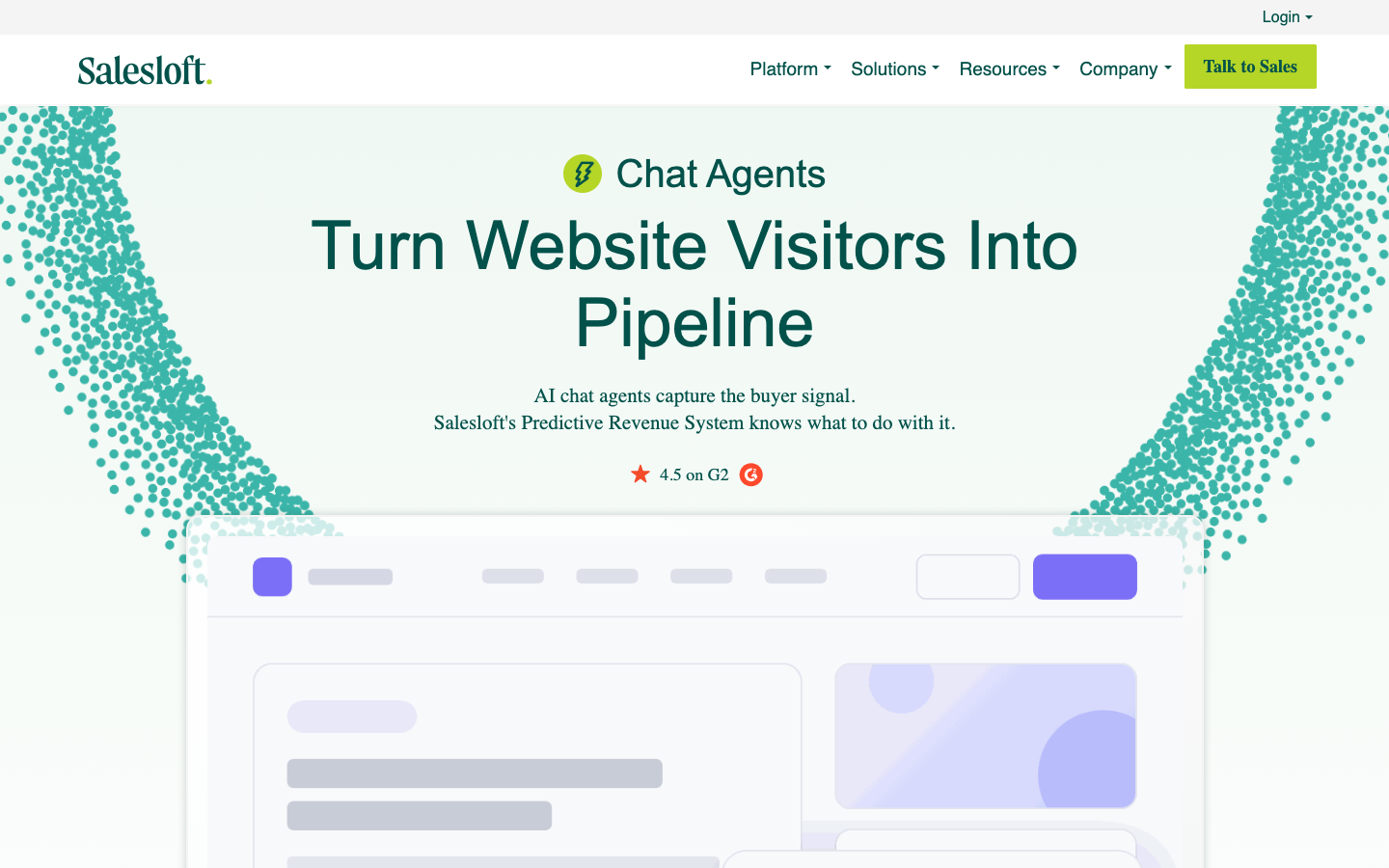
Drift converts website visitors into conversational sales leads through an AI chatbot that automatically identifies purchase intentions and transfers them to manual sales at the right time.
DriftAI
Core parameters and statistics of Drift AI
Specific technical parameters (such as model size, context length, supported file formats, etc.) are subject to the official product page.
Users and market recognition of Drift AI
Drift's market recognition is closely related to its status as a "category pioneer", but organizational changes after the acquisition have changed its independent market voice.
Category creation bonus: Drift is the definer of the "Conversational Marketing" category. Its founder, David Cancel, is also an early promoter of the "Growth Driven Design" concept. This category position gives it high brand recognition in the enterprise B2B SaaS space - in a survey of B2B marketing technology buyers, Drift was consistently ranked in the top three choices in the "website chat and conversation" category.
Enterprise customer base: The official page shows that it serves more than 50,000 enterprise customers. Typical customers prefer B2B companies with high back-end transaction prices, long sales cycles, and requiring manual sales intervention, rather than self-service SaaS with low unit price. Representative customers cover areas such as SaaS, professional services, financial technology, and healthcare, but the official list of specific customers or NPS scores has not been disclosed.
Market position after acquisition: After being acquired by Salesloft in 2021, Drift still maintains independent brand operations, but inevitably competes with the Salesloft main brand in terms of marketing resources and brand budget. For companies already using the Salesloft suite, Drift's depth of integration is a unique advantage; for companies that haven't yet adopted Salesloft, purchasing decisions about Drift as a point tool will be affected by "post-acquisition product roadmap uncertainty."
Industry Recognition: Drift has appeared in Gartner's Magic Quadrant for Sales Engagement Platforms multiple times, but its visibility as a standalone quadrant has declined since the acquisition. In Forrester's Wave evaluation, the Drift/Salesloft combination is usually positioned in the "leader" range, but the specific score is subject to the latest official report.
Cost Advantages of Drift AI
Drift’s cost structure is a typical B2B SaaS tiered model—increasing from free verification to business negotiations. The following split is based on speculation from the public price page and similar industry tools. The specific figures are subject to the official real-time quotation.
C-side/Individual: Drift is not intended for individual users. Although its most basic free version is available, the upper limit of monthly active visitors and feature set are very limited. It is suitable for small and micro enterprises with extremely low monthly traffic for preliminary verification, and does not have the attributes of a personal productivity tool.
Small and medium-sized teams/starting stage: The Premium version is about $400/month (paid annually), and is billed based on the monthly active visitors of the website. Taking a small to mid-sized B2B website that brings in 5,000 monthly visitors as an example, $400/month equates to about $0.08 per visitor – if 2% of those convert into conversational leads, the lead acquisition cost is about $4. Compared with the traditional combination of form + advertisement to acquire customers (usually $20-$50 per lead), although Drift's payment threshold is not low, there is still room for ROI in B2B scenarios where the unit price of leads is high. Hidden Cost: At least one marketing operation staff is required to configure Playbook words, analyze conversation data, and optimize trigger rules. This part of the labor investment often exceeds the tool subscription fee itself.
Medium and large enterprises/deep integration: The Advanced version starts at about $1,500/month, and the Enterprise version is priced at a fixed price. The Advanced version includes A/B testing Drift Email and customized reports - these features are strictly needed for companies with dedicated marketing operations teams, but may be a waste of functionality for small teams with only 1-2 people working part-time. The enterprise version usually requires an annual contract and includes terms such as SSO, audit logs, and SLA. The contract period and minimum consumption need to be confirmed with sales.
Cost comparison with alternatives: Compare Drift with similar tools based on the monthly cost of a typical B2B website (10,000 monthly visitors). The following figures are a summary of public price pages or industry public information. The actual price is based on the latest quotation from each manufacturer:
| Comparative Dimensions | Drift | Intercom | HubSpot Chat | LivePerson |
|---|---|---|---|---|
| Starting price (monthly payment) | ~$400 | ~$74 | Free version available | Quotation basis |
| Typical mid-range price | ~$1,500 | ~$139 (base functionality) + add-ons | ~$800 (Marketing Hub Pro) | ~$500-$1,000 |
| Core selling points | B2B conversational marketing + meeting booking | Full stack customer communication platform | Native integration with HubSpot CRM | Key account customer service solution |
| AI active trigger | Strong | Medium | Medium | Medium |
| B2B Sales Fit | High | Medium | Medium-High | Low |
| Billed by visitor | Yes (annual payment discount) | Yes | By contact | By agent |
Cost conclusion: Drift has the highest functionality focus in pure "conversation marketing" scenarios, but its absolute price is on the higher side among its peers. The premise for its ROI is that "there is a sufficient proportion of potential customers among website visitors" - for websites with low lead price (<$100) or small monthly visitors (<5,000), it is recommended to first verify the conversion rate with the HubSpot free version or the Intercom entry version, and then decide whether to upgrade to the Drift level.
Main features of Drift AI
Drift's capabilities are not isolated chat widgets, but a modular system designed around a closed chain of "identify intent → initiate conversation → screen leads → facilitate meetings → continue follow-up". The following five functions have obvious "hidden linkage" relationships.
-
AI Chatbot (Active Dialogue Engine): Based on information such as the visitor's browsing page, number of historical visits, source channel IP ownership, etc., personalized chat invitations will automatically pop up at the best time. Drift's trigger rules are not just a simple "stay in the pop-up window for Expert View: This "conditional trigger" mechanism is deeply bound to Playbook automation - a trigger condition chain can be associated with multiple conversational branches, multiple transfer rules and different email follow-up sequences. They are different presentation layers of the same set of configuration entries, rather than independent functional modules.
-
Intelligent routing and lead grading: After AI identifies the visitor's intention, it will automatically assign it to the most appropriate team member based on the problem type (pre-sales consultation vs technical support), product line, target customer level and the current busy status of the sales representative. Routing rules support polling, priority matching and historical transaction correlation. Hidden linkage: The "grading" result of intelligent routing is not isolated - it is automatically synchronized to Drift Email's follow-up strategy and Salesloft's task queue, which means that after a chat lead is marked as "high intent", the subsequent email content and sales task priority will be automatically adjusted to form an automated link from chat to CRM.
-
Meeting Booking Engine (Calendar Booking): After a visitor expresses interest in the conversation, AI directly displays the sales representative's available calendar, and the visitor can select a time and confirm the appointment without leaving the chat window. Automatically sync to Google Calendar or Outlook upon confirmation and send reminders before meetings. Expert View: This is the core difference between Drift and pure customer service chat tools - its end point is not to "solve the problem", but to "facilitate an appointment". Once the meeting is booked, Drift automatically triggers the creation of subsequent email sequences and CRM tasks, turning a conversation into the starting point of a complete sales process.
-
Drift Email (conversation continuation engine): an email module deeply linked to chat. After the visitor leaves the website, AI can automatically generate a follow-up email based on the chat content, and continue to manage the conversation within the Drift interface after the visitor replies, without having to switch to a separate email client. Hidden linkage: Drift Email is not an independent email system, but an "asynchronous continuation of the chat conversation" - when a visitor asks about a product feature in the chat and then leaves, Drift Email will automatically send an email containing the detailed information of the feature 24 hours later, and embed a "one-click chat back" button at the bottom of the email to bring the visitor back to the real-time chat session.
-
Playbook Automation (Scenario Strategy Engine): Preset dialogue processes for different scenarios, including conversational branches, trigger conditions, transfer rules and follow-up actions. Playbook covers scenarios ranging from "visitors on the pricing page" to "visitors coming from competing product official websites" to "visitors staying in the help center exceeding the threshold". Each Playbook is essentially a small decision tree, with AI dynamically switching branches based on real-time visitor input. Expert opinion: The real value of Playbook is not in the "preset words" but in the "data feedback function" - the execution effect of each Playbook (trigger rate, transfer rate, reservation completion rate) will be written back into Drift's analysis report. Based on this, operators can continue to optimize the dialogue strategies of different groups of people, forming a "configuration-execution-analysis-optimization" cycle.
Functional integrity verification: The above functional combination covers the entire chain of "capture → screening → booking → follow-up", but lacks in-depth customer success management and contract signing capabilities. After Drift completes lead incubation, the final closing of the deal still needs to be done in the CRM or sales tool, it is not an end-to-end revenue platform.
Model and version evolution of Drift AI
As a SaaS platform, Drift's version iterations are based on the function release timeline rather than discrete software version numbers. The following milestones are based on public product release records and media reports. The precise dates are subject to official announcements.
Early category definition period (2015–2018)
- 2015: David Cancel and Elias Torres found Drift in Boston. The product was initially positioned as a "website real-time chat tool", but soon shifted to the direction of "Conversational Marketing".
- 2016: The Drift chat platform was officially released, with the core functions being website chat + email notification.
- 2017: Introducing "Meeting Booked" - visitors can book sales meetings directly in chat, one of the industry's first in-chat meeting booking features.
- 2018: Drift 2.0 was released and the "Playbook" automation framework was introduced, marking the transformation from "chat tool" to "marketing automation platform". The Drift Developer Platform and API were launched at the same time.
Growth and category expansion period (2019–2021)
- 2019: Released Drift Audience Engine - an audience analysis and segmentation system based on visitor behavior data, linked with Playbook to achieve "different groups of people see different conversations". At the same time, the Drift Email Beta version was launched.
- 2020: Deeply integrate AI capabilities and introduce NLP-based intent detection (Intent Detection), so that chatbots can understand visitors' natural language input instead of just clicking preset buttons. The same year the Revenue Acceleration Platform concept was launched.
- 2021: Acquired by Salesloft (for an undisclosed amount), Drift continues to operate as an independent brand. After the acquisition, we will focus on promoting deep integration with the Salesloft suite to enhance the accuracy of intent recognition in AI chat.
Post-acquisition integration period (2022–2024)
- 2022: Drift is deeply integrated with the Salesloft product system to realize the automated linkage of "chat leads → sales tasks → email sequences". Launched Drift Conversational AI 2.0 to improve multi-turn conversation capabilities and contextual understanding.
- 2023: Introducing GPT model-driven dialogue generation capabilities to support the generation of more natural Playbook dialogue and email content. ABM (Attached Account List) functionality has been enhanced to support triggering specific conversation flows through IP identification and Company Domain matching.
- 2024: Conversation analysis reports are upgraded to provide advanced analysis dimensions such as "intent trend", "conversation decay rate" and "optimal trigger time". Slack and Teams integration enhancements.
Current Phase (2025–2026)
- 2025: Continue to enhance the natural language generation (NLG) capabilities of AI chat and reduce the cost of manual Playbook configuration. Launch more preset industry templates.
- 2026.2 (2026-02): Introducing the AI meeting booking function, booking sales meetings directly in chat and synchronizing calendars, reducing email confirmation steps.
- 2026.7 (2026-07): Enhance the intent recognition and natural language generation capabilities of AI chatbots. Use the official release notes for accurate information.
Release Note: The above time points are compiled based on public reports and product release records. As a SaaS product, Drift has continuous function iterations, and there is no concept of discrete "large version numbers". The precise dates of some early milestones are based on official archives or Wayback Machine records.
Technical advantages of Drift AI
Drift's technical advantage lies not in the originality of the underlying AI model (its NLP core is based on a combination of commercial models and self-trained classifiers), but in the "coupled design of conversation data and sales process."
Synchronization mechanism of intent recognition and routing: When Drift's AI identifies visitor intent, it does not simply match keywords, but comprehensively uses page context, historical conversations, visitor profiles, and real-time input to perform multi-signal fusion judgments. The core effect of this "multi-signal fusion" mechanism is that the same word is given different weights in different scenarios. For example, when a visitor says "How much" on the pricing page, the system determines it as "purchase intention" and transfers sales; and when the same visitor says "How much" on the help center, the system determines it is "existing customer renewal consultation" and transfers the call to customer service. This context-sensitive intent routing reduces manual screening costs.
Structured Extraction of Conversation Data: After each chat conversation ends, Drift automatically extracts key fields (visitor needs, budget range, decision timeline, contact details) and writes them into the CRM. This means sales reps don’t have to manually enter information after a conversation—the flow of data from chat to CRM is automated. Mechanism → Effect: Automatic structured extraction reduces the entry time of sales representatives by about 30-60 seconds per lead. For a team that handles 50+ leads per day, this is equivalent to saving 30-50 minutes of manual operations per day.
Playbook's conditional compound engine: Playbook's triggering is not a simple if-then rule, but supports multi-condition combination operations (AND/OR/NOT) and numerical comparisons. For example, "Visitors came from the target company (company_domain IN target_list) AND visited the pricing page (page_url CONTAINS /pricing) AND visited for the first time in the past 7 days (visit_count = 1)" - the flexibility of this combination of conditions is at a high level among similar tools.
Architectural advantages of synergy with Salesloft: After being acquired by Salesloft, Drift's routing results can be directly imported into Salesloft's sales task queue and email sequence, forming an end-to-end link of "chat capture → lead grading → task allocation → email follow-up → meeting appointment". For companies that have already adopted Salesloft, this depth of integration is difficult for competing products to replicate in the short term. However, for companies that do not use Salesloft, this deep integration advantage may become a concern for "vendor lock-in" - the migration cost of switching to other CRMs after intensive use of Drift will increase significantly.
Data Security and Compliance: Drift’s SaaS architecture supports SOC 2 Type II compliance certification (based on Salesloft’s enterprise certification system), and the enterprise version supports SSO, audit logs, and IP whitelisting. Data storage is based on AWS. Please refer to the official compliance page to confirm the latest certification status.
How to use Drift AI
The usage path of Drift is divided into three role dimensions: administrator configuration, operator optimization, and sales representative operation. The following description takes the administrator's first deployment as the main line.
Deployment Steps:
- Registration and Embedding: Visit the Drift official website to register an account, obtain the JavaScript embed code in the Drift Dashboard, and paste it into the
<head>tag of the website. Once the code snippet loads, the chat widget automatically renders in the lower right corner of the website. - Configure basic trigger rules: Set trigger conditions in the Playbook module of the Dashboard - for example, select "Visitors browse the pricing page for more than 15 seconds" as the trigger event, and configure the initial dialogue.
- Connect to CRM: Authorize Drift to connect to your Salesforce, HubSpot or Salesloft account, and set lead synchronization mapping rules (such as mapping the "Company Name" field of the chat to the "Account Name" of the CRM).
- Configure intelligent routing: Set the availability time, skill tags and load limit of team members, and define the transfer priority for different intentions.
- Set up Calendar Integration: Connect to Google Calendar or Outlook to configure sales reps’ availability and meeting lengths.
- Online Test: Access the website in stealth mode or not logged in, and verify the trigger logic and dialogue process. It is recommended to run through the system in hierarchical whitelist mode (only effective for internal IPs), and then go online in full.
Role Responsibilities Comparison:
| Role | Core Operations | Frequency | Key Metrics |
|---|---|---|---|
| Admin/IT | Embed code, configure SSO, manage permissions | Deploy once + update on demand | Embed coverage, widget load time |
| Marketing operations | Write Playbook words, analyze dialogue reports, A/B test trigger rules | Weekly | Playbook trigger rate, transfer rate, appointment completion rate |
| Sales Representative | Handle transfer conversations, manage meeting reservations, follow up Drift Email | Daily | Response time, meeting conversion rate |
Acceptance focus: In the first week after deployment, focus on verifying three indicators - the accuracy of AI automatic response (scenarios where no response is given vs. scenarios where no response is given), the proportion of routes to the wrong person (misdirect rate), and the rate of visitors actively closing the chat (indicating inappropriate words or timing).
Product Pricing for Drift AI
Drift has tiered pricing based on website monthly active visitors (MAV) and feature depth. The following information is compiled based on the public price page and industry information. The complete contract details are subject to the official real-time quotation.
- Free version: basic chat robot, with a low monthly active visitor limit (subject to the official page), and supports basic Playbook and email notifications. It is suitable for very small websites to verify the effect, but its functions are limited and it is difficult to support the complete sales process.
- Premium version: starting from about $400/month (paid annually). Contains AI chat, intelligent routing, meeting booking, and standard playbook. This is the starting gear for most small and medium-sized B2B companies.
- Advanced version: starting from about $1,500/month (paid annually). Includes advanced playbook (multi-step, conditional branching), A/B testing drift email, custom reports and multi-team management. Suitable for growing companies with a full-time marketing operations team.
- Enterprise Edition: Quotation system. Includes dedicated AI model training SSO and SAML, audit log SLA guarantee, and dedicated customer success manager. Ideal for large enterprises and compliance-sensitive industries.
Three-tier cost assessment framework:
- C client/individual users: Drift is not for individuals. The free version is only a preview of enterprise functions. It has a monthly active visitor limit (usually within 1,000), functional tailoring and brand watermark restrictions, and is not suitable as a formal productivity tool.
- Developer/API Integration: Drift offers a Developer Platform and REST API, but no separate API pricing plan. API access is included in Premium and above versions, and frequency control and quotas are subject to the API document limits.
- Enterprise/Large Scale Deployments: Enterprise edition pricing varies based on monthly active visitors, integration needs, and security compliance requirements. The minimum information points that enterprises need to confirm before purchasing include: MAV tiered price (incremental unit price after exceeding the package quota), data retention period, outbound IP whitelist support number, and function upgrade terms during the contract period.
Application scenarios of Drift AI
Drift's value is maximized in scenarios where "shortening B2B lead response times" is most needed. The following four types of scenarios have been verified by a large number of customers.
-
SaaS website lead conversion: When visitors browse the pricing page, AI will automatically pop up "Do you need help choosing a plan?", and after understanding the needs through dialogue, it will directly recommend suitable packages and make an appointment for a demonstration. Implementation Tip: The key to this scenario is not "how well the pop-up words are written", but "the speed of follow-up after the appointment" - Drift data shows that the conversion rate of responding to leads within 5 minutes is 21 times higher than after 30 minutes. It is recommended to hard-bind Drift's reservation system with the sales representative's calendar slot to ensure that the sales representative can receive a notification within 15 minutes of the conversation being converted to an appointment. Cost reduction and efficiency increase: Take a 50-person sales team that receives 200 website leads every day as an example. In the traditional form mode, sales representatives need to call or send emails one by one to confirm their intentions (about 15 minutes per person). After using Drift, the pre-screening is completed by AI. The sales representatives only need to process the "high intention" leads marked by AI (about 20% of the total), and the daily lead processing volume of a single person increases from 4 to 15-20. strips, efficiency increased by 3-4 times.
-
Accurate reaching of target customer list (ABM): After identifying that the visitor comes from the company domain name in the target company list, AI automatically triggers VIP customized dialogue techniques. For example, after the sales team of a Cybersecurity SaaS customer sets a whitelist of target enterprises, when a visitor accesses the website from the corporate IP of Palo Alto Networks or CrowdStrike, the AI's first sentence is not "Hi, how can I help you?", but "What is your company's latest progress in zero-trust security? We have just released a dedicated solution for ZTNA scenarios." Implementation Tips: The degree of personalization of ABM speech directly affects the effect - it is recommended to maintain a set of speech branches for different decision-making roles of the target enterprise (IT decision-maker vs. procurement leader vs. front-line engineer). You cannot just replace the company name.
-
Traffic Undertaking for Exhibitions and Events: After offline exhibition participants scan the QR code or click on the event-specific link, AI will automatically take over the conversation and follow up on follow-up meeting appointments. Typical link: Visitor scans the QR code → opens the event landing page → Drift identifies the source parameter (utm_source=event) → triggers the event-specific Playbook (the words include exclusive discounts for the exhibition) → guides the appointment for demonstration. Implementation Tips: Traffic peaks in exhibition scenarios will occur within a week. It is recommended to complete at least 2 rounds of Playbook internal testing and routing stress testing before the event to avoid response delays caused by high concurrency.
-
Customer Support and Sales Collaboration: After a visitor searches in the help center, AI will determine whether the visitor has purchase intention. If so, the visitor will be transferred to sales instead of continuing to push the FAQ. This scenario requires the AI to be able to distinguish between "I am looking for instructions for a certain function" (support class) and "this function cannot solve one of my problems" (sales consulting class). Human-machine collaboration boundary: In this scenario, the AI's decision-making accuracy needs to set a "confidence threshold" - when the AI's confidence in the intention judgment is less than 80%, it should give priority to replying "I will transfer you to a more suitable person" rather than making its own judgment. At the same time, any conversation judged by AI to be a "sales transfer" must retain complete conversation records for manual review and traceability to avoid wasting customer service resources due to misjudgment of intent.
Applicable groups of Drift AI
Drift's audience is concentrated within the B2B marketing and sales system, not a general productivity tool. The following three types of roles are the most typical users.
-
B2B Marketing Operations Personnel: Responsible for configuring Playbook vocabulary, analyzing dialogue reports, and optimizing trigger rules. The value of Drift lies in changing "website customer acquisition" from passive form waiting to active dialogue interaction. Operators can continue to iterate customer acquisition strategies based on dialogue data. Not suitable for boundaries: If the marketing operations team lacks basic copywriting capabilities and data interpretation capabilities (cannot understand the Playbook conversion funnel), the effect of Drift will be greatly reduced - the tool itself does not generate strategies, it is just an amplifier to amplify strategies.
-
B2B Sales Representative (SDR/AE): Directly handles AI-redirected chat sessions and manages meeting bookings. After Drift's AI pre-screening, sales representatives only need to focus on high-intent leads, reducing the time of "cold calling" and "labeling". Implementation Tips: Sales representatives need to adapt to the "chat interface" rather than the "phone + email" working style - for sales teams accustomed to the traditional outbound call model, it is recommended to incorporate Drift's meeting booking rate into performance indicators rather than forcing all communications to be completed in chat.
-
B2B SaaS Product & Growth Leader: Focus on the overall efficiency of your website’s conversion funnel and lead quality. Drift's analysis report provides complete conversion data from "visitor → session → appointment → transaction", which is suitable for product growth teams to measure the ROI of website optimization. Not suitable for boundaries: If the company's main traffic source is not the official website (but sales outbound calls, channel cooperation or offline activities), Drift's "website dialogue" positioning will have limited impact on it.
Not applicable to the crowd:
- C-side e-commerce or self-service products with low customer unit price: For products with a visitor unit price of less than $50, the cost of a manual chat may exceed the product profit, and the ROI of using Drift is difficult to establish.
- Enterprises that already have a strong customer service work order system: If the team already has a mature Zendesk/Intercom system and only needs work order management rather than sales conversion, Drift's "Conversation → Appointment" positioning is misaligned with its needs.
- Small team without dedicated operation resources: Drift requires at least one person to devote 2-4 hours per week to configure and optimize the Playbook. Without manpower to maintain, the chat effect will decrease week by week.
Summary and Outlook
Drift has established clear value in the segmented B2B scenario of "website conversation conversion" - replacing cold forms with instant conversations and compressing lead response time from days to minutes. After being acquired by Salesloft, it created a unique competitive barrier in the depth of integration between the conversation layer and the sales process layer, but it also made a sacrifice in the flexibility of independent innovation.
Current core advantages: The combination of active dialogue triggering mechanism + in-chat meeting booking + Playbook condition engine is still the most suitable design for the B2B sales process among similar tools. Deep integration with Salesloft provides a seamless link from website to sale for businesses that have adopted Salesloft.
Current main limitations and uncertainties: The accuracy of intent recognition in multi-language scenes such as Chinese needs to be verified - Drift's NLP training is mainly based on English corpus, and the recognition accuracy of non-English scenes may drop significantly. The pricing threshold is high, and the ROI for sites with less than 5,000 monthly visitors is unclear. The product roadmap transparency and independent iteration speed after acquisition are not as good as during the independent period. Deep AI capabilities (such as multiple rounds of dialogue to truly understand complex business issues) are still being gradually improved. Currently, Playbooks are still mainly based on preset conversation skills, and the flexible dialogue capabilities of generative AI have not yet been fully released.
Follow-up observation points: Salesloft's long-term investment intention in the Drift brand - whether to maintain independent brand operations, or gradually integrate it into a functional module of Salesloft; whether generative AI will evolve Playbook's "preset tree" mode into a "free conversation + real-time knowledge retrieval" mode; multi-language support and Chinese market availability (the current access stability of Drift in mainland China has not been disclosed).
Procurement and Adoption Risk Assessment:
- Suitable for immediate introduction: B2B companies with 10,000+ monthly website visitors, lead unit price >$100, existing or planning to use Salesloft sales platform. It is recommended to apply for a 14-day demo to verify the rate of AI automatically converting effective meetings under real website traffic. Focus on: acceptance rate of proactively triggered conversations (how many visitors are willing to click on a chat invitation), accuracy of AI automated routing, and conversion rate from chat to meeting booking.
- It is recommended to postpone or verify with the free version first: small teams with <5,000 monthly visitors, non-English markets (such as pure Chinese websites), teams that have deeply used Intercom or HubSpot and have high migration costs. You can test the triggering effect of 1-2 Playbooks in the free version of Drift before evaluating whether to pay.
- Key terms that enterprises need to check before purchasing: incremental MAV unit price (to prevent the cost from jumping as website traffic increases), data export format and frequency (to prevent data locking during future migrations), whether function upgrades are free during the contract period (to avoid paying a second time for included functions), and the impact of Salesloft Group's product integration plan on the survival of Drift's independent functions.
Related tools:  Notion AI, google-workspace
How to use Drift AI
- Web client: You can use it by visiting the official website and registering an account. Most functions do not require installation.
- API access: Provides RESTful API, developers can obtain the API Key and integrate it into their own applications.
Version Info
- Drift 2026 July Update :There is no official precise date yet. Enhance the intent recognition and natural language generation capabilities of AI chatbots.
- Drift 2026 February Update :There is no official precise date yet. Introducing AI meeting booking function, book sales meetings directly in chat and synchronize calendar.
User Reviews