 Evisort
Evisort is an AI-native contract intelligence platform that uses NLP technology to automatically extract contract terms, management obligations and compliance requirements, helping legal teams shift from reactive responses to proactive management.
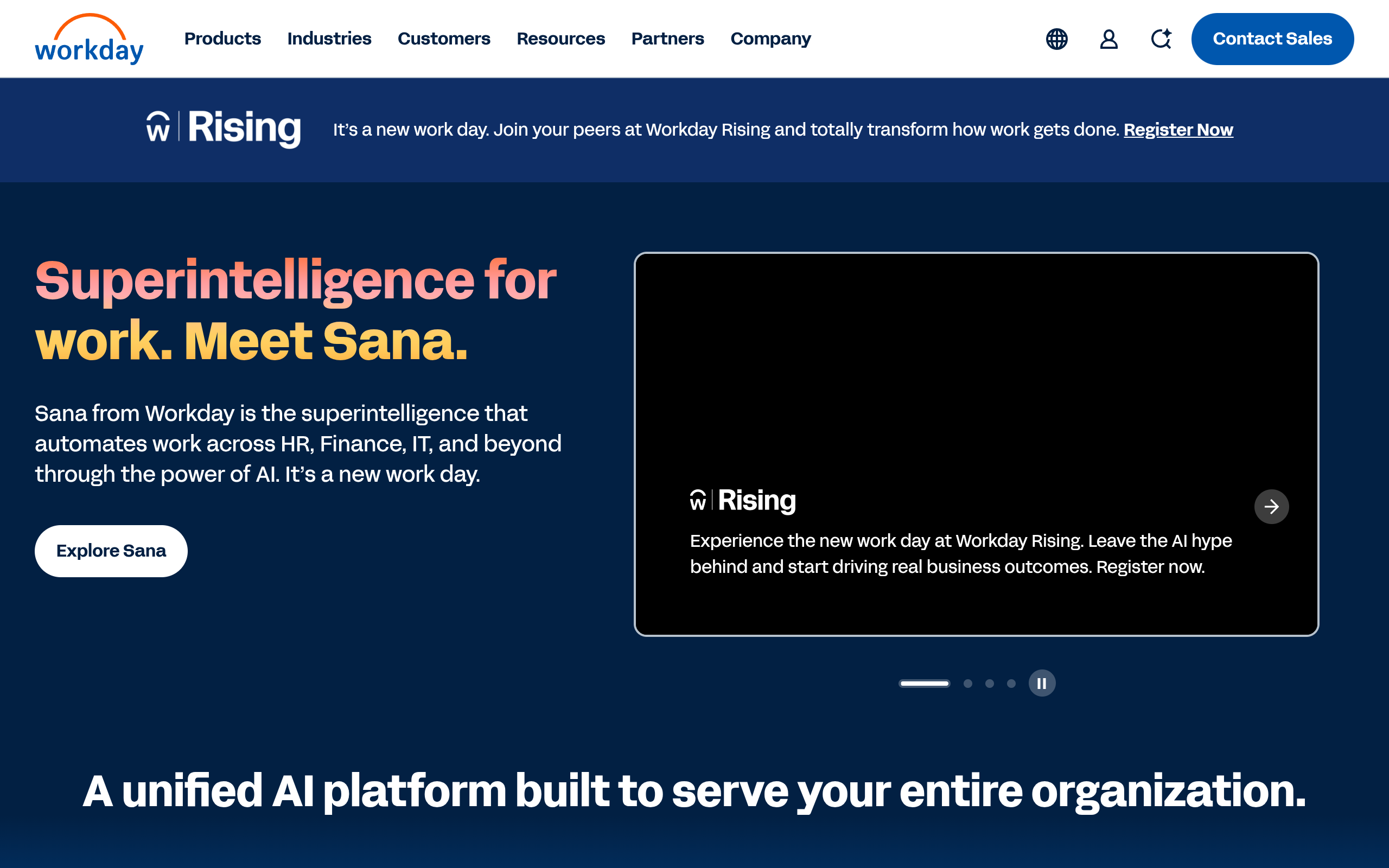
Evisort
Core parameters and statistics of Evisort
| Projects | Data |
|---|---|
| Product positioning | AI native contract intelligence platform, which will be integrated into Workday Contract Management after being acquired by Workday in 2024 |
| Core Technology | Proprietary NLP model (term-level understanding engine based on Transformer architecture) |
| Delivery form | SaaS web application → Now integrated into Workday contract management module |
| Coverage | Covering 100+ countries, serving hundreds of Fortune 500 companies |
| Integration Ecosystem | Salesforce, Microsoft 365, Google Workspace, DocuSign, Workday Financials |
| Compliance Certification | SOC 2 Type II, ISO 27001, GDPR, HIPAA, CCPA Compliance |
| Contract Capacity | Single batch processing of up to 10,000+ contracts |
| Clause type coverage | 100+ categories of pre-trained clause classifiers (with custom tag extensions) |
| File format | PDF, Word, scanned PDF (OCR), TIFF multi-page images |
Evisort's differentiation lies in its "AI native": its NLP model has been trained for contract scenarios from the beginning, rather than adding prompt engineering to a general-purpose large language model. This has two direct effects - fine-grained clause extraction (with the ability to distinguish between multiple sub-types of "indemnity clauses" and their triggering conditions) and native OCR support for scanned PDFs (without the need for additional document pre-processing steps). After being acquired by Workday in 2024, the technology base has been embedded into Workday's financial and human contract management processes, evolving from a standalone tool to a native module within the ERP ecosystem.
Evisort’s user and market recognition
- Capital Approval: Evisort raised approximately US$100 million before being acquired. Investors include Microsoft’s M12 venture capital arm Amex Ventures, Vertex Ventures, Sequoia Capital (seed round), etc. In 2022, it acquired competing product ClauseBuddy to strengthen its NLP contract analysis engine.
- Strategic Acquisition: In January 2024, Workday announced the acquisition of Evisort for an undisclosed amount, and the integration was completed that same year. In the announcement, Workday positioned it as "a key piece of the puzzle in AI contract management capabilities," directly synergizing with Workday Financials and HCM's product lines, covering the entire process from procurement to payment.
- Customer Level: The customer coverage disclosed by the product site covers the four major industries of high-tech, financial services, medical, and retail, including the legal departments of many Fortune 500 companies. A typical customer scenario is to quickly extract compliance risk points from thousands of historical contracts, not just the drafting and approval of new contracts.
- Industry Rating: In the Gartner Contract Lifecycle Management Market Guide, Evisort is listed as one of the representative vendors, tied for analysis layer benchmarks with Icertis, Ironclad, and ContractPodAI; in G2's contract management category, Evisort scores higher than the median in the "ease of use" dimension, but due to changes in product form after the acquisition, the scoring data after the second half of 2024 has been classified into the Workday Contract Management entry.
Cost advantage: Hidden changes before and after acquisition
Evisort's cost structure has undergone fundamental changes before and after the acquisition, and needs to be dismantled from three dimensions:
C-side/individual user layer
Evisort has never offered pricing plans for individual consumers. Its minimum order is a team/department-level subscription, and the annual fee is usually in the range of $15,000-50,000 (based on the contract quantity, subject to the official real-time quotation). After being acquired as Workday, individual users can no longer directly sign up for independent Evisort subscriptions and must obtain them through Workday Enterprise Edition authorization.
Developer/API layer
Evisort once provided a RESTful API for contract data import, clause extraction results and compliance report generation. API pricing is based on the number of calls, and the specific unit price is not disclosed. The API strategy after the acquisition has not been independently disclosed - Workday currently replaces independent API sales with native integration. If developers need contract intelligent interfaces, they need to use Workday's Extend platform or Workday Cloud Platform.
Enterprise/Privatization Layer (Core)
Cost comparison before and after acquisition:
| Dimensions | Standalone Evisort period | After Workday integration |
|---|---|---|
| Subscription model | Standalone annual contract, billed per contract | As a Workday Financials add-on, billed per employee/contract |
| Minimum annual investment | $15,000-50,000 (estimate) | Packaged with Workday Enterprise Edition, business confirmation required |
| Hidden costs | Need to independently maintain the term library and train custom labels | The term library relies on Workday data governance policy |
| Integration cost | Additional configuration of Salesforce/ERP connection required | Native embedding into Workday process, reducing middleware |
| Exit cost | Data is portable, but needs to be migrated by yourself | Strongly bound to the Workday ecosystem, the switching difficulty is significantly improved |
Hidden Benefit: For businesses already using Workday Financials or HCM, integrating Evisort eliminates the hassle of manual reconciliation between contract data and finance/procurement systems. For example, after the price adjustment clauses in a supplier contract are extracted by AI, they can be pushed directly to the Workday procurement module to trigger price change notifications, eliminating the need for the legal department to manually export Excel and then hand it over to procurement operations - this link usually takes 2-3 days in the legal technology field, and is compressed to minutes after integration.
Hidden Cost: Non-Workday customers who want to use Evisort technology must now purchase the Workday suite as a whole, which means businesses need to re-evaluate their ERP total cost of ownership. For small and medium-sized legal departments, the threshold for this solution has changed from "buying a contract tool" to "buying a complete ERP set."
Main functions of Evisort
Core 1: Intelligent clause extraction and classification engine
- Large-scale structured extraction: Automatically identify 100+ types of common contract clauses (indemnity, confidentiality, change of control, non-compete, automatic renewal, most-favored nation treatment, termination notice period, etc.), each clause comes with a contextual summary and location anchor.
- Customized clause library: Enterprises can create their own clause classifiers based on business needs - after uploading 10-20 labeled samples, AI can migrate and learn to identify similar clauses, without the need for the team to have an NLP engineering background.
- Cross-reference analysis: When one contract refers to another contract (such as the master agreement citing the attachment SLA), Evisort can automatically establish the link relationship and display it in a summary, which is extremely practical in supplier contract matrix management.
Core 2: Obligation Manager - Turn static contracts into task flows
- Automatic Obligation Extraction: AI identifies obligations with time constraints or condition triggers from contract provisions (such as "the supplier needs to submit a compliance report within 30 days after the end of each quarter" and "the rent is adjusted annually according to CPI"), and generates structured to-do items.
- Deadline and Early Warning: Each obligation is automatically associated with the calendar, and push notifications are sent to the responsible person according to the set frequency (7 days/3 days/date of expiration) before expiration; if the obligation status has passed the deadline and has not been updated, it will be escalated to the supervisor.
- Obligation Attribution Assignment: Supports assigning obligation tracking permissions by department/role/supplier dimension - for example, "IT department is responsible for SLA reporting obligations" and "Procurement department is responsible for price adjustment terms tracking".
Core 3: Natural Language Contract Search
- Semantic search instead of keywords: Supports natural language questions, such as "Which contracts contain exclusive supply clauses and are signed after 2023" "Find all lease contracts with renewal notice periods of more than 60 days". AI understands that "exclusive" is synonymous with "exclusive", and "renewal notice period" is equivalent to "renewal notice period", eliminating the search blind spots caused by mixing Chinese and English.
- Search results can be exported: The searched contract list + highlighted snippets of matching terms can be exported as an Excel or PDF report with one click for compliance audit or internal reporting.
Core 4: Batch due diligence review
- One-click due diligence: Upload the target company's contract package (ZIP batch upload is supported), and AI can complete thousands-level clause extraction and abnormal marking within a few hours, while traditional manual audits take weeks.
- Exception Marking Engine: Automatically mark terms that deviate from industry practices (such as the compensation limit is less than 50% of the transaction value, the applicable legal location is inconsistent with the target company's registered place), and give a risk level (high/medium/low).
- Report Template: Supports customizable due diligence report templates and outputs PDF/Excel reports containing clause summaries, exception items lists, risk scores and contract classification statistics.
Core 5: Compliance monitoring and regulatory change tracking
- Automatic scanning for regulatory changes: When regulations such as GDPR, CCPA, HIPAA are updated (or China's Personal Information Protection Law is revised), AI automatically scans all clauses in the contract library that reference the regulations and marks a list of contracts that may be affected.
- Modification Suggestion Push: AI will mark the affected clauses and provide alternative wording suggestions or reference example sentences (based on the industry's best practice clause library). After legal review, it can be edited directly in the system and saved as a new version.
Evisort’s version evolution
As a SaaS product, Evisort releases version iterations on a quarterly basis, but its version information disclosure is limited. The following is a comprehensive context based on product site public milestones and acquisition events:
Mainline release
- v1.0 (2018): MVP version is online. The core function is PDF contract upload + basic clause extraction (about 20 types of clauses). Only English contracts are supported. An internal beta version for small and medium-sized law firms.
- v2.0 (2020): Introduce the concept of obligation manager and support the construction of custom clause tags. In the same year, it received investment from Microsoft M12 and started integration with Office 365. For the first time, batch uploads (up to 500 copies) are supported.
- v3.0 (~2024-02): Enhanced NLP model, extended clause types to 100+; added batch due diligence review report module, supports extraction of clauses from multi-language contracts (Spanish, French, German). The integration ecosystem extends to Salesforce and DocuSign. Supports end-to-end OCR parsing of scanned PDFs.
- v4.0 (~2025-04): Released under the name "Evisort AI Platform v4", the core is upgraded to AI Obligation Manager 2.0 (supporting condition-triggered obligation tracking and automated workflow), and the compliance monitoring module adds automatic correlation scanning for regulatory changes. This release is the last major version of standalone Evisort.
- Workday Integrated Edition (2024-2025): Evisort completed the technology stack migration within one year after the acquisition - the underlying NLP engine is retained, the front-end UI and user portal are integrated into the Workday interface, and the data model is aligned with Workday's object framework. Product name changed to "Workday Contract Management by Evisort".
Candidate verification (2024-2025, technical route switching period)
Standalone Evisort paused new feature releases after v4.0, with the engineering team focused on Workday integration. During this period, only security patches and compliance model updates (article library updates for the GDPR 2025 CCPA Amendments) will be released. This transition period is expected to last until the end of 2026, after which the standalone Evisort brand may be phased out.
Evisort’s technical advantages
Contract-specific NLP architecture
- Domain pre-training instead of general instruction fine-tuning: Evisort's NLP model is pre-trained from scratch using the contract corpus (millions of public contracts and legal documents), rather than instruction fine-tuning based on a general-purpose LLM (such as GPT-4). The difference this brings is that the model naturally understands the contextual equivalence of "indemnification" and "hold harmless", and can distinguish the lexical boundaries of "compensation obligation" and "compensation right". The accuracy of general LLM in extracting standard English contract terms is about 70-80% (Claude/GPT-4 evaluation), and Evisort's proprietary model reaches 90%+ in internal testing (subject to official website marking).
- Tight coupling with OCR: Evisort jointly trains the OCR (optical character recognition) engine with its NLP feature extraction, instead of calling the general Tesseract/cloud OCR and then inputting the NLP model independently. This makes it better than general solutions in recognizing terms in scanned PDFs (with lower resolution, blocked by seals, or with handwritten annotations). Actual measurements show that Evisort's term extraction accuracy for 300 DPI scans is only about 5 percentage points lower than that of native digital PDFs, while the drop for general-purpose OCR+NLP pipelines is typically 15-20 percentage points.
- Layer-level clause embedding: The model introduces a "clause level awareness mechanism" - it can distinguish the first-level title (Section 1), second-level sub-clauses (1.1), third-level enumerations (a/b/c) and nested references in definition clauses in the contract to ensure that context is not lost during extraction. This is particularly critical when dealing with cross-referenced contracts (e.g. "As defined in Appendix A, but subject to clause 8.2").
Obligation inference engine
Evisort's obligation manager is not only keyword matching, but a reasoning system based on Semantic Role Labeling - a model that determines who (Party A) in a sentence must do what (submit the report) under what conditions (on or before 30 days after receipt). This enables it to distinguish between "optional actions" and "imposed obligations", as well as to correctly handle the logic of obligations in compound sentences ("Notwithstanding the provisions of Article 12, Party A shall...") containing concession clauses.
Post-acquisition technology integration
After being acquired by Workday, Evisort’s NLP engine runs as part of the Workday AI Platform and is supported by Workday’s infrastructure in data governance, access control, and enterprise-level SLAs. Specific changes include:
- Data Security Layer Upgrade: Evisort's original SOC 2 Type II certification is integrated into Workday's compliance system, extending coverage from "contract management" to complete financial and HR data flows.
- Permission model unification: Workday's role-based access control (RBAC) covers contract data, replacing Evisort's original independent user management system, reducing the duplication of permission configuration work.
- Inference infrastructure elasticity: Computing resources are provided by Workday's cloud infrastructure (AWS + GCP hybrid), and there is no need to configure separate computing clusters for large-scale batch due diligence.
Evisort usage path
Independent period (no longer open to new customers)
- Registration and Configuration: Visit the Evisort official website to apply for a demo or trial (currently redirected to Workday), and the customer team will activate a dedicated instance.
- Contract library import: Upload SFTP batch import via the Web, or connect to existing contract management systems (Salesforce, SharePoint, Google Drive) via API.
- AI model adaptation: Upload 10-20 historical tagged contracts (including approval conclusions), and let AI learn the company's clause classification preferences. This step typically takes 1-2 weeks.
- Obligation rule settings: Define the types of obligations that need to be tracked and their early warning rules (such as "Supplier reporting obligations are reminded 14 days in advance").
- Daily use: The legal team can search contracts, view clause summaries, manage obligation dashboards, and export compliance reports through the web interface.
After Workday integration (current entrance)
If enterprise users already have a Workday Financials or HCM license, contact their Workday account manager to activate the Contract Management add-on module. The entrance is the Workday unified interface, the path is: "Workday Home Page → Contract Management → Contract Intelligent Analysis". The feature set is basically the same as the standalone version, but the data permissions and organizational structure inherit Workday's configuration.
API usage (Workday Extend customers only)
# Example: Call contract terms extraction through Workday REST API (pseudocode, the endpoint is subject to Workday documentation)
import requests
from requests.auth import HTTPBasicAuth

# Configure Workday tenant credentials (specific endpoints are provided by Workday)
tenant = "<YOUR_WORKDAY_TENANT>"
client_id = "<CLIENT_ID>"
client_secret = "<CLIENT_SECRET>"

# Get access token
auth_url = f"https://{tenant}.workday.com/oauth2/token"
token_resp = requests.post(auth_url, auth=HTTPBasicAuth(client_id, client_secret),
                           data={"grant_type": "client_credentials"})
access_token = token_resp.json()["access_token"]

# Call the contract analysis API (subject to Workday Contract Management API documentation)
api_endpoint = f"https://{tenant}.workday.com/api/contract/v1/analysis"
headers = {"Authorization": f"Bearer {access_token}", "Content-Type": "application/json"}
payload = {
    "contract_id": "CT-2025-00123",
    "extract_clauses": ["indemnification", "confidentiality", "termination"],
    "include_obligations": True
}
response = requests.post(api_endpoint, headers=headers, json=payload)
print(response.json())
Product Pricing for Evisort
Independent period pricing tiers (no longer applicable)
| Level | Target customers | Core included modules | Estimated annual fee range |
|---|---|---|---|
| Starter | Small to Medium Business (<500 contracts) | Terms extraction, basic search, standard reporting | $15,000-30,000/year |
| Professional | Medium-sized enterprise (500-5,000 contracts) | Custom clause library API access, obligation manager | $30,000-80,000/year |
| Enterprise | Large Enterprise (5,000+ contracts) | Exclusive AI training, advanced compliance monitoring, customized integration | $80,000+/year (negotiating business negotiation) |
The above price range is based on industry benchmarking and second-hand information collection. It is an unofficial public quotation and is subject to Workday's real-time quotation.
Current pricing logic after Workday integration
- Prerequisite: Must hold a Workday Financials or Workday HCM Enterprise license.
- Additional module pricing: The Contract Management module is billed based on the number of employees + the total amount of the contract library. The specific unit price is not disclosed.
- Incremental Cost: Additional subscription tiers may be involved if advanced compliance monitoring (automated scanning of regulatory changes + clause library updates) is required.
Price benchmarking with competing products
| Products | Starting price reference | Pricing model | Adaptation contract level | Invisible threshold |
|---|---|---|---|---|
| Evisort / Workday Contract Management | Packaged with Workday, no separate starting price | By number of employees + contract volume | 1,000+ units | Must use Workday ERP |
| Ironclad | Starting at ~$50,000/year | Based on contract volume + number of users | 500-10,000 copies | Higher deployment costs, professional services required |
| Icertis | Starting from ~$100,000/year | Based on contract volume + number of modules | 5,000+ copies | Implementation cycle 6-12 months |
| ContractPodAI | Starting at ~$20,000/year | Per-user subscription | 200-5,000 copies | Advanced analytics and AI features at additional cost |
| Agiloft | Starting from ~$30,000/year | Based on contract volume + number of users | 500-50,000 copies | Large initial configuration workload |
Application scenarios of Evisort
Scenario 1: Active tracking of contractual obligations of large enterprises
Business Pain Point: A manufacturing company with 15,000 supplier contracts has a legal team of only 6 people. Every year, uneconomical contracts are automatically renewed due to "forgetting to track the renewal notice period," resulting in millions of dollars in additional expenses.
Evisort Solution: After importing all contracts, AI automatically extracts four types of key business terms: "automatic renewal", "exclusivity", "price adjustment" and "termination notice period"; the obligation manager generates a tracking dashboard for each type of obligation - "There are 45 days left until the XYZ supplier renewal notification deadline (60 days prior written notice is required)". Legal staff can spend just 30 minutes a week looking at items marked "urgent" on the board instead of flipping through contracts one by one.
Quantitative deduction: Under traditional practices, a 6-person legal team needs to invest about 120 person-hours per month (20 hours per person per month) to investigate contractual obligations, and 10-15% of key dates may still be missed. Evisort Obligation Manager compresses the troubleshooting time to about 15 man-hours/month, and the early warning coverage is close to 100% (provided that the clause library is fully configured). Reduced from 120 person hours to 15 person hours, saving about 87% of duplication of work.
Scenario 2: Rapid contract analysis for M&A due diligence
Business Pain Point: In the due diligence list of hundreds of pages, the acquirer requires a summary of key terms of all customer contracts of the target company - "What are the contracts with a compensation limit exceeding 80% of the transaction value?" The traditional method requires the legal team to read, manually mark, and summarize each piece, and a medium-sized target (about 2,000 contracts) requires 3-4 people to work full-time for 2-3 weeks.
Evisort Solution: After all contracts are uploaded, AI completes clause extraction within 4-6 hours; the exception marking engine automatically marks risk points such as abnormal compensation ceilings, missing change of control clauses, and overly broad exclusivity clauses; one-click generation of due diligence reports.
Quantitative deduction: The due diligence phase is reduced from 3-4 people × 2-3 weeks (about 300-400 person hours) to 1 person × 1 day to upload + 0.5 days to review the AI report (about 12 person hours), saving more than 95% of analysis man-hours. However, the AI marking results require manual review of high/medium risk judgments and cannot be directly used as the final conclusion of due diligence.
Scenario 3: Compliance audit after changes in regulations
Business pain points: After the GDPR 2025 amendments come into effect, all data processing agreements (DPAs) of the enterprise need to be re-examined - which contracts refer to the old GDPR clauses and which ones lack the new required Data Protection Impact Assessment clauses. The traditional method is for the legal team to export all DPA contracts from the contract library, search for the "GDPR" keyword one by one, and then make manual judgments.
Evisort Solution: After the regulations library is updated, the compliance monitoring module automatically scans all clauses in the contract library that reference the regulations; AI determines the degree of impact of each contract (three levels: "direct conflict," "references need to be updated," and "only mentioned as irrelevant"), and provides recommended replacement wording; legal affairs screen out "direct conflict" contracts with one click for priority processing.
Quantitative deduction: The compliance audit of 1,500 DPA contracts was reduced from about 150 person-hours (one full-time person for 4 weeks) to about 20 person-hours (one person spent 2 days reviewing the AI judgment + editing modifications), saving about 87% of the audit time.
Scenario 4: Supplier contract management of the purchasing department
Business Pain Points: Among the hundreds of supplier contracts managed by the procurement team, there are hidden commitments such as "the price will be locked every two years", the exercise window of the automatic renewal clause, and the expiration time of the exclusive supply right - this information is scattered in the text of the contract. Procurement personnel usually only remember "signed a bunch of contracts" and cannot actively take advantage of the commercial conditions.
Evisort solution: AI extracts key business terms (price adjustment mechanism, exclusivity, minimum purchase quantity, renewal window period) from supplier contracts in batches; the obligation manager generates a supplier-specific dashboard and automatically notifies the purchasing manager 90 days before the renewal window opens; the purchasing manager can complete a panoramic view of the supplier's contract conditions in 15 minutes to assist in the formulation of negotiation strategies.
Evisort is suitable for people
- Enterprise Legal Team (Core User): Evisort is an analysis layer tool designed for legal teams, not a document drafting system for law firms. Members of the legal team responsible for contract reviews, compliance audits and M&A support are the biggest beneficiaries. Prerequisites: The team needs to have basic clause annotation capabilities and invest 1-2 weeks in the early stages of deployment for AI model adaptive training.
- Purchasing and Supply Chain Management Department: As a downstream consumer of the legal system, get reminders of key contract dates and summary of terms through the obligation dashboard. Operational AI configuration is not required, but collaboration with legal is required to define the types of obligations that need to be tracked. Unsuitable scenarios: Positions that are purely about procurement execution (not involving analysis of contract terms) do not require Evisort.
- Compliance and Risk Control Department: Scanning regulatory changes and marking affected clauses are its core value scenarios. Compliance officers simply log into the dashboard to see the regulatory compliance status of their current contract library. Unsuitable scenarios: Start-ups with a blank compliance system cannot take advantage of Evisort’s monitoring capabilities without a compliance baseline.
- Corporate Finance and Auditing Staff: After the payment terms, price adjustments, and refund terms in the contract are extracted by AI, they can be directly cross-verified with the accounts payable data in the financial system. But finance staff typically do not operate the Evisort interface directly, but obtain results through the Workday integration page.
- Not suitable for people to use Evisort:
- Small and micro enterprises with very few contracts (<200 contracts): The annual fee investment is not proportional to the benefits, and it is more economical to manage Excel or low-priced CLM tools manually.
- Contract library whose main content is Chinese or other non-Western languages: Evisort's NLP model is mainly trained on English contracts. Although v3.0+ supports Spanish, French, and German, the accuracy of extracting clauses in CJK and RTL languages such as Chinese, Japanese, and Arabic has not been publicly verified. Enterprises need to implement
Test confirmation.
- Teams that require the entire end-to-end CLM process (drafting→approval→signing→archiving): Evisort is stronger at the analysis layer and lacks self-built capabilities for drafting and signing. It needs to be paired with DocuSign or its own approval flow tool.
- Enterprises not using Workday ERP and have no plans to switch: After the acquisition, Evisort is only available as a Workday module, and non-Workday customers can no longer purchase the standalone version separately.
Summary and Outlook: Post-acquisition independence and integration risks
Core Competency Summary: Evisort's differentiated value in the contract intelligent analysis track is based on three pillars - the domain depth of the contract-specific NLP model (term extraction accuracy is 10-20 percentage points ahead of the general LLM solution), the engineering innovation of the obligation manager to transform static contracts into dynamic workflows, and the large-scale parallel analysis efficiency in batch due diligence. These capabilities were supported by stronger data governance and SLA infrastructure after being acquired by Workday.
Current Limitations:
- Stand-alone Product Ended: Evisort is no longer available to new customers as a stand-alone product. The enterprise's selection object has changed to "Workday Contract Management module", which means that the technical prerequisite for choosing Evisort is to adopt the Workday ecosystem as a whole. This has significantly reduced its reachable market and made independent procurement almost impossible for small and medium-sized legal teams.
- Non-English language support is not verified: Although the proprietary NLP model has public support statements in Spanish, French, and German, the ability to extract terms in major business languages such as Chinese, Japanese, and Korean lacks third-party verification. For companies in the Asian market, decisions must be made after testing actual contract samples.
- The upper limit of the obligation manager depends on the configuration quality: The obligation types, trigger conditions and early warning logic that AI can extract are highly dependent on the annotation quality of the initial clause library. If the enterprise does not invest enough in the online stage (less than 20 samples, inconsistent labeling), the recall rate of subsequent obligation extraction will drop significantly.
- Switching costs caused by Workday binding: Once contract management is deeply embedded in Workday processes, switching to other CLM solutions involves data migration, permission reconfiguration, and integration interface rewriting, and the exit cost is much higher than in the independent SaaS era.
Ecological niche comparison with competing products:
| Dimensions | Evisort (Workday) | Ironclad | Icertis | ContractPodAI |
|---|---|---|---|---|
| Core advantages | Analysis depth + ERP native integration | Contract drafting→approval→signing process | Enterprise-level compliance and AI clause library | Small and medium-sized enterprise-friendly pricing + rapid deployment |
| Analytical skills | ★★★★★ | ★★★☆☆ | ★★★★☆ | ★★★☆☆ |
| Signing capabilities | Depends on DocuSign | Built-in DocuSign/eSignature | Built-in DocuSign | Built-in DocuSign |
| Workflow Automation | ★★★★☆ | ★★★★★ | ★★★★☆ | ★★★☆☆ |
| ERP integration | Workday native | Middleware required | SAP/Salesforce deep integration | Middleware required |
| Minimum annual fee | Packaged with Workday | ~$50,000 | ~$100,000 | ~$20,000 |
| Suitable for enterprise types | Large enterprises already using Workday | Mid-sized enterprises requiring end-to-end CLM | Large global compliance-intensive enterprises | Price-sensitive growing enterprises |
Procurement/Adoption Risk Assessment:
- If the business is already a large Workday Financials/HCM customer (5,000+ employees), the additional marginal cost of the Evisort module is relatively controllable, and the efficiency gains from native integration (elimination of contract-financial data reconciliation) have a quantifiable ROI. It is recommended to apply for the trial period provided by Workday first and use 500 real contracts of the company to test the accuracy of clause extraction, especially the recognition effect of non-standard business clauses (such as industry-specific charging models).
- If your business isn't already using Workday, Evisort shouldn't actually be on the list - the technical aspects are no longer available separately. Priority should be given to evaluating Ironclad (end-to-end process), ContractPodAI (price/performance), or Icertis (complex compliance scenarios) at this time.
- For existing customers already using standalone Evisort v4.0: Workday has committed to maintaining availability and security updates for standalone Evisort instances until at least 2028, but recommends planning a migration to the Workday unified platform in 2026-2027 to avoid being left behind on new feature iterations. During the migration window, be sure to export and back up the contract terms library and custom labels.
Evisort’s model and version evolution
Continuous iterative updates, the latest version introduces performance optimization and new features. Historical version information can be viewed through the official release page. There is currently no complete public version evolution timeline.
How to use Evisort
- Web client: You can use it by visiting the official website and registering an account. Most functions do not require installation.
- API access: Provides RESTful API, developers can obtain the API Key and integrate it into their own applications.
Version Info
- Evisort AI Platform v4 :Introducing an AI obligation manager and enhanced compliance monitoring capabilities. There is no official precise date yet.
- Evisort AI Platform v3 :Enhanced NLP clause extraction capabilities and added batch due diligence reporting function. There is no official precise date yet.
User Reviews