 Greptile
Free
Greptile
Free
Greptile is an AI code review agent that provides automated reviews based on the complete code base context for each PR. It builds a code diagram of the entire warehouse, understands the impact of changes on the system, and returns review results in about 3 minutes. Supports GitHub/GitLab, multi-cloud deployment and self-hosting, and has been adopted by 250+ enterprises such as Brex, Substack, PostHog, etc.
Greptile
Core parameters and statistics
Greptile is an AI code review agent, officially positioned as "AI code review agent that automatically reviews every pull request with complete understanding of your codebase". Different from traditional linters, it builds the function, class and dependency graph of the entire warehouse to understand the impact of changes on the upstream and downstream of the system.
| Projects | Public Information |
|---|---|
| Official positioning | AI code review agent with full codebase context |
| Review method | PR level automatic review, full code base map index |
| Average review time | ~3 minutes |
| Supported platforms | GitHub Cloud/Enterprise Server, GitLab Cloud/Self-Managed |
| Supported languages | All programming languages |
| Deployment path | Cloud (SOC2 Type II), Docker Compose, Kubernetes (Helm), Air-gapped VPC |
| Community size | 250+ enterprise customers |
| Latest version | v4 (2026-03-06) |
| Team size | 35 people |
| Company Founded | 2023, San Francisco |
Review Depth: Greptile builds a complete code diagram for each PR change instead of file-by-file comparison. This means it can detect implicit dependency breaks across files and modules – the kind of problems that are nearly impossible to spot in traditional linters and AI chat completion tools.
Deployment Flexibility: Offers both SaaS cloud and enterprise self-hosted paths. Self-hosting supports Docker, Kubernetes and even completely offline Air-gapped environments, which is suitable for industries with strict data sovereignty requirements such as finance and medical care.
Ecological integration: In addition to the core integration of GitHub/GitLab, it has been connected to Jira, Notion, Zapier and mainstream coding agents (Claude Code, Codex, Cursor, Devin, Conductor), forming a process from review to repair.
User and market recognition
Greptile's market recognition comes from enterprise customer adoption and capital endorsement, rather than public independent user statistics (the latter is not made public).
Enterprise Clients: Publicly disclosed clients include Brex, Substack, PostHog, Bilt, Stripe, Amazon, and Y Combinator’s internal software team. Public data claims that more than 500 million lines of code are reviewed every month, helping to block 180,000+ bugs. Deployed and used by 250+ companies at the same time.
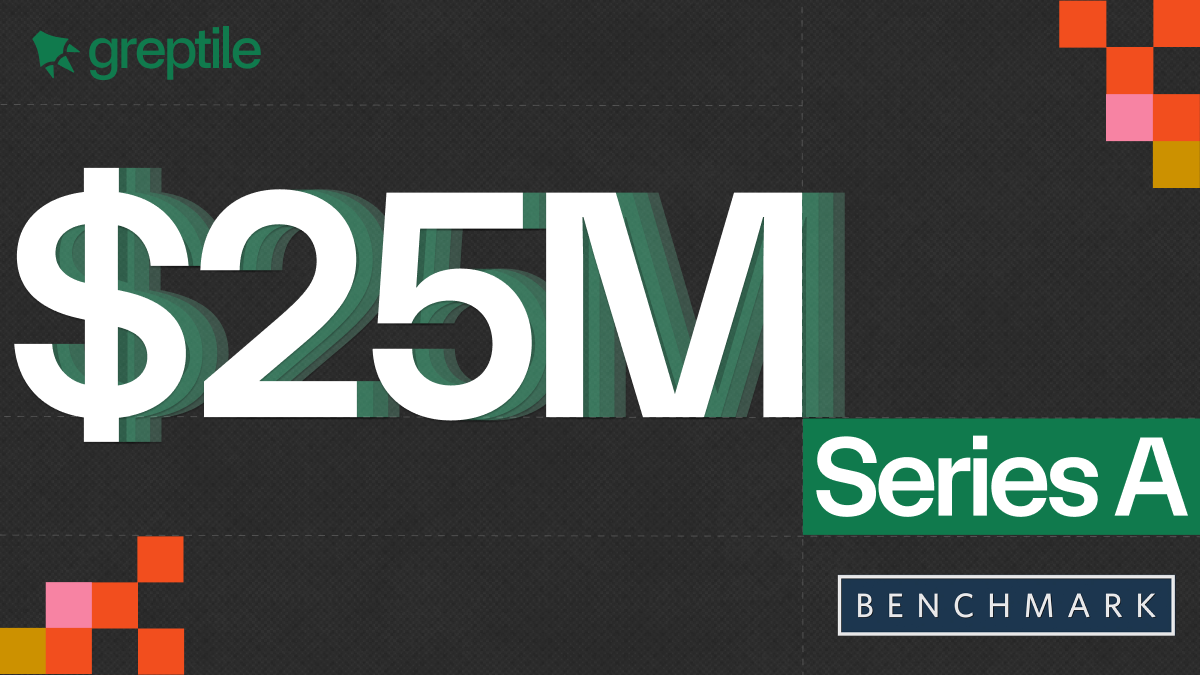
Capital Approval: Completed $25M Series A financing in September 2025, led by Benchmark Capital, with participation from seed investors Initialized Capital, YC and Cory Levy. It previously completed a $4M seed round in June 2024 (TechCrunch report).
Industry influence: Leading YC companies such as PostHog, Raycast, Vouch, and Podium are all its customers; YC itself also uses Greptile in its internal software team. Its two major releases of v3 and v4 have attracted industry attention.
Cost advantage
Greptile's cost structure is divided into three tiers: individual/team/enterprise, with transparent pricing and discounts for open source projects and early-stage startups.
C-side/individual developers: Free Starter plan launched in June 2026, for independent developers - 50 standard reviews/month for one active developer, unlimited warehouses. For individual open source maintainers or small projects, an automated review process can be established at zero cost.
Team/Professional Plan: The Pro plan is billed at $30/seat/month, each seat includes 50 review quotas, and the excess is $1/time. Supports unlimited warehouses, unlimited external application connections, and customized review rules. From a monthly fee perspective, a team of 5 costs $150 per month and can cover approximately 250 reviews.
Enterprise Plan: Supports self-hosting (own infrastructure or Air-gapped VPC), SSO/SAML, audit log SOC2 Type II compliance, dedicated Slack support, custom contract terms. Pricing is subject to business negotiation.
Preferential policy:
- Open source projects are free: Non-commercial MIT/Apache licensed projects can apply for free use.
- 50% off for startups: 50% off for startups that are not yet Series A and have less than $2M in revenue in the last 12 months.
Main functions
Greptile's capabilities are designed around "context-aware automated code review", and its core functions can be summarized into the following six categories:
- Full-Context PR Review: Analyze the impact of changes based on the graph structure of the entire codebase, rather than file-by-file comparison. The review results will be returned in about 3 minutes, including problem location, severity level (P0/P1/P2) and repair suggestions.
- Adaptive learning of team coding specifications: Automatically extract coding specifications (such as transaction processing order, log format specifications, security verification mode) from team members' historical PR comments on GitHub/GitLab, and apply these specifications to subsequent reviews. Learning results are segregated by organization and not shared across teams.
- Fix link directly to coding Agent: Each review comment comes with a "Fix with your Agent" button, which sends the problem context (file path, line number, suggested code) to Claude Code, OpenAI Codex, Cursor, Devin or Conductor with one click, and the Agent directly performs the repair. The PR summary page also provides a "Fix All" button to batch process all issues.
- MCP Server Access: Provided as an MCP server, coding agents can directly call Greptile to trigger reviews, obtain results, and manage custom contexts without leaving the IDE.
- Cross-system context integration: Supports correlating Jira Tickets to check whether PRs meet requirements, reading Notion specification documents as a basis for review, and reading related code libraries across repositories as context through Repo Clusters (up to 7 repositories).
- TREX test generation and execution (Public Beta): Not only can you review PRs, but you can also generate targeted tests for each change and execute them in the sandbox, with failure logs and screenshot traces attached. Officials claim to catch 20% more bugs.
Model and version evolution
Continuous iterative updates, the latest version introduces performance optimization and new features. Historical version information can be viewed on the official release page. There is no complete public version evolution timeline yet. It is recommended to pay attention to the official announcement to understand the rhythm of feature updates.
Technical advantages
Greptile's technical advantages are concentrated in the two levels of "contextual depth" and "review automation":
Full code base graph index: Unlike solutions that rely on file-level diff or plain text search, Greptile builds a structural graph of every function, class, and dependency for the entire repository. This allows it to understand the implicit impact of a change on remote modules - such as changing the return type of a utility function, and the graph can be automatically associated with all call sites.
Adaptive learning mechanism: By analyzing the team's existing PR comment history (including error corrections, questions and coding standard corrections by human reviewers), the organization's unique coding rules are automatically extracted. Learning results are isolated across organizational boundaries and are not leaked across teams. After 2-3 weeks of learning, Greptile will gradually reduce reminders for review items that the team does not care about and reduce the noise.
Agentic Review Pipeline: Starting from v3, the review process is designed as a multi-step Agent pipeline—not only can it do static analysis, but it can also actively pull relevant Ticket requirements, read project configuration files (CLAUDE.md, .cursor/rules, .greptile/), and ask clarification questions to the reviewer when necessary. When a reply is received, the Agent can continue the discussion in the same thread.
Multi-model configurable: The team can choose the underlying AI model that drives the review, and set the maximum Agentic rounds for each review to make a trade-off between review depth and Token cost.
Security and isolation design: Enterprise self-hosting supports completely offline Air-gapped deployment, and the code data does not leave the enterprise network. The SaaS version holds SOC2 Type II certification. For irreversible operations (such as automatic repair triggered by MCP), an explicit confirmation link is designed.
How to use
Quick Start
- Register an account: Visit app.greptile.com to create an account and support GitHub OAuth login.
- Install the App: Install the Greptile App on GitHub or GitLab and select the repository that needs to be reviewed.
- First review received: After submitting the PR, Greptile automatically starts the review, and it takes about 3 minutes to return the review results in the form of comments in the PR.
- Feedback Training: Use 👍/👎 reactions to review results or reply to comments, and Greptile gradually learns your preferences, with significant noise reduction after 2-3 weeks.
Usage comparison
| How to use | Suitable for people | Features | Cost |
|---|---|---|---|
| GitHub/GitLab App (recommended) | Team Developer | Automatically review every PR, out-of-the-box | Starter Free / Pro $30/seat/month |
| Greptile CLI | CI/CD and power users | npm i -g greptile, run greptile review in terminal |
Included in package |
| Greptile MCP Server | Coding Agent users | Trigger reviews and get comments directly in the IDE | Included in plan |
| TREX (Test Generation) | Teams that need test coverage | Automatically generate and execute tests, which requires 3 times the quota | 1 TREX = 3 standard reviews |
| Self-hosted/Enterprise | Organizations with high data sovereignty requirements | Docker/K8s/Air-gapped deployment | Business confirmation required |
Configuration points
- .greptile/ directory: Place
.greptile/config.jsonand.greptile/rules.mdin the root directory or subdirectory of the warehouse to configure custom review rules and context. Configurations are inherited cascading from the root directory to subdirectories. - cross-repo context: Point to the associated repository through the
context.reposfield, up to 7, to make the review cross-repository aware. - Model Selection: Choose the underlying model and maximum Agent rounds in team settings to balance depth and cost.
Product Pricing
The pricing model is subject to the official real-time page. Usually a freemium or subscription system is used, and basic functions can be used for free. Advanced functions or high-frequency use require paid subscriptions, and users are advised to evaluate the optimal solution based on actual usage.
Application scenarios
Greptile's implementation scenarios focus on development processes that require large-scale, traceable code quality assurance:
- PR review for medium and large teams: When the team has multiple PRs circulating at the same time, and it is difficult for human reviewers to remember the entire code base context every time, Greptile acts as a "never-tiring junior reviewer" and automatically discovers cross-module impacts, security implicit issues, and deviations from coding standards. The benefits are reflected in shortened manual review time and reduced missed review rate.
- New members getting started with the code base: When new engineers take over the legacy code base, they can understand the existing coding standards and architectural conventions through Greptile's review comments, shortening the learning cycle from "understanding the project structure" to "writing compliant code".
- CI/CD Quality Gating: Integrate Greptile CLI into the CI pipeline to automatically perform full context review before merging and block PRs containing high-risk issues. Cooperate with TREX to generate tests to further enhance release confidence.
- Multi-warehouse microservice architecture governance: Repo Clusters are used to associate multiple warehouses of the same service group, and a cross-warehouse change can be fully reviewed before merging to avoid missing interface incompatibilities between microservices.
- Compliance and Security Audit: Security Audit Beta focuses on detecting potential vulnerabilities and risk patterns, and cooperates with enterprise self-hosted Air-gapped deployment to meet code audit compliance requirements in finance, medical and other industries.
Applicable people
- Software development teams (core audience): For teams that want to systematically improve code quality and reduce online bugs, Greptile can serve as the infrastructure layer for the code review process. The premise is that the team has a standardized Git workflow (PR/MR process), otherwise the review capability cannot be implemented.
- Technical Managers and CTO: Technical managers who need to grasp the overall code quality across teams and quantify review effects (adoption rate, number of bug interceptions, merge acceleration ratio), Greptile provides Analytics Dashboard to track these indicators.
- Open Source Project Maintainer: The free OSS plan allows independent maintainers to obtain enterprise-level code review capabilities and improve the quality threshold of code submitted by contributors.
Not suitable for scenarios:
- For small projects where individuals work alone (the Git workflow is not standardized or the code size is extremely small), the context-aware advantages of Greptile cannot be fully utilized.
- For architecture reviews that require in-depth human judgment (such as overall refactoring plan review), AI review can only be used as an auxiliary rather than a replacement.
- The team is in the "write and go live" stage and does not have a PR review process established, so it cannot benefit from automated reviews.
Summary and Outlook
Greptile's core competitiveness lies in "AI review with full code base context understanding" - it is not a traditional linter, nor a simple code completion tool, but an AI Agent that is the last quality gate before the code is put into the library. Its graph index architecture, adaptive learning of team coding standards, and repair capabilities of direct-connected coding agents give it a clear differentiated advantage in the segmented track of code review.
High-frequency iterations since 2025 (v3 Agentic rewriting v4 engine upgrade TREX test generation MCP Server, Partner Program) show that the team is still rapidly expanding the boundaries of capabilities. Coupled with the $25M Series A endorsement led by Benchmark Capital, the funding is sufficient to support long-term development.
Current Limitations and Uncertainties:
- Review quality is highly dependent on the reasoning capabilities of the underlying model, and the difference in results between different models has not been publicly quantified.
- TREX is still in the Beta stage, and the test coverage and false positive rate in production need to be continuously monitored.
- The resource requirements of the self-hosted solution (especially graph index computing resources for large code bases) are not disclosed.
- Data such as Partner Program and corporate customer specific magnitudes rely on official real-time disclosure.
Procurement and Adoption Suggestions: It is recommended to use the Starter free plan to run the process on 1-2 medium-sized warehouses, observe the adoption rate and false positive rate of the review results (about 2-3 weeks), and then decide whether to upgrade to Pro or Enterprise. Before purchasing, enterprises need to confirm the following: freedom of choice of underlying model, self-hosted resource requirements, completeness of audit logs, and the valid scope of the SOC2 compliance certificate.
Related tools:  GitHub Copilot,
  Cursor
Version evolution of Greptile
Since its founding in 2023, Greptile has undergone a complete evolution from codebase knowledge Q&A to Agentic reviews. The publicly verifiable major version nodes are as follows:
v4 (2026-03-06)
Major upgrade to review engine. The number of accepted comments per PR increased from 0.92 to 1.60 (+74%), the author fix rate increased from 30% to 43% (+43%), and the positive replies increased from 0.31 to 0.52 (+68%). The release of v4 marks the evolution of Greptile from "problems can be found" to "problems are more accepted and fixed by the team".
v3 (2025-09-15)
Completely rewrite the review engine into an Agentic workflow. Introducing team coding norm learning (automatically extracting rules from human PR comments), Jira/Notion business context integration, automatic detection of configuration files such as CLAUDE.md/.cursorrules/.greptile/, and the ability to copy review comments to the coding agent with one click. MCP Server was launched at the same time. Series A financing announced simultaneously in September 2025.
v2 (~2025-03)
There is no official precise date yet. In the early version iteration period, code base graph indexing and basic context-aware review capabilities were built.
v1 (~2024-06)
Initial version. Supports basic code base natural language Q&A and PR automatic review, verifying the core proposition of "understanding code changes with the complete code base context". Completed $4M seed round in June 2024.
Since the end of 2025, product iteration has accelerated significantly - more than 20 feature releases were recorded in the Changelog in the first 6 months of 2026, covering key capabilities such as CLI, MCP Server, TREX, Partner Program, Memory & Learning, etc.
Version Info
- Greptile v4 :The review engine has been significantly upgraded, with the number of accepted comments per PR increased by 74%, author response rate increased by 43%, and positive replies increased by 68%.
- Greptile v3 :Completely rewrite the review engine into Agentic workflow, introduce Jira/Notion integration for team coding standard learning, automatically detect CLAUDE.md/.cursorrules, and copy repair suggestions to the coding agent with one click.
- Greptile v2 :There is no official precise date yet. Early version iterations laid the foundation for code base graph indexing and context-aware review capabilities.
- Greptile v1 :There is no official precise date yet. The initial version supports basic code base Q&A and PR review functions.
User Reviews