 Nomic Atlas
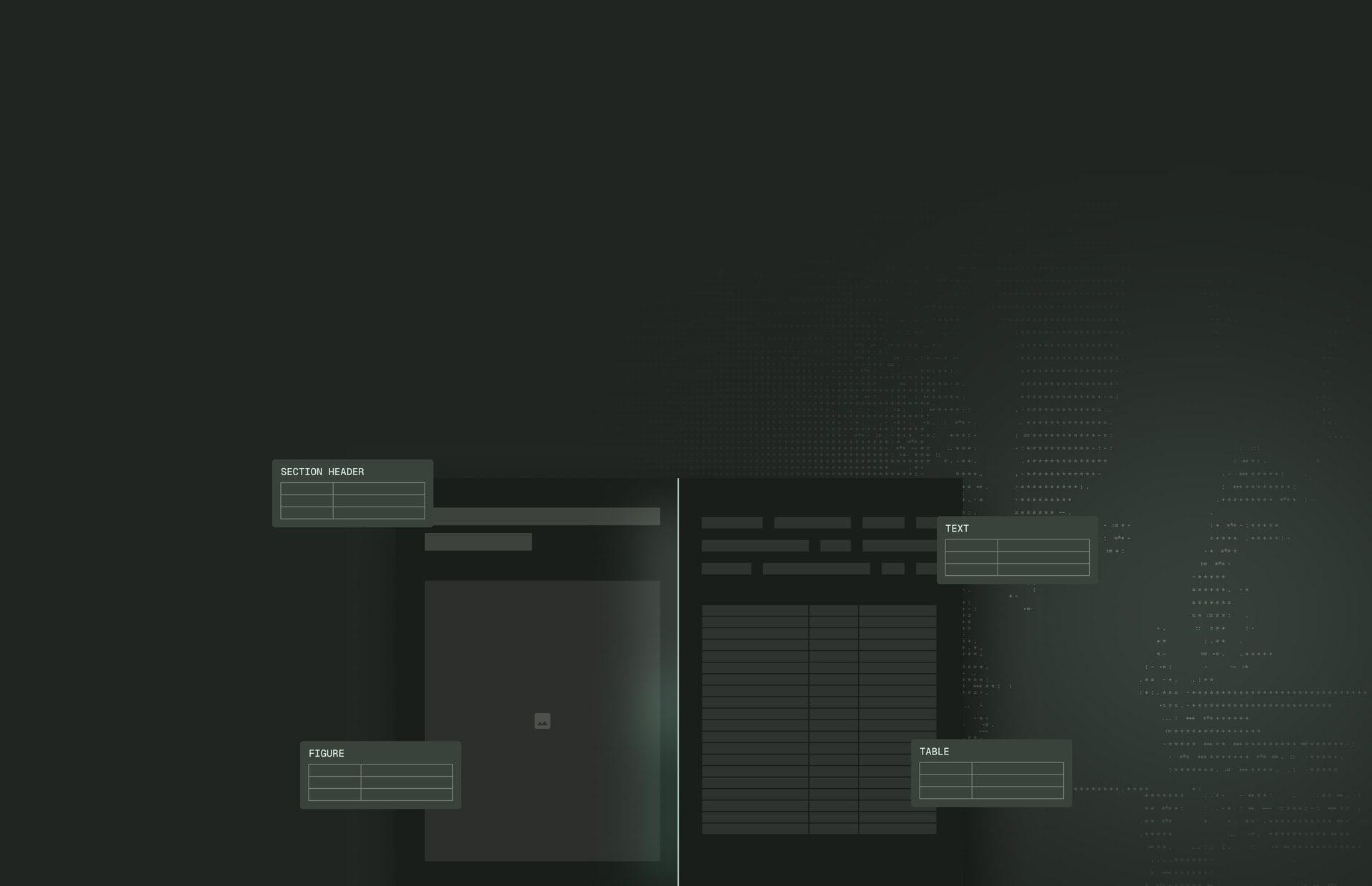
Nomic Atlas is an AI data processing and semantic retrieval platform for engineering and enterprise knowledge bases. It supports Parse, Extract, Embed, Datasets and collaborative workflows, and converts drawings, specs, PDFs and project data into searchable, distributable and auditable knowledge assets.
NomicAtlas
Core parameters and statistics
Nomic Atlas is not a single-point tool for general Q&A, but instead strings together project-level document processing, vectorization, retrieval, and collaborative analysis into a set of workflows. Its core value is to turn drawings, specs, PDFs, tables and annotation files into searchable, traceable and reusable data assets.
| Projects | Public Information |
|---|---|
| Official positioning | AI data processing and semantic retrieval platform for AEC and enterprise knowledge bases |
| Core Process | Parse, Extract, Embed, Datasets |
| Main objects | drawings, specs, PDF, tables, markups, scanned reports |
| Deployment form | Cloud, VPC, On-prem |
| Platform interface | Web, Developer API |
| Primary language | en-US |
| Home Region | US |
| Current public status | The official website is continuously updated, but there is no unified public version number |
User and market recognition
Gradually build user awareness in the field, and product capabilities are used by content creators and teams to improve work efficiency. Some industry users have incorporated it into their daily workflow. It is recommended to refer to the latest official disclosures for specific user scale and industry adoption rate data.
Cost advantage
- C-side/Individual: Usually a free version is provided to experience the core functions, and high-frequency use requires a paid package subscription.
- API/Developer: Billed by call volume, suitable for development teams that can be flexibly integrated into their own systems.
- Enterprise/Privatization: Contact the business owner to obtain customized quotation and deployment plan. The specific price is subject to the official real-time pricing page.
Main functions
- Parse: Convert complex drawings, specs and PDFs into usable representations that preserve layout and structure, suitable for subsequent retrieval, analysis and proxy calls.
- Extract: Extract structured output from document collections to facilitate approval, reporting, compliance, and system docking.
- Embed: Generate multi-modal embeddings for text, images, drawings, tables and project materials for semantic retrieval and similarity analysis.
- Datasets: Organize, store and govern project data sets to support repeated analysis, comparison and team collaboration.
- Developer API: Provides parsing, extraction embedding and retrieval capabilities to internal system copilot or automated workflows.
- Deployment options: Supports cloud VPC and on-prem to facilitate implementation according to data residency and compliance requirements.
Model and version evolution
Atlas' version system is more like the continuous evolution of the product platform, rather than the discrete version number of traditional single software. The official website news page can confirm two key nodes: the new Nomic Platform on 2025-11-03, and the regional data residency update on 2026-06-12. They show that Atlas is moving from a collection of tools to a platform and enterprise deployment capabilities.
| Time | Node | Description |
|---|---|---|
| 2025-11-03 | Announcing a new Nomic Platform | Platform workflow node |
| 2026-04-02 | AEC-Bench | Official research/evaluation node, reflecting the continuous iteration of product capabilities |
| 2026-06-12 | Data Residency update | Data residency and regional hosting nodes, indicating that deployment and compliance capabilities continue to expand |
Technical advantages
Complete multi-modal data processing link: Atlas not only does search, it puts parsing, extraction embedding and data set management in one chain, which is suitable for all the way from original files to reusable knowledge assets.
The effect comes from structure awareness: It is trained and optimized for drawings, specs, tables and scanned documents, so it is better at handling layout, hierarchy, image and text mixing and professional context, rather than the superficial similarity of pan-text.
Collaborative analysis closer to the production process: Datasets, permissions, and deployment options mean this is not a personal note-taking tool, but a workbench that allows teams to iteratively retrieve, review, and distribute chains of evidence.
Clear Deployment Boundaries: Cloud, VPC, on-prem and data residency options give enterprises a clearer implementation path, and also allow it to connect with the existing permission system.
How to use
- First connect project documents and data sources to Atlas, usually starting with SharePoint, Egnyte, ACC, Bentley or direct upload.
- Use Parse to process drawings, specs, PDFs and scanned materials to preserve structural information.
- Use Embed to build an index, and then use semantic search to find similar content, cross-file references, and contextual evidence.
- Organize key data into Datasets to facilitate team collaboration, review and repeated analysis.
- For automation, connect the Developer API to internal copilot, review processes, or knowledge workflows.
Product Pricing
Atlas' public pricing page has a two-tier structure. The Business plan is marked as $40/user/month, with an annual commitment, at least 25 seats, and each seat includes $20 AI usage; Enterprise is a customized plan for more complex security, compliance and deployment needs.
| Plan | Price | Applicable objects | Remarks |
|---|---|---|---|
| Business | $40/user/month | Small and medium-sized teams and pilot teams | Includes $20 AI usage/seat, annual commitment, starting from 25 seats |
| Enterprise | Customization | Large organizations and compliance scenarios | Supports VPC/on-prem, custom AI usage, SCIM, audit logs and dedicated support |
Application scenarios
- Dataset Exploration: Put drawings, specs, PDFs and tables from different projects into the same workflow to quickly identify differences, duplications and gaps.
- Embedding visualization and similarity analysis: Use multi-modal embedding to find similar drawings, similar terms and similar cases to assist decision-making and review.
- Semantic Search: Search project materials by question, topic, and context, not just by file name or keywords.
- Collaborative review: Let multiple members review, mark, and cross-check around the same evidence chain, suitable for drawing review and submittal review.
- Enterprise Knowledge Governance: Incorporate permissions, residency, indexing and usage logs into the process to meet internal control and compliance requirements.
Applicable people
- Architecture, Engineering and Construction Team: Need to find evidence from a large amount of project data, check specifications and track modifications.
- AI Platform Engineer: Hope to turn document parsing, retrieval and embedding into internal capabilities.
- Knowledge Management and Compliance Team: A knowledge workbench that is auditable, controllable, and resident is required.
Not suitable for boundaries: If there is no project information, no team collaboration requirements, and no intention to turn documents into retrievable assets, it will be difficult to fully unlock the value of Atlas.
Summary and Outlook
The competitiveness of Nomic Atlas does not lie in "another search box", but in stringing multi-modal data processing, semantic retrieval and collaborative analysis into an implementable production chain. It is suitable for building reusable knowledge assets from project materials, and is especially suitable for scenarios that require citation, review and permission management.
The current restrictions are also clear. First, the public version number of Atlas is not uniform, and the outside world can only understand the evolution through the official online version and news nodes. Second, it is more enterprise- and project-driven, with limited space for personal lightweight use. Third, the effect is highly dependent on the quality of data warehousing, permission configuration and the degree of data structuring. The more chaotic the original data, the more discounted the benefits.
The most worthy of continued observation in the future are three things: first, whether Parse and Embed will continue to expand to more multi-modal formats; second, whether the Developer API will penetrate deeper into the agent workflow; third, whether enterprise deployment and data residency capabilities will continue to sink into more detailed industry scenarios.
User and market awareness
The audience of Atlas is not ordinary individual users, but teams that need to quickly locate evidence chains in a large amount of project data. Both the homepage and the price page have a very solid scenario, which revolves around code compliance, drawing review, submission review, project research and firm-wide search, indicating that it is more like an enterprise knowledge infrastructure than a lightweight search box.
| Role | Fit | Key Benefits |
|---|---|---|
| Architecture and Engineering Team | High | Semantic search and collaborative analysis in drawings, specs, BIMs, RFIs and project materials |
| Development and Platform Team | High | Use Developer API to connect parsing, extraction embedding and retrieval to internal systems |
| Enterprise Knowledge Management Team | Medium to High | Use Datasets and permissions to control the organization's internal knowledge assets and reduce repeated searches |
| Individual Light User | Low | Requires project data, team collaboration, or enterprise permissions to gain value |
Real usage boundary: Its value mainly comes from "organizing multi-modal project data". If you are just doing one-time text Q&A, Atlas' capabilities will appear to be overweight; once you need repeated retrieval, cross-file comparison, collaborative analysis with references, and data residency, it is its home field.
Cost Boundary
Atlas' pricing is a clear enterprise SaaS structure. The public pricing page shows that the Business plan is $40/user/month, with an annual commitment and a minimum of 25 seats; each seat includes $20 of AI usage and is shared at the organization level. Enterprise is priced on demand and provides stronger deployment and compliance capabilities.
C side/individual: There is no lightweight free mainline for individuals. Even if individuals can have access to the product, it is more suitable for trial rather than long-term independent deployment.
Developer/API: Developer API is the production entrance of the platform, but the public page does not have a separate API with independent pricing. Seat, usage and integration costs are usually calculated together.
Enterprise/Private: This is the main paid tier. In addition to seat fees, consider data indexing, additional AI usage, VPC or on-prem deployment, compliance review, permissions, and implementation support.
Hidden Costs: The real cost is not just the subscription fee. For platforms such as Atlas, data cleaning, project warehousing, permission sorting, index maintenance, audit requirements and subsequent operation and maintenance must be included in the total cost of ownership.
Version Info
- Nomic Supports Data Residency Across Europe, UK, US, and Australia :The official website news page shows that a data residency update was released on 2026-06-12, indicating that the Atlas and Nomic platforms have been expanded to multi-region hosting and data residency options.
- Announcing a new Nomic Platform :The official website news page shows that Nomic announced the new Nomic Platform on 2025-11-03, marking the extension of Atlas-related capabilities from single search to platform-based workflow and enterprise knowledge management.
- Nomic Atlas Web :Atlas' official public page will continue to be updated in June 2026. The currently visible product forms revolve around the Developer API, Platform, Pricing and Security pages, supporting data residency, access control, indexing and multi-modal retrieval; the official has not disclosed a unified version number or precise release date, so it is marked with the online version at the time of collection.
User Reviews