 Nuance DAX
Nuance DAX (Dragon Ambient eXperience) is an contextual clinical intelligence solution launched by Nuance Communications, a subsidiary of Microsoft, and has now evolved into Microsoft Dragon Copilot. AI is used to automatically capture doctor-patient conversations and generate structured medical record documents that meet specialty requirements. It is deeply integrated with the EHR system and covers multi-role scenarios such as doctors, nurses, and radiology departments.
NuanceDAX
Core parameters and statistics
Specific technical parameters (such as model size, context length, supported file formats, input and output restrictions, etc.) are subject to the official product page. It is recommended that users verify the latest technical specifications and system requirements before choosing to ensure that they match their own usage scenarios.
User and market recognition
Nuance DAX (now Microsoft Dragon Copilot) is a leader in medical AI clinical documentation:
B-side medical system coverage: It has been implemented in many large medical systems in the United States, including Intermountain Health, Mercy, Cooper University Health Care, Vail Health, University of Michigan Health-West, University of Rochester Medical Center, etc. 88% clinician adoption rate at Singing River Health System, with average monthly usage of 22,000 voice commands.
Industry status: Nuance has been deeply involved in the field of medical speech recognition for more than 20 years, and Dragon Medical One is one of the most widely used medical speech input solutions in clinical practice. DAX's ambient intelligence technology continues this advantage and directly competes with competing products such as Abridge, Suki, and Augmedix in the ambient clinical documentation market segment.
Verifiable Facts:
- Nuance had 6,500+ employees and served over 10,000 healthcare organizations before being acquired by Microsoft.
- After the release of Dragon Copilot, Microsoft integrated it into the overall Microsoft for Healthcare approach to provide compliance infrastructure through Azure and Microsoft Cloud.
- In third-party evaluations such as Gartner and KLAS, Nuance has long been ranked in the leader quadrant of medical voice/clinical documentation (subject to the latest official report).
Cost advantage
Nuance DAX/Dragon Copilot is positioned as an enterprise-level medical solution, and its cost structure needs to be dismantled from the perspective of organizational procurement:
C-side/Individual: Personal subscription is not available. DAX is a B-end product for medical institutions and cannot be purchased directly by ordinary consumers.
Developer/API: Undisclosed standalone API pricing. Nuance's speech recognition and AI capabilities are provided indirectly through services such as the Microsoft Azure Healthcare API and Dynamics 365. Please consult Microsoft sales team for specific pricing.
Enterprise/Private: Pricing is based on organization size, number of users and deployment method. The typical model is annual license. There is no public price list, please contact Microsoft Sales for a quote. Cost includes:
- Software license fee (charged per physician/clinician seat)
- EHR integration and implementation service fees
- Azure cloud infrastructure fees (if you choose cloud deployment)
- Training and technical support costs
Hidden costs: Deep EHR integration requires the cooperation of the IT team, and the cycle is usually 3-6 months; the investment in adoption training for clinicians cannot be ignored; multi-site deployment needs to consider network bandwidth and Azure regional coverage.
Reference for comparison with competing products: Competing products such as Abridge, Suki, and Augmedix also adopt an annual payment model based on enterprise seats. The price range is roughly US$200-500 per clinician per month (subject to the official real-time quotation). Nuance DAX is likely in the upper-middle range of this range due to its brand premium and EHR integration maturity.
Main functions
The core value of Nuance DAX is to integrate the four steps of "listening, writing, checking, and doing" into a single AI workflow:
- Contextual listening medical record generation: Passively listen to doctor-patient conversations in the clinic, automatically extract clinically relevant semantics, and generate a draft medical record in SOAP format that meets the requirements of the specialty. Supports multi-speaker recognition, multi-language mixed dialogue, and time-lapse recording supplement.
- Knowledge retrieval and citation: Clinicians can ask questions directly in the DAX interface, and the answers come from conversation transcriptions, generated medical records, and third-party authoritative medical knowledge bases. Each answer comes with a traceable citation source without switching systems.
- Intelligent Coding and Task Automation: Automatically extract ICD-10/CPT coding recommendations and generate documents such as referral letters, clinical evidence summaries, and follow-up summaries. Transform repetitive paperwork from "manual filling" to "AI drafting + physician review".
- EHR Deep Two-way Integration: Two-way data synchronization with mainstream EHR systems such as Epic and Cerner. The generated medical records can be directly written back to the corresponding fields of the EHR without copying and pasting.
- Multi-role scene adaptation: Design dedicated workflows for doctors, nurses, and radiologists respectively. For example, the radiology version is integrated with PowerScribe One to support automatic drafting of imaging reports.
Expert opinion: The real differentiation of DAX lies in the relationship of "contextual monitoring + EHR write-back" - it is not just a voice transcription tool, but an AI middleware that is fully embedded in the clinical workflow. Doctors do not need to actively operate any equipment during the consultation process, and medical records can be automatically generated and written into the system. This "zero-interaction" experience is the key to reducing the paperwork burden.
Model and version evolution
Continuous iterative updates, the latest version introduces performance optimization and new features. Historical version information can be viewed on the official release page. There is no complete public version evolution timeline yet. It is recommended to pay attention to the official announcement to understand the rhythm of feature updates.
Technical advantages
DAX’s technology moat is built on the combination of Nuance’s more than two decades of medical speech recognition accumulation and Microsoft AI infrastructure:
Medical Speech Recognition Depth: Nuance’s Dragon Medical family of products has accumulated over 20 years of medical language model training data in the medical field. On this basis, DAX is optimized for the "doctor-patient dialogue" scenario and can distinguish the voices of doctors and patients, recognize the abbreviations of medical terms, and understand unstructured spoken expressions.
Ambient Intelligent Architecture: Different from the traditional "button-to-talk" mode, DAX uses passive ambient listening to continuously analyze the clinical semantics in the audio stream and provide a structured draft of the medical record within minutes after the conversation ends. Its underlying model has been specially trained in medical dialogue and can identify key clinical information points during medical treatment (chief complaint, medical history, physical examination, diagnosis, treatment plan).
Microsoft AI Infrastructure: Relying on Azure's HIPAA compliant infrastructure Azure OpenAI Service's GPT model and Microsoft's responsible AI framework, DAX meets the strict compliance requirements of medical institutions in terms of model inference, data encryption, audit logs, etc.
EHR Integration Thickness: Deep integration with EHR systems such as Epic, Cerner, Meditech and others is a significant competitive barrier for DAX. The interface not only supports data writing, but also supports context awareness - automatically matching medical record templates based on the current patient and current visit type.
How to use
How to use Nuance DAX/Dragon Copilot for enterprise-level deployment in medical institutions:
| Access method | Description | Applicable scenarios |
|---|---|---|
| EHR embedded integration | Directly called through plug-ins of EHR systems such as Epic and Cerner | Full outpatient, emergency, and inpatient scenarios |
| Standalone Web application | Access Dragon Copilot console through browser | Remote diagnosis, treatment and management work |
| Mobile App | PowerMic Mobile and other supporting applications | Ward rounds, bedside records |
| Azure API integration | Calling underlying capabilities through Microsoft Healthcare API | Custom development ISV integration |
Typical usage process:
- Contextual Configuration: IT team completes EHR integration and device deployment (microphone, network).
- Visit Start: The doctor starts a DAX session in the office via the EHR plug-in or voice.
- Automatic monitoring: DAX passively monitors doctor-patient conversations in the background and analyzes clinical semantics in real time.
- Medical Record Generation: After the visit, DAX generates a draft structured medical record within 1-5 minutes.
- Doctor review: The doctor reviews and modifies the medical records generated by AI in the EHR, and signs to confirm.
- Coding and follow-up: ICD-10/CPT coding suggestions and attached documents such as referral letters are generated simultaneously.
Product Pricing
Nuance DAX / Dragon Copilot implements an enterprise licensing model and does not offer individual subscriptions or pay-as-you-go:
- Enterprise Annual License: Billed per clinician seat, includes software license, EHR integration support and basic training.
- Cloud Infrastructure Fee: When using Azure cloud deployment, cloud resource fees are additional.
- Pricing Transparency: Microsoft does not disclose the standardized price list for Dragon Copilot. According to industry speculation, the price of similar ambient documentation solutions is usually in the range of $200-500 per clinician per month, and DAX may be higher due to brand and integration maturity. Final pricing requires contacting Microsoft Sales for a custom quote.
- Free Trial: No personal free version available, but can be deployed via Microsoft Sales Request POC (Proof of Concept).
Purchase Suggestion: It is recommended that institutions interested in purchasing first apply for a POC trial with 10-20 clinicians, focusing on evaluating the medical record accuracy, EHR integration experience and physician adoption rate, before deciding whether to expand deployment.
Application scenarios
- Outpatient Contextual Clinical Document: The core scenario of DAX. Doctors in outpatient departments such as family medicine, internal medicine, pediatrics, obstetrics and gynecology do not need to manually enter data during consultations, AI automatically generates medical records. Key points of verification: The degree of structuring of medical records, the accuracy of specialist terminology, and the editing and modification rate of doctors.
- Emergency and inpatient ward round records: In high-volume scenarios in emergency departments and inpatient wards, DAX supports bedside recording and delayed supplementary recording through PowerMic Mobile and other methods. Verification focus: Multi-speaker recognition (patient/family member/doctor/nurse), recognition accuracy in noisy environments.
- Nurse Nursing Document Automation: Nurses’ flowsheet records, handover reports and other repetitive paperwork are relieved through DAX. Mercy Health System's case shows savings of about 2 hours per 12-hour shift. Key points for verification: The degree of structure of flowsheet data and the depth of integration with nursing workflow.
Applicable people
- Clinicians (physicians/specialists): core user group. Free up medical record entry and give more time back to your patients with DAX. Prerequisites: Accept AI medical record review training and adapt to the "AI drafting + doctor review" working model.
- Nurses and caregivers: Obtain significant efficiency improvements in repetitive recording scenarios such as nursing documents and handover reports. Prerequisite: Need to adapt to the nursing-specific workflow template.
- Healthcare IT & Procurement Decision Maker: Responsible for EHR integration, compliance assessments and procurement negotiations. Prerequisite: Need to evaluate DAX's compatibility with existing EHR systems, Azure deployment options, and total cost of ownership.
- Not suitable for the crowd:
- Individual clinics that are independent practices and do not have an EHR system (DAX relies on EHR integration and does not offer a standalone usage model).
- Regions where English is not the main working language (DAX's multilingual capabilities are still being expanded, and support for minor languages is limited).
- Doctors who are wary of AI-generated medical records (although DAX has a high accuracy rate, it still requires manual review and cannot completely replace clinical judgment).
Summary and Outlook
Nuance DAX (now Microsoft Dragon Copilot) represents one of the highest levels of maturity in medical AI clinical documentation. Its core value lies in the deep integration of AI contextual monitoring and EHR, achieving "zero-interaction" medical record automation - doctors only need to conduct normal consultations, and medical records can be automatically generated and written into the system. This experience is unmatched by traditional voice input solutions.
Current limitations: Insufficient pricing transparency, enterprise procurement needs to go through sales contacts and POC processes; EHR integrated deployment requires high IT resources, and small and medium-sized medical institutions may face implementation barriers; the accuracy of AI medical records varies in different specialties and clinical complexity, and it cannot completely replace physician review.
Procurement/Adoption Risk Assessment: DAX/Dragon Copilot, as a product of Microsoft, has a relatively reliable endorsement in terms of compliance (HIPAA/HITRUST), infrastructure (Azure) and long-term product iteration. However, key points need to be verified before purchasing: ① Whether the EHR integration covers the existing system and supports two-way synchronization; ② Whether the multi-language capability covers the actual patient group; ③ Whether the data residency and audit requirements in the contract terms comply with local regulations; ④ Whether subsequent version iterations require additional fees. It is recommended to start with a single department POC and use medical record accuracy and physician adoption rate as core indicators for expansion decisions.
Related tools:  Notion AI, google-workspace
Version evolution of Nuance DAX
Nuance DAX's product evolution reflects the integration of Microsoft's healthcare strategy:
Initial version (~2022-2023)
- Nuance DAX Original (~2022-09): Launched after Microsoft completed the acquisition, focusing on outpatient scenarios, supporting English conversations, and generating SOAP medical records. Targets primary care and specialty clinics in the United States.
- Nuance DAX Pro (~2023-06): Expanded multi-language support (French, German, Spanish), added ICD-10 coding recommendations and automatic generation of referral letters. Start supporting nurse and radiology scenarios.
Microsoft integration period (~2024-2025)
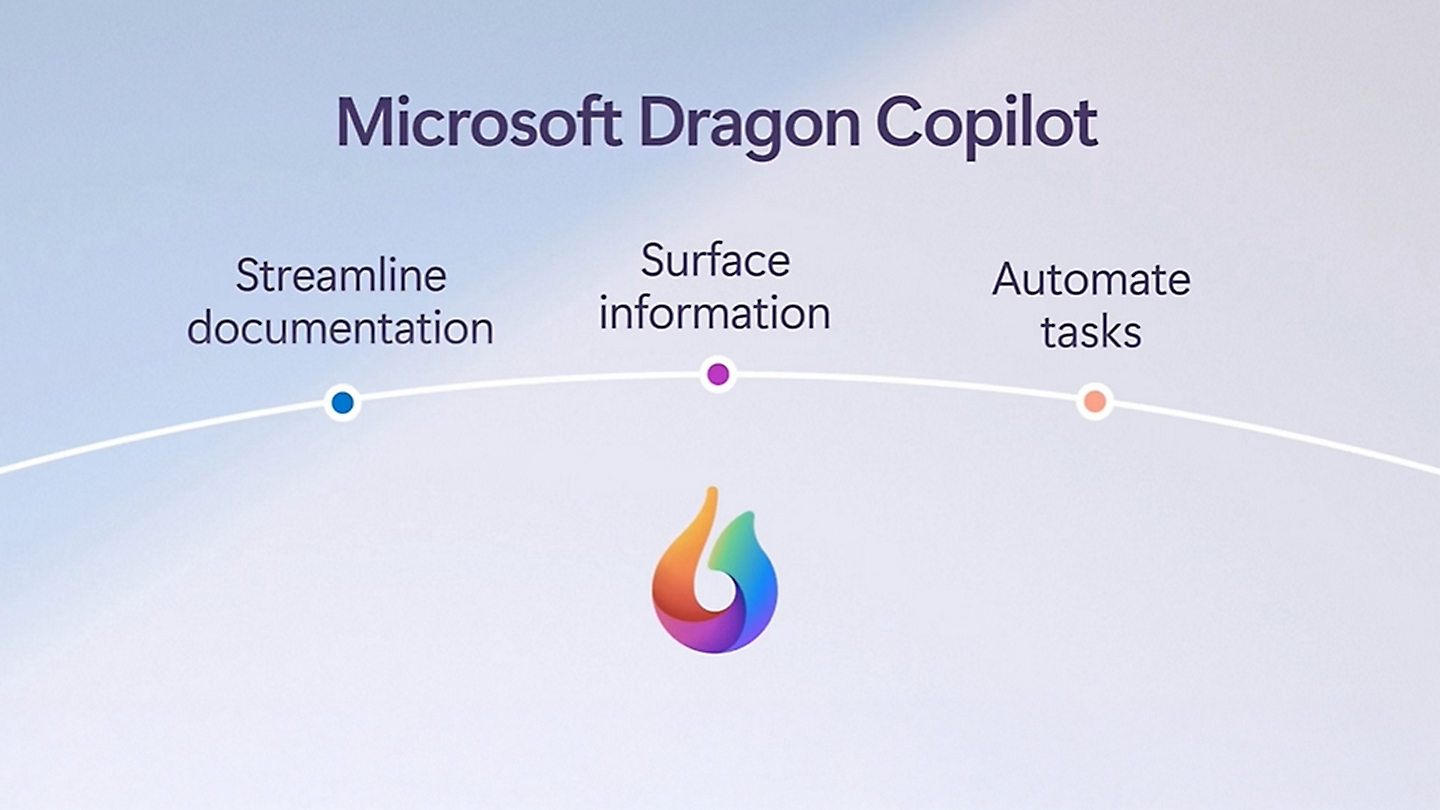
- Microsoft Dragon Copilot (~2025-03): Full brand integration, renamed to Microsoft Dragon Copilot. Three core capabilities have been upgraded: Ambient Listening, Knowledge Retrieval (Surface Information), and Automate Tasks. Integrate into Microsoft for Healthcare solution matrix and form synergy with Azure and Dynamics 365.
Current status
As of mid-2026, Microsoft Dragon Copilot is the main product and the Nuance DAX brand is gradually fading away. New customers can purchase Dragon Copilot directly, and existing DAX customers can migrate to the Copilot version to receive continuous updates and AI capability enhancements.
Version Info
- Microsoft Dragon Copilot :Nuance DAX has evolved into Microsoft Dragon Copilot, integrating the three major capabilities of contextual monitoring, knowledge retrieval and task automation, covering multi-role scenarios of doctors, nurses, and radiology departments. There is no official precise release date yet.
- Nuance DAX Pro :Enterprise-level contextual clinical intelligence solution supports multi-lingual doctor-patient dialogue capture and automatic medical record generation, and is deeply integrated with mainstream EHR systems. There is no official precise release date yet.
- Nuance DAX (Original) :The initial commercial version of Nuance DAX focuses on automatic clinical document generation for outpatient scenarios. There is no official precise release date yet.
User Reviews