 Agent Kit
Free
Agent Kit
Free
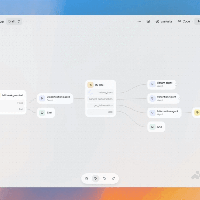
Agent Kit is a complete agent development toolkit launched by OpenAI to help developers quickly advance AI agents from prototypes to production. It contains three core components: Agent Builder, visual canvas ChatKit, customizable chat interface, Connector Registry, and unified connector management, supporting functions such as multi-agent collaboration, network search, and file search CUA.

Agent Kit
Core parameters and statistics
| Parameters | Official verifiable information |
|---|---|
| Product positioning | AI Agent development toolkit |
| Core Components | Agent Builder / ChatKit / Connector Registry / Evals |
| Supported models | GPT-4o series |
| Agent capabilities | Multi-agent collaboration, network search, file search CUA |
| Deployment method | OpenAI API / Self-hosted |
| Security Mechanism | Guardrails / Manual Approval Node / Connector Registry |
| Developer | OpenAI |
| Pricing | Free (priced per API usage) |
A brief comment: Agent Kit is not a single AI tool, but a set of "Lego building blocks for building Agents" that OpenAI gives developers.
User and market recognition
Gradually build user awareness in the field, and product capabilities are used by content creators and teams to improve work efficiency. Some industry users have incorporated it into their daily workflow. It is recommended to refer to the latest official disclosures for specific user scale and industry adoption rate data.
Cost advantage
C-side/individual developers: Agent Kit itself is free to use. Billed according to OpenAI API call volume (GPT-4o token consumption + tool call fee).
Enterprise/Team: Enterprise-level governance and monitoring capabilities require an OpenAI Enterprise subscription. Connector Registry enables centralized management of data source and third-party tool permissions.
API/Developer: Integrated through Responses API, pay standard API pricing. Support BYOK mode and custom tool functions.
Main functions
- Agent Builder Visual Canvas: Drag-and-drop node orchestration workflow, supporting tool invocation, logical judgment, and manual approval of nodes without writing underlying coordination code.
- ChatKit Chat Interface SDK: An embedded chat interface toolkit that supports brand customization and reduces front-end development costs.
- Connector Registry Connector Management: Centrally manage the secure access of data sources and third-party tools to ensure seamless integration of agents and external services.
- Evals Evaluation Monitoring: Built-in performance tracking, automated testing and trajectory grading functions to analyze the agent's decision-making process and optimize behavior.
- Network Search Tool: Supports GPT-4o to obtain network information in real time and provide citation sources, with an accuracy of 90%.
- File Search Tool: Multi-format document retrieval, metadata filtering and custom sorting, suitable for knowledge base applications.
- CUA Computer Usage Agent: Desktop automation by manipulating graphical interfaces (clicking buttons, entering text) through vision and reasoning capabilities.
Model and version evolution
Continuous iterative updates, the latest version introduces performance optimization and new features. Historical version information can be viewed on the official release page. There is no complete public version evolution timeline yet. It is recommended to pay attention to the official announcement to understand the rhythm of feature updates.
Technical advantages
Main type judgment: Agent/automation tool - OpenAI's Agent development framework.
Architecture Link: Developers → Agent Builder (visualization/code) → Agent + Tools + Handoffs + Guardrails → Responses API → GPT-4o → External Tools/Data
The core design of Agent Kit is a modular architecture - the four core components of Agent, Tools, Handoffs and Guardrails are efficiently integrated through the Responses API. Multi-agent collaboration achieves dynamic allocation of tasks through the handoffs mechanism.
Guide to engineering pitfalls:
- Token Cost Control: Token consumption will rise sharply in multi-agent collaboration and tool invocation scenarios. It is recommended to set clear instruction boundaries for each Agent to reduce unnecessary reasoning.
- CUA Stability: Computer Usage Agent (CUA) relies on vision and reasoning capabilities to operate the GUI and may fail when interface layout changes or non-standard UI components. It is recommended to add manual confirmation nodes as a safety net.
- Guardrails configuration: The command constraints of the security guardrail need to be carefully configured according to specific business scenarios. If they are too loose, the Agent behavior may deviate from expectations, and if they are too strict, they may block normal functions.
How to use
| Entrance | Description |
|---|---|
| OpenAI official website | Visit openai.com/index/introducing-agentkit/ to learn more |
| API access | Integrate Agent Kit capabilities through OpenAI Responses API |
Product Pricing
The pricing model is subject to the official real-time page. Usually a freemium or subscription system is used, and basic functions can be used for free. Advanced functions or high-frequency use require paid subscriptions, and users are advised to evaluate the optimal solution based on actual usage.
Application scenarios
- Customer Support Automation: Build 24/7 intelligent customer service to handle frequently asked questions, multiple rounds of conversations, and ticket flow.
- Multi-step research and analysis: Automate complex research processes such as literature search, data analysis and results visualization.
- Sales and Marketing Automation: Screening of sales leads, automated lead generation, and personalized marketing content generation.
- Code Review and Development: Assists in code review, automated testing and complex task management.
Applicable people
- Individual Users: Content creators and knowledge workers who need AI assistance to improve their daily work efficiency.
- Developers: Technical teams who need to integrate AI capabilities into their own products or services through APIs.
- Enterprise: Organizations seeking to deploy AI at scale in their field.
Summary and Outlook
Agent Kit is OpenAI’s important layout in the field of Agent development framework. The visual canvas lowers the threshold for Agent development, and the multi-agent collaboration and safety guardrail mechanisms are suitable for enterprise-level scenarios.
Not suitable for boundaries: relies on OpenAI API and cannot run completely offline; CUA has limited stability in complex GUI scenarios; billing is based on API usage, and the cost needs to be evaluated in high concurrency scenarios.
Purchasing Recommendation: Developers start with free API credits to try out Agent Builder and core components. In the enterprise scenario, PoC is first used to verify the effectiveness of multi-agent collaboration and security guardrails, and then the governance and monitoring functions of the enterprise version are evaluated. Pay attention to the curve of API cost increasing with usage.
Related tools:  CrewAI,
  LangChain
Version Info
- Agent Kit launch :Contains core components such as Agent Builder, ChatKit, Connector Registry, Evals, etc., and supports GPT-4o series models.
- Agents SDK preview :OpenAI's early Agents SDK preview version provides basic agent building capabilities.
User Reviews